The Growing Threat of Social Media Scams: How Brands Can Protect Their Reputation
Social media has revolutionized the way businesses connect with customers. Platforms such as Facebook, Instagram, LinkedIn, TikTok, X (formerly Twitter), and YouTube have become essential tools for brand awareness, customer engagement, and revenue generation. Today, consumers expect brands to maintain an active social presence, provide customer support through social channels, and deliver personalized experiences online.
However, the increasing popularity of social media has also attracted cybercriminals and fraudsters. Scammers are using sophisticated tactics to exploit trusted brands, deceive consumers, and steal sensitive information. From fake business profiles and phishing schemes to counterfeit products and fraudulent advertisements, social media scams are becoming more common and more dangerous.
For businesses, these scams represent more than just a cybersecurity issue. They threaten customer trust, brand reputation, and long-term growth. In an age where online perception can significantly influence purchasing decisions, protecting a brand from social media scams has become a critical business priority.
This article explores the growing threat of social media scams, their impact on brands, and practical strategies organizations can implement to safeguard their reputation.
Table of Contents
ToggleUnderstanding Social Media Scams
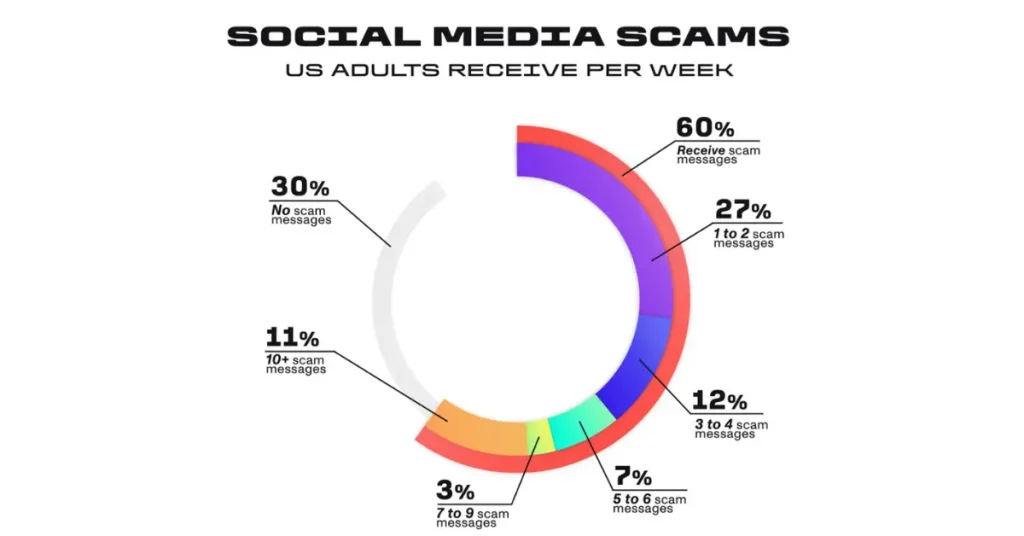
Social media scams are fraudulent activities conducted through social networking platforms with the goal of stealing money, personal information, or sensitive business data. Scammers often exploit the credibility of well-known brands to increase the effectiveness of their schemes.
Unlike traditional cyberattacks, social media scams target both businesses and consumers simultaneously. A scammer may impersonate a trusted brand, trick customers into making payments, or use fake promotions to gather personal information.
The rise of social commerce and digital customer engagement has expanded opportunities for fraudsters. As businesses increasingly rely on social media for marketing and communication, scammers have more channels through which they can target users.
Common Types of Social Media Scams
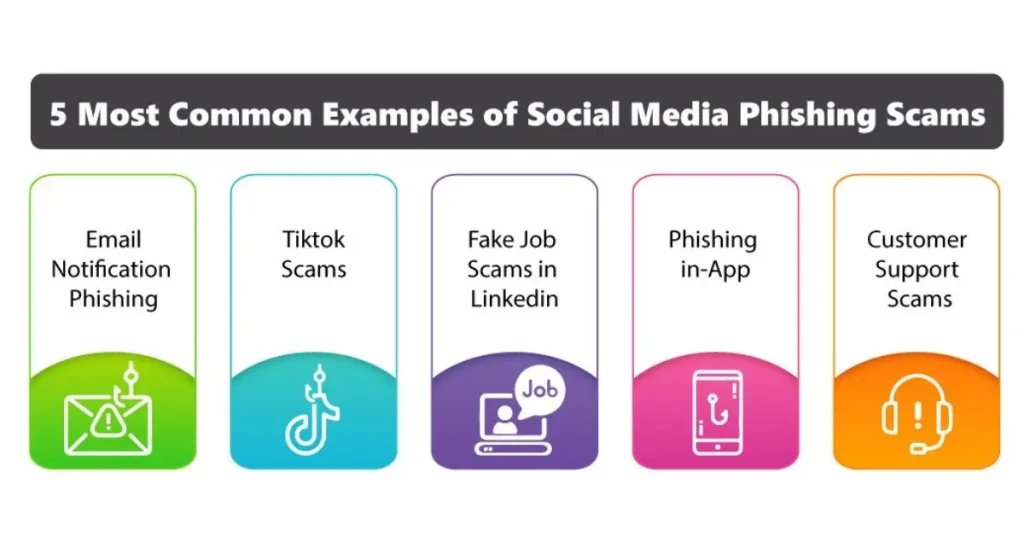
Fake Brand Accounts
One of the most widespread forms of social media fraud involves fake business profiles. Scammers create accounts that closely resemble official brand pages, often copying logos, profile pictures, cover images, and content. These fake accounts may:
- Offer fake discounts
- Collect customer information
- Promote fraudulent products
- Request payments directly from users
Many customers struggle to distinguish between legitimate and fake accounts, especially when scammers mimic branding elements effectively
Phishing Attacks
Phishing scams are designed to steal sensitive information such as passwords, credit card details, and login credentials.
Scammers may send direct messages, comments, or advertisements containing malicious links. These links often lead users to websites that closely resemble official brand websites.
Once users enter their information, cybercriminals gain access to valuable data that can be used for financial fraud or identity theft.
Fake Giveaways and Contests
Giveaway scams are extremely common on social media. Fraudsters use a brand's name to advertise fake promotions and prizes.
Victims are often asked to:
- Share personal information
- Pay processing fees
- Click suspicious links
- Provide banking details
Although the business may have no connection to the scam, affected users often blame the brand involved.
Counterfeit Product Sales
Scammers frequently use social media advertising to sell counterfeit products under the name of reputable brands. Customers may purchase items believing they are genuine only to receive low-quality counterfeit goods or nothing at all. Such experiences can significantly damage customer confidence in the original brand.
Customer Service Impersonation
Fraudsters often pose as customer support representatives and contact users who have posted complaints online.
These fake support agents may request:
- Account credentials
- Payment information
- Verification codes
- Personal identification details
Why Social Media Scams Are Increasing?
Several factors contribute to the rapid growth of social media scams.
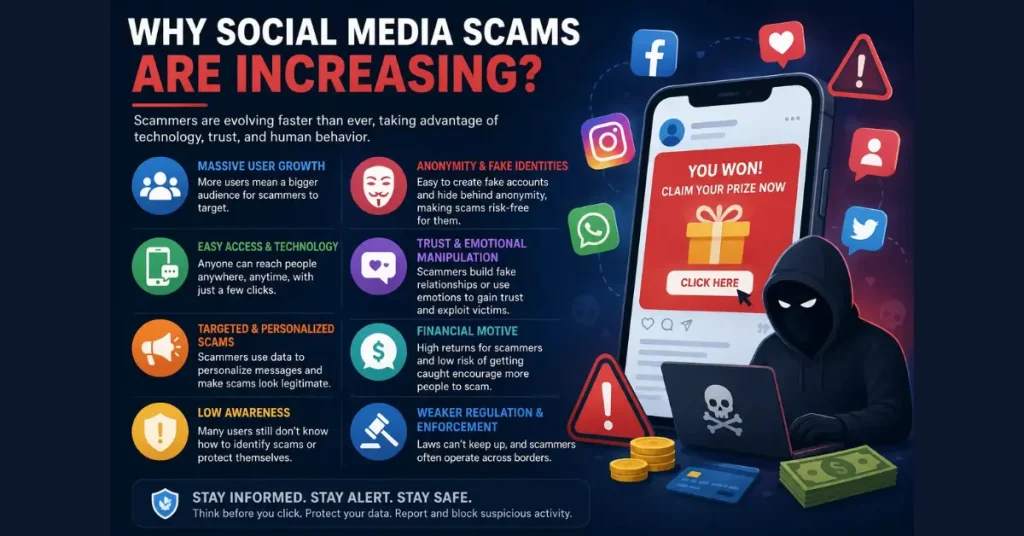
Massive User Populations
Social media platforms host billions of active users worldwide. This provides scammers with an enormous pool of potential victims.
Easy Profile Creation
Creating fake accounts requires little effort. Fraudsters can establish convincing profiles within minutes.
Sophisticated Technology
Modern scammers use artificial intelligence and automation tools to create realistic messages, advertisements, and fake customer interactions.
Growing Online Shopping Activity
Consumers increasingly discover and purchase products through social media. This shift creates new opportunities for scammers to exploit customer trust.
Viral Content Distribution
Fraudulent posts can spread rapidly through shares, likes, and comments before platform moderators identify and remove them.
How Social Media Scams Damage Brand Reputation?
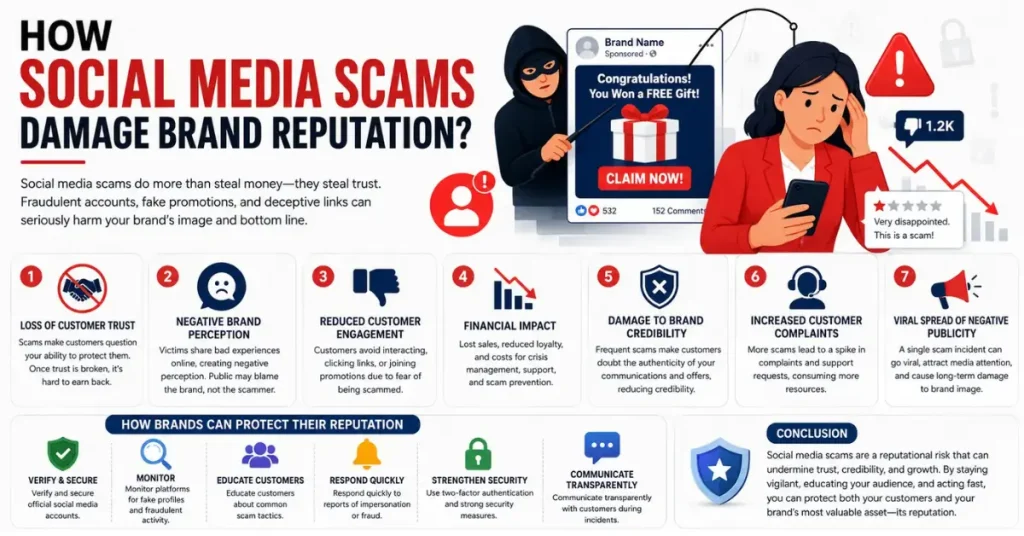
Loss of Customer Trust
Trust is one of the most valuable assets any business possesses. Customers expect brands to provide secure and reliable experiences across all digital channels. When scams exploit a company's identity, customers may question the brand's credibility and security practices. Even when the business is not directly responsible, consumers often associate negative experiences with the brand being impersonated.
Negative Publicity
Social media amplifies customer experiences. Victims frequently share scam-related incidents publicly, generating negative conversations about the brand. A single viral complaint can reach thousands or even millions of users, creating long-term reputational challenges.
Customer Retention Problems
Customers who experience fraud associated with a brand may choose to stop doing business with that company. Acquiring new customers is often far more expensive than retaining existing ones. Therefore, scam-related trust issues can directly affect profitability.
Financial Impact
The financial consequences of social media scams can include:
- Lost sales
- Increased customer support costs
- Legal expenses
- Security investments
- Compensation claims
Businesses may also lose revenue when customers become hesitant to interact with their social media channels.
Damage to Brand Equity
Brand equity represents the value consumers associate with a business. Years of marketing, customer service, and relationship-building efforts can be undermined by repeated scam incidents that create doubt and uncertainty among customers.
The Role of Artificial Intelligence in Modern Scams
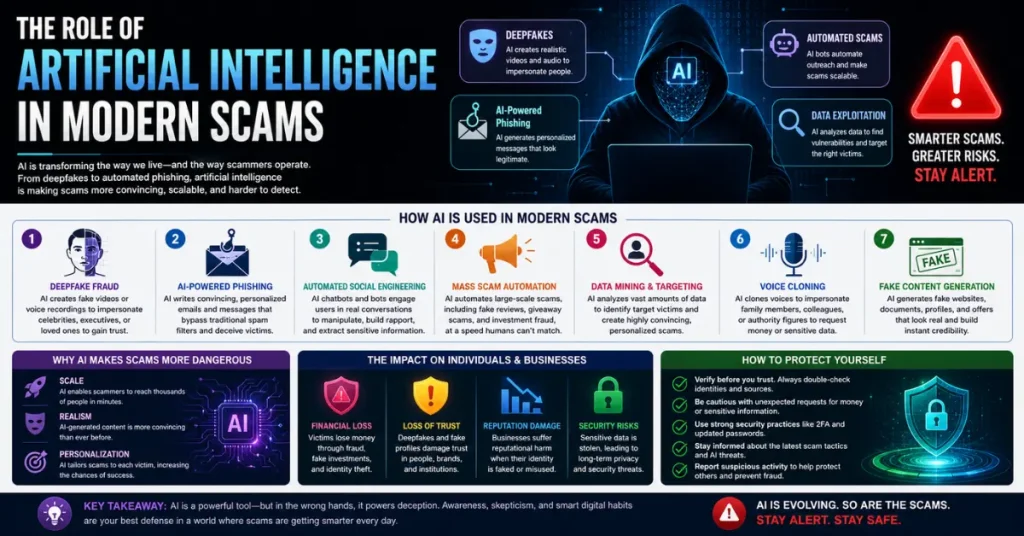
Artificial intelligence has transformed both cybersecurity and cybercrime.
Today, scammers can use AI-powered tools to:
- Generate convincing messages
- Create realistic fake profiles
- Produce deepfake videos
- Automate customer interactions
- Personalize phishing attacks
AI enables fraudsters to operate at a larger scale while making scams more difficult to detect.
For example, a scammer can use AI to imitate a brand’s tone of voice, making fake communications appear authentic.
As AI technology continues to evolve, businesses must adopt equally advanced defenses to stay protected.
How Brands Can Protect Their Reputation?
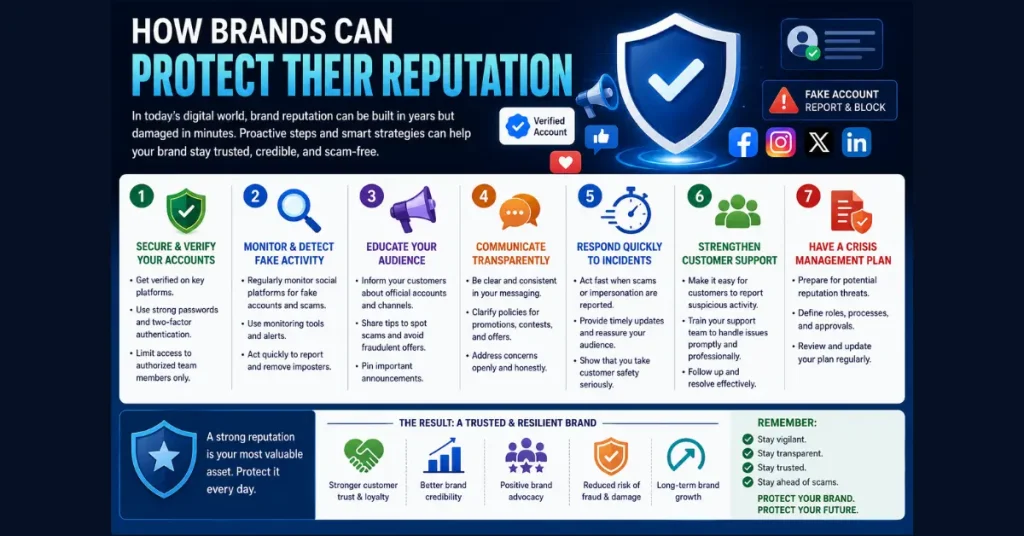
Verify Official Accounts
Verification badges help customers identify legitimate business accounts. Brands should pursue account verification wherever available and consistently promote their official social media handles on websites, emails, and marketing materials.
Monitor Social Media Activity
Active monitoring is essential for identifying threats early.
Brands should regularly monitor:
- Mentions
- Tags
- Comments
- New accounts using similar names
- Customer complaints
Social listening tools can help businesses detect suspicious activity before it escalates.
Educate Customers
Customer awareness is one of the strongest defenses against scams. Businesses should regularly share information about:
- Official communication channels
- Common scam tactics
- Safe online practices
- How to report suspicious activity
Educated customers are less likely to become victims.
Strengthen Internal Security
Protecting social media accounts requires strong security controls, including:
- Multi-factor authentication (MFA)
- Secure password policies
- Role-based account access
- Regular security audits
- Employee cybersecurity training
These measures reduce the risk of account compromise.
Develop an Incident Response Plan
Every business should have a documented plan for responding to social media scams. The plan should include:
- Threat identification procedures
- Reporting processes
- Customer communication strategies
- Legal escalation guidelines
- Recovery actions
Rapid response can significantly reduce reputational damage.
Collaborate With Social Media Platforms
Every business should have a documented plan for responding to social media scams. The plan should include:
Maintain Transparent Communication
When scams occur, transparency is critical. Brands should:
- Inform customers promptly
- Explain the situation clearly
- Provide guidance on avoiding scams
- Share updates regularly
Open communication helps preserve trust during challenging situations.
The Importance of Social Listening
Social listening involves monitoring online conversations related to a brand, industry, or product. Advanced social listening tools allow businesses to:
- Detect scam reports quickly
- Monitor sentiment changes
- Identify fake accounts
- Track emerging threats
By understanding what customers are discussing online, brands can respond proactively and reduce reputational risks.
Future Trends in Social Media Fraud
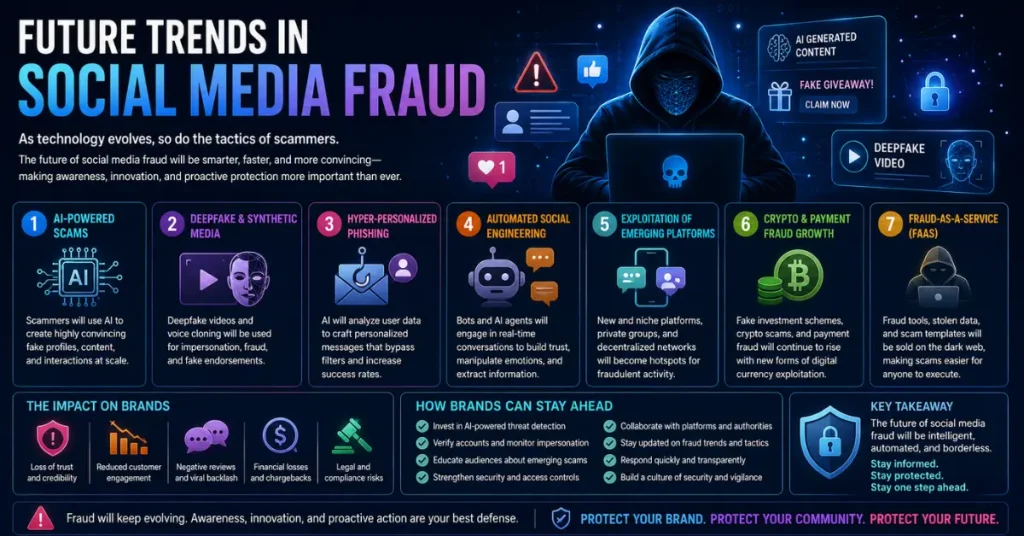
The social media fraud landscape continues to evolve.
Emerging threats include:
Deepfake Endorsements
Scammers may create AI-generated videos featuring celebrities or business leaders endorsing fake products.
AI-Powered Chatbots
Automated scam bots can engage thousands of users simultaneously, increasing fraud efficiency.
Cryptocurrency Investment Scams
Fraudsters increasingly use social media to promote fake investment opportunities and cryptocurrency schemes.
Fake Influencer Collaborations
Scammers impersonate influencers and brands to create fraudulent partnership offers.
Cross-Platform Fraud Campaigns
Future scams will likely operate across multiple social media channels simultaneously, making detection more challenging. Businesses must remain vigilant and adapt continuously to new threats.
Conclusion
Social media has become a cornerstone of modern business strategy, offering unparalleled opportunities for customer engagement and growth. However, the same platforms that help brands reach audiences also provide fertile ground for scammers and cybercriminals.
Fake accounts, phishing attacks, counterfeit products, and fraudulent promotions can seriously damage customer trust and brand reputation. As social media scams become more sophisticated, businesses can no longer afford to treat them as isolated incidents.
Protecting a brand’s reputation requires a proactive approach that combines security, customer education, social monitoring, and transparent communication. Organizations that invest in these areas will be better positioned to maintain trust, safeguard customers, and strengthen their competitive advantage.
In the digital age, reputation is one of a company’s most valuable assets. By taking action against social media scams today, brands can ensure long-term success and build stronger relationships with their customers tomorrow.