What is Social Media Marketing?
Social Media Marketing (SMM) is the process of using social media platforms to promote a business, product, service, or brand. It involves creating and sharing content, engaging with followers, running paid advertisements, and analyzing performance to achieve marketing goals.
The primary objective of social media marketing is to connect with potential customers where they spend a significant amount of their time online.
Table of Contents
ToggleSocial media marketing can include:
- Creating and posting content
- Running paid social media ads
- Influencer collaborations
- Building online communities
- Customer engagement and support
- Brand awareness campaigns
- Lead generation activities
Table of Contents
Why Is Social Media Marketing Important?
Social media platforms have billions of active users worldwide. Businesses can directly interact with customers, understand their preferences, and build long-term relationships.
Some reasons why social media marketing is important include:
1. Increased Brand Awareness
Social media allows brands to reach large audiences quickly. Consistent posting and engagement help businesses become more visible and recognizable.
2. Better Customer Engagement
Unlike traditional advertising, social media enables two-way communication. Customers can comment, message, and interact with brands in real time.
3. Cost-Effective Marketing
Compared to traditional marketing channels, social media marketing often requires a smaller budget while delivering measurable results.
4. Increased Website Traffic
Sharing valuable content and promotional offers can drive users from social media platforms directly to your website.
5. Lead Generation and Sales
Businesses can generate qualified leads and convert followers into customers through targeted campaigns and advertising.
Popular Social Media Platforms for Marketing
Facebook remains one of the largest social media platforms globally. Businesses use it for:
- Brand awareness
- Paid advertising
- Community building
- Customer support
Instagram focuses on visual content and is highly effective for:
- Lifestyle brands
- Fashion businesses
- Food and travel companies
- Influencer marketing
LinkedIn is the leading platform for B2B marketing and professional networking.
It helps businesses:
- Generate leads
- Build authority
- Recruit talent
- Share industry insights
YouTube
Video content continues to dominate online engagement. YouTube allows brands to educate, entertain, and promote products through videos.
TikTok
TikTok has become a major marketing platform, especially for younger audiences. Creative short-form videos often achieve massive organic reach.
X (Twitter)
X is commonly used for:
- Industry updates
- Brand announcements
- Customer service
- Real-time engagement
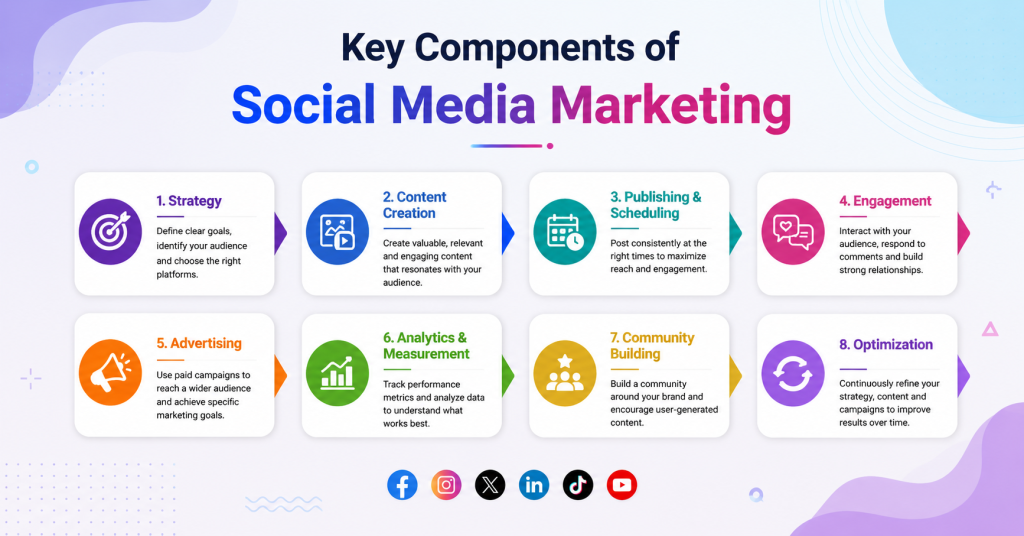
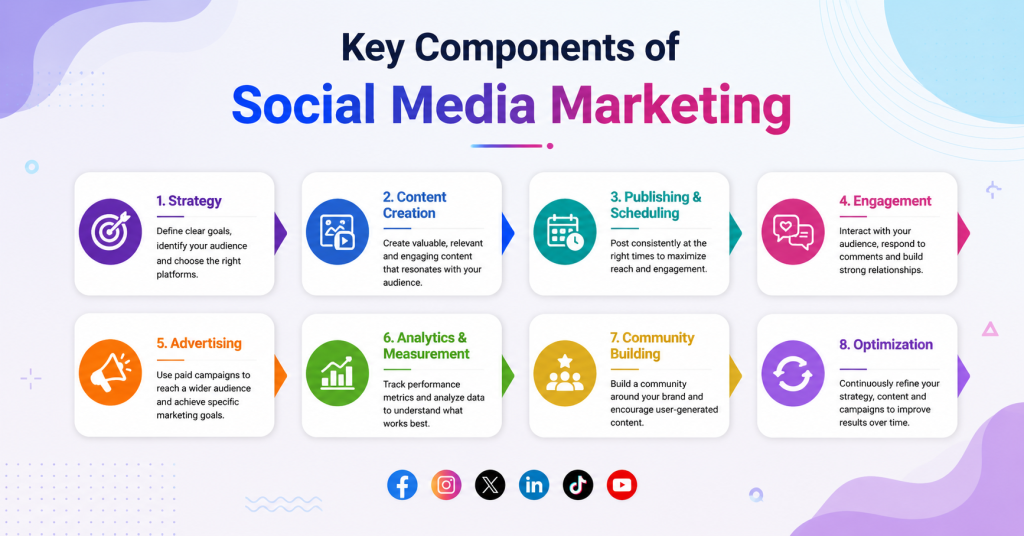
Key Components of Social Media Marketing
Content Creation
Content is the foundation of any social media strategy. Businesses create content such as:
- Images
- Videos
- Infographics
- Reels
- Stories
- Blog promotions
- Educational posts
High-quality content helps attract and retain followers.
Audience Engagement
Engagement includes:
- Replying to comments
- Answering messages
- Running polls
- Hosting live sessions
Active engagement builds trust and strengthens customer relationships.
Social Media Advertising
Paid advertising helps businesses reach specific audiences based on demographics, interests, behaviors, and locations.
Popular ad formats include:
- Image ads
- Video ads
- Carousel ads
- Story ads
- Lead generation ads
Analytics and Reporting
Tracking performance helps businesses understand what works and what doesn’t.
Common metrics include:
- Reach
- Impressions
- Engagement rate
- Click-through rate (CTR)
- Conversions
- Follower growth
Benefits of Social Media Marketing
Improved Brand Recognition
Regular social media activity increases visibility and helps customers remember your brand.
Higher Customer Loyalty
Businesses that actively engage with customers often develop stronger customer relationships and loyalty.
Better Search Engine Presence
Although social media signals are not direct ranking factors, strong social media activity can increase content visibility and website traffic, indirectly supporting SEO efforts.
Increased Conversion Rates
Engaged audiences are more likely to trust your brand and make purchasing decisions.
Valuable Customer Insights
Social media platforms provide data about audience behavior, preferences, and interests, helping businesses improve their marketing strategies
Social Media Marketing Strategy: Step-by-Step
Step 1: Define Your Goals
Determine what you want to achieve, such as:
- Brand awareness
- Website traffic
- Lead generation
- Customer engagement
Step 2: Identify Your Target Audience
Understand your audience’s:
- Age
- Gender
- Location
- Interests
- Online behavior
Step 3: Choose the Right Platforms
Focus on platforms where your target audience spends the most time.27
Step 4: Create Valuable Content
Develop content that educates, entertains, inspires, or solves problems for your audience.
Step 5: Maintain Consistency
Consistency helps build trust and keeps your audience engaged.
Create a content calendar to plan posts in advance.
Step 6: Monitor Performance
Regularly analyze results and optimize your strategy based on performance data
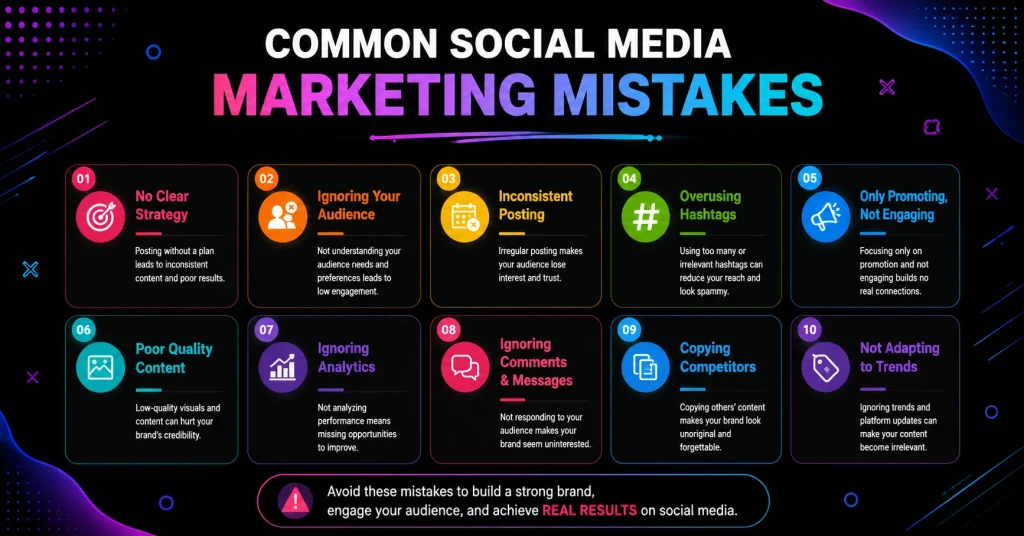
Common Social Media Marketing Mistakes
Many businesses fail to achieve results because they:
- Post inconsistently
- Ignore audience engagement
- Focus only on selling
- Use poor-quality visuals
- Neglect analytics
- Target the wrong audience
Avoiding these mistakes can significantly improve campaign performance.
Social Media Marketing Trends in 2026
Lorem ipsum dolor sit amet, consectetur adipiscing elit. Ut elit tellus, luctus nec ullamcorper mattis, pulvinar dapibus leo.
Short-Form Video Content
Platforms increasingly prioritize short videos, reels, and stories.
AI-Powered Content Creation
Artificial Intelligence helps businesses create content, analyze data, and automate marketing processes.
Influencer Partnerships
Brands continue to collaborate with influencers to reach highly engaged audiences.
Social Commerce
Consumers are increasingly purchasing products directly through social media platforms.
Personalized Marketing
Advanced targeting allows brands to deliver more relevant content and advertisements.
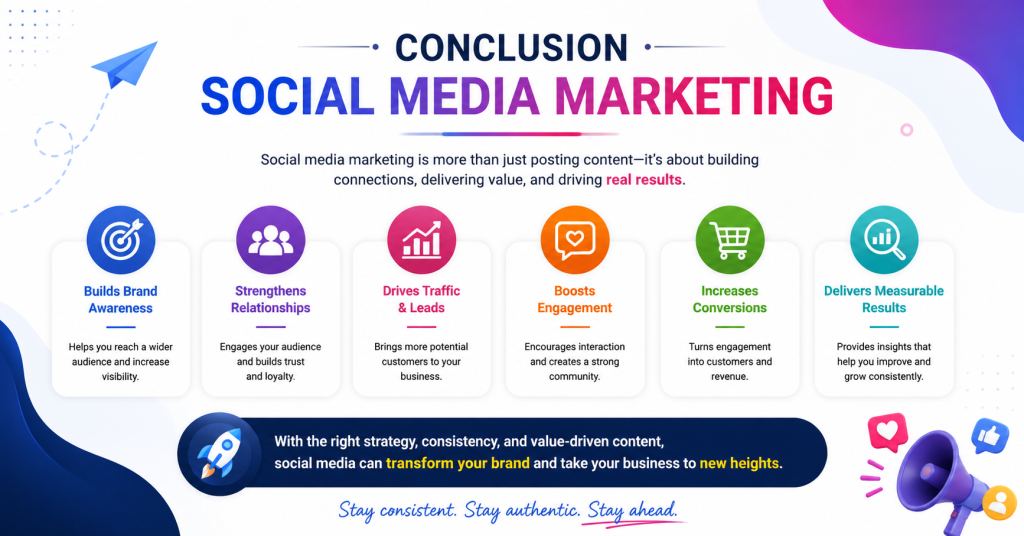
Conclusion
Social Media Marketing is no longer optional for modern businesses. It has become a powerful tool for building brand awareness, engaging customers, generating leads, and driving sales.
By understanding your audience, creating valuable content, maintaining consistency, and leveraging analytics, you can build a successful social media marketing strategy that delivers long-term growth.
As social media platforms continue to evolve, businesses that adapt quickly and prioritize meaningful customer interactions will gain a significant competitive advantage in the digital marketplace.