What Is Greenwashing? A Complete Guide for Marketers and Businesses
In today’s market, sustainability is no longer just a buzzword—it’s a major factor in how customers choose the brands they support. Consumers are becoming more environmentally aware, and many actively look for products, services, and businesses that align with their values. As a result, brands across industries are promoting themselves as eco-friendly, sustainable, ethical, and responsible.
But not every “green” claim is genuine.
This is where **greenwashing** comes in.
Greenwashing happens when a company uses marketing, branding, or messaging to appear more environmentally friendly than it actually is. It may involve vague claims, misleading labels, selective information, or exaggerated sustainability efforts. While greenwashing may create a short-term image boost, it can seriously damage trust, harm brand reputation, and even lead to legal consequences.
For marketers and business owners, understanding greenwashing is essential. If your business wants to promote sustainability, it must do so honestly, transparently, and with proof. In this guide, we’ll explore what greenwashing is, why it’s harmful, common examples, warning signs, and practical steps marketers can take to avoid it.
Table of Contents
ToggleTable of Contents
What Is Greenwashing?
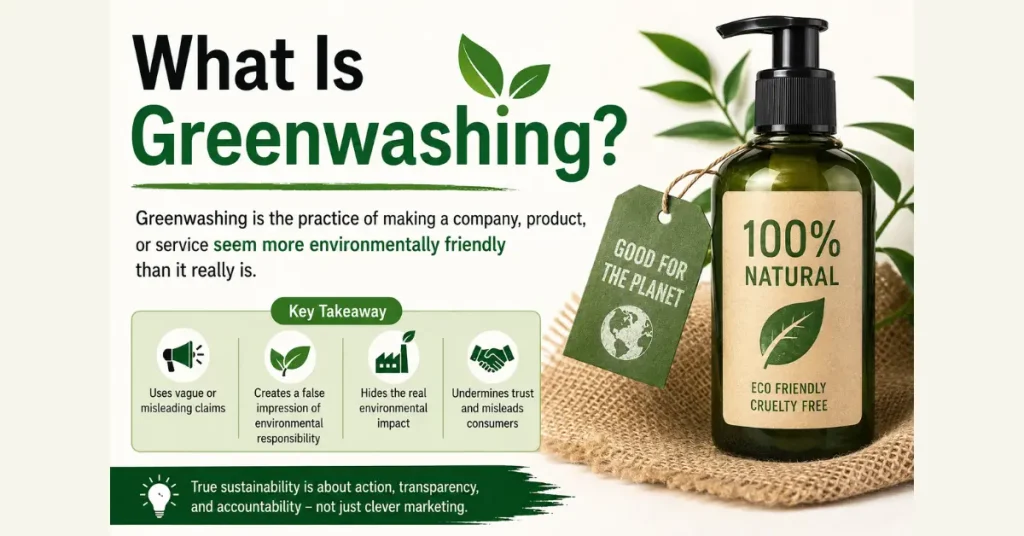
**Greenwashing** is the practice of making a company, product, or service seem more environmentally responsible than it really is. It often happens when businesses use eco-friendly language, packaging, visuals, or advertising claims without meaningful environmental action to support those claims.
In simple terms, greenwashing is **misleading consumers into believing a brand is “green” when the reality doesn’t match the message**.
The term combines **“green”** (symbolizing environmental sustainability) and **“whitewashing”** (covering up the truth). Together, it refers to hiding unsustainable practices behind environmentally friendly marketing.
Greenwashing can happen intentionally or unintentionally. Some companies deliberately mislead customers to gain sales or improve public perception. Others may simply overstate small sustainability efforts without realizing their messaging is deceptive. In either case, the result is the same: consumers are given a false impression.
Why Greenwashing Is a Growing Concern?
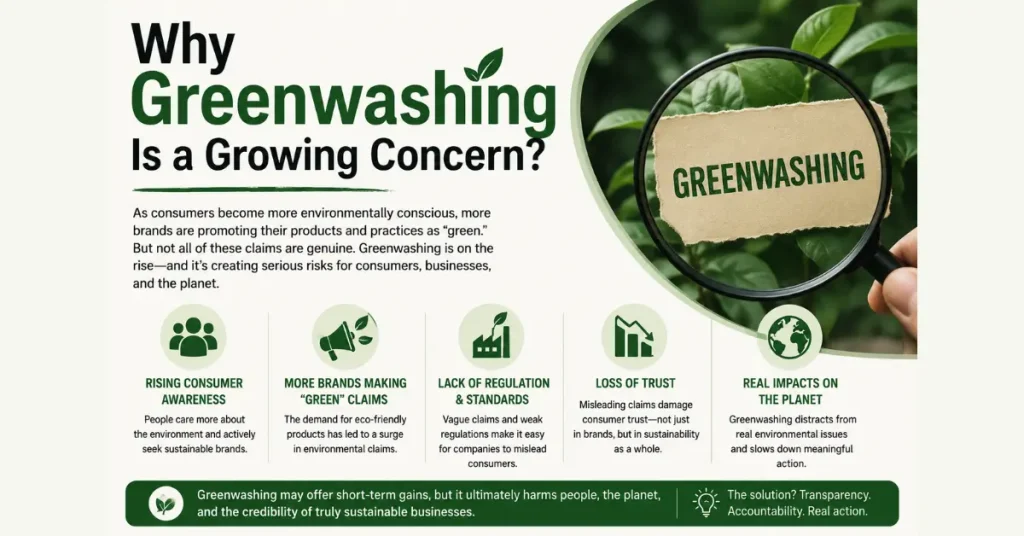
Sustainability has become a major marketing advantage. More people want to support brands that care about the planet, reduce waste, use ethical sourcing, and minimize carbon emissions. Because of this, businesses are under pressure to appear environmentally responsible.
However, this rising demand has also created a problem: some brands focus more on **looking sustainable** than **being sustainable**.
Greenwashing is now a major concern because it affects three important areas:
1. It Misleads Consumers: Customers who genuinely want to make responsible choices rely on honest information. If a company uses false or exaggerated environmental claims, consumers may unknowingly support harmful practices.
2. It Hurts Trust in Sustainability Marketing: When people discover a brand has exaggerated its eco-claims, trust is lost—not just in that brand, but sometimes in sustainability messaging as a whole. This makes it harder for truly ethical businesses to stand out.
3. It Creates Unfair Competition: Businesses that invest real money in sustainable sourcing, cleaner production, and responsible operations often face higher costs. Greenwashing allows competitors to gain similar marketing benefits without doing the actual work.
Why Greenwashing Is Harmful for Brands and Businesses?
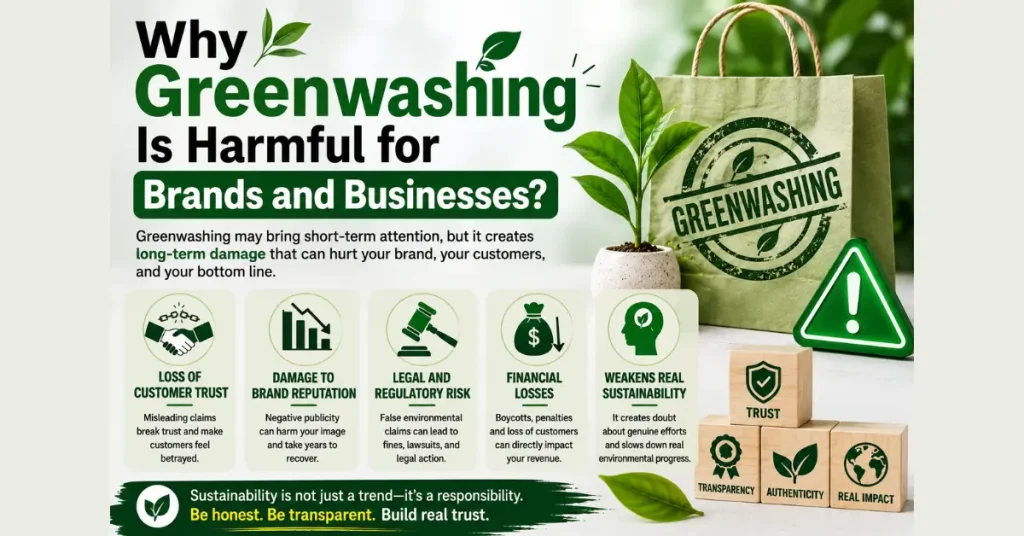
Some companies assume greenwashing is harmless because it “sounds positive” and may attract eco-conscious buyers. But in reality, it can create serious long-term damage.
1. Loss of Customer Trust: Trust is one of the most valuable assets in marketing. Once customers realize a company has misled them, it becomes difficult to rebuild credibility. Today’s consumers research brands, read labels, check reviews, and share concerns publicly on social media. A single misleading sustainability claim can trigger backlash.
2. Damage to Brand Reputation: A reputation built over years can be damaged quickly if a company is accused of greenwashing. Negative press, online criticism, and public complaints can make a brand seem dishonest and opportunistic.
3. Legal and Regulatory Risk: Many countries are tightening rules around environmental advertising and sustainability claims. If a business makes claims it cannot prove, it may face legal notices, fines, or forced changes in its marketing.
4. Internal Brand Misalignment: If the marketing team promotes sustainability claims that the business cannot support operationally, it creates a disconnect between brand image and reality. This can affect employee trust, stakeholder confidence, and long-term brand strategy.
5. Short-Term Gain, Long-Term Loss: Greenwashing might create temporary attention, but it rarely creates lasting loyalty. Customers increasingly reward brands that show honesty, transparency, and real impact—not just attractive eco-themed packaging.
Common Examples of Greenwashing in Marketing
Greenwashing can appear in many forms. Some examples are obvious, while others are subtle. Here are some of the most common types marketers should watch for:
1. Vague or Undefined Claims: Words like **“natural,” “eco-friendly,” “green,” “clean,”** or **“sustainable”** are often used without explanation or evidence. These terms sound positive, but without context, they may be meaningless.
For example:
* “Made with eco materials” — Which materials? What percentage?
* “Sustainable product” — In what way?
* “Environmentally safe” — Based on what proof?
If a claim is too broad to verify, it may be misleading.
2. Highlighting One Small Green Feature While Ignoring Bigger Issues: A company may promote one environmentally friendly aspect of a product while hiding larger environmental harms.
For example:
* A plastic bottle labeled “made with 20% recycled material” while the rest of the production process is highly wasteful.
* A fashion brand promoting one organic cotton collection while the majority of its supply chain remains unsustainable.
This tactic gives consumers an incomplete picture.
3. Misleading Packaging and Visuals: Green colors, leaves, nature imagery, earthy fonts, and recycled-looking packaging can create the impression of sustainability even when the product has no meaningful environmental benefit.
Visual branding alone should never replace real proof.
4. Fake Certifications or Labels: Some brands create symbols, badges, or eco-labels that look official but are self-made and not verified by any trusted organization. This can mislead consumers into assuming third-party approval.
5. Hidden Trade-Offs: A company may promote one positive environmental feature while ignoring other harmful aspects. For example, paper packaging may sound greener than plastic, but if the production process causes excessive water use or deforestation, the claim is incomplete.
6. No Proof to Support Claims: If a brand says its product is carbon-neutral, biodegradable, non-toxic, or planet-friendly but provides no evidence, certification, data, or explanation, the claim may be considered greenwashing.
Signs Your Marketing Might Be Greenwashing
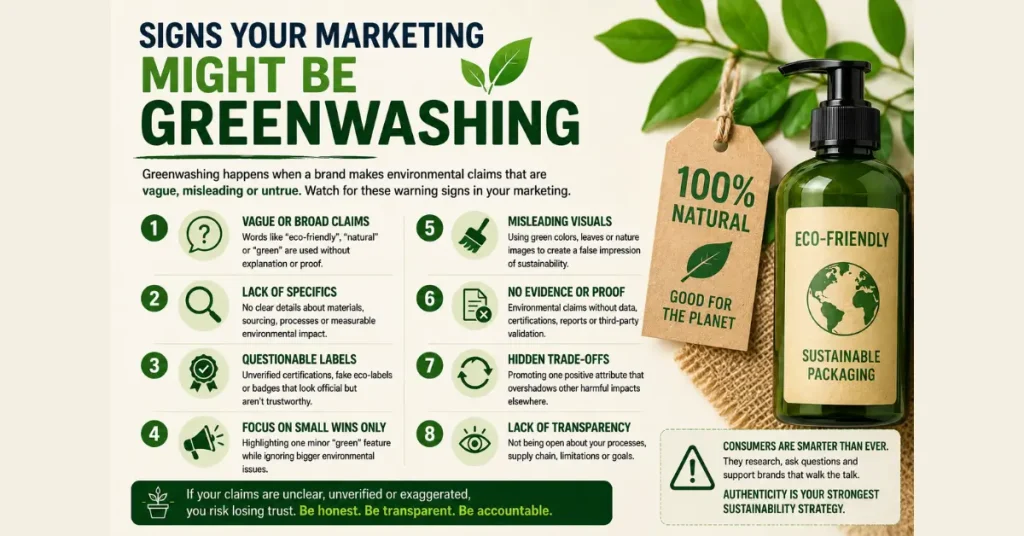
Not every misleading claim is intentional. Sometimes businesses simply don’t realize their sustainability messaging is weak or unclear. Ask yourself these questions:
* Are we using eco-friendly terms without defining them?
* Can we prove every sustainability claim with data, certification, or documentation?
* Are we highlighting small wins while hiding bigger environmental issues?
* Are our visuals suggesting sustainability more strongly than our actual practices?
* Would a customer understand exactly what our claim means?
* Are we being transparent about what we have achieved—and what we have not?
If the answer to these questions is uncomfortable, your marketing may need a closer review.
How Greenwashing Happens in Different Industries?
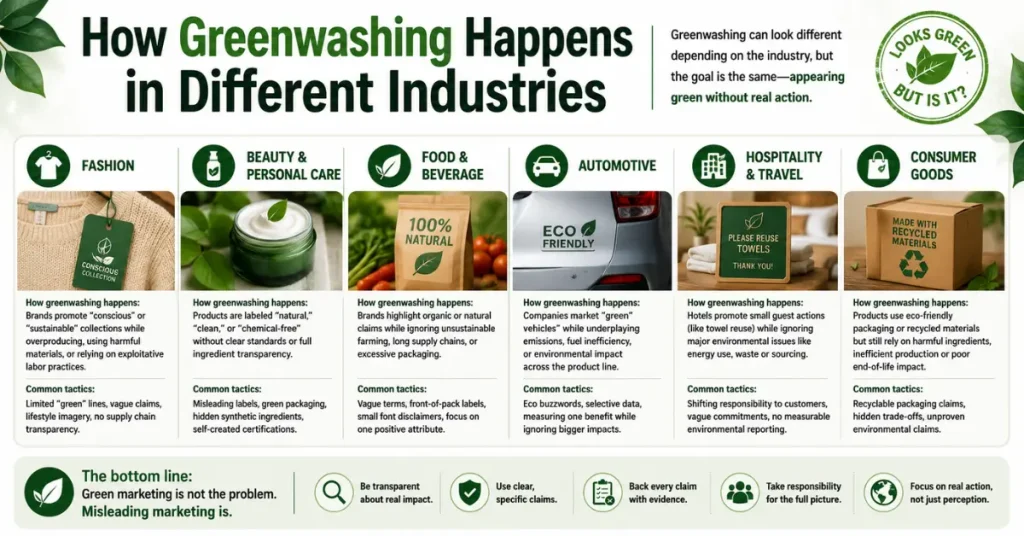
Greenwashing is not limited to one sector. It appears across industries in different ways.
Fashion: Brands may market “conscious collections” while relying on overproduction, poor labor practices, and waste-heavy manufacturing.
Beauty and Personal Care: Products may be labeled “clean,” “natural,” or “chemical-free” without clear standards or ingredient transparency.
Food and Beverage: Packaging may emphasize organic or eco-friendly qualities while hiding wasteful sourcing, high emissions, or misleading ingredient claims.
Automotive: Companies may market “green vehicles” while underplaying fuel inefficiency or emissions elsewhere in the product line.
Hospitality and Travel: Hotels may ask guests to reuse towels “for the environment” while making little effort to reduce waste, energy use, or unsustainable sourcing.
Consumer Goods: Products may use recyclable packaging but still rely on harmful materials, poor manufacturing practices, or misleading disposal claims.
How to Avoid Greenwashing in Marketing?
The good news is that greenwashing can be avoided. Businesses can still talk about sustainability—but they need to do it responsibly. Here’s how.
1. Make Specific, Clear Claims
Avoid vague terms unless you explain them. Instead of saying “eco-friendly,” say exactly what makes the product better.
For example:
* “Made with 80% recycled plastic”
* “Packaging is fully recyclable where local facilities exist”
* “Manufactured using 30% less water than our previous process”
Specific claims are easier to trust and verify..
2. Back Up Every Claim with Evidence
If you make a sustainability claim, be ready to prove it. Support your statements with:
* Third-party certifications
* Independent audits
* Internal data and reports
* Product testing
* Public sustainability documentation
Evidence protects both your customers and your brand.
3. Be Honest About Progress
You do not need to be a perfect company to talk about sustainability. Customers appreciate honesty. If your business is still improving, say so.
For example:
* “We’ve reduced packaging waste by 40% and are working toward a fully recyclable solution.”
* “Our current range includes 25% recycled materials, with plans to increase this over the next year.”
Transparent progress is stronger than exaggerated perfection.
4. Avoid Overstating Small Improvements
If your business has made one positive change, share it—but don’t present it as a complete sustainability transformation. Small improvements are worth communicating, but they should stay in proportion.
5. Involve Operations, Not Just Marketing
Sustainability claims should never be created by the marketing team alone. Work closely with product, sourcing, manufacturing, legal, and leadership teams to ensure claims reflect reality.
Marketing should communicate genuine business action—not invent the story independently.
6. Use Trusted Certifications Carefully
If your product or business has recognized certifications, mention them clearly and accurately. But never imply certification where it does not exist. And if you use a logo or standard, explain what it actually covers.
7. Review Packaging, Ads, Website Copy, and Social Posts
Greenwashing doesn’t only happen in a big campaign. It can appear in product pages, packaging, Instagram captions, sales brochures, and email copy. Review every customer-facing message for misleading environmental language.
8. Train Your Team on Sustainability Communication
Your content writers, social media managers, designers, and sales teams should understand what greenwashing is and how to avoid it. A simple internal guideline can help keep messaging accurate and consistent.