How to Develop a Growth Mindset as a Marketer
The concept of a growth mindset was introduced by psychologist Carol Dweck. People with a growth mindset believe that intelligence and abilities can improve through dedication and continuous learning.
In contrast, those with a fixed mindset believe their talents are static and cannot significantly change.
Growth Mindset Marketer:
- Continuously develops skills
- Experiments with new strategies
- Welcomes feedback
- Learns from failures
- Embraces challenges
Fixed Mindset Marketer:
- Avoids challenges
- Fears failure
- Takes criticism personally
- Resists change
- Relies on existing knowledge
Table of Contents
ToggleTable of Contents
Why a Growth Mindset Matters in Marketing
Marketing is one of the fastest-changing industries. Search engine algorithms, social media trends, AI tools, and consumer preferences can change overnight.
A growth mindset helps marketers:
Adapt to Industry Changes
Instead of fearing change, growth-minded marketers see it as an opportunity to learn and improve.
Improve Problem-Solving Skills
Marketing campaigns don’t always succeed. A growth mindset encourages marketers to analyze what went wrong and find solutions.
Boost Creativity
Being open to learning new ideas and perspectives often leads to more innovative campaigns.
Increase Career Opportunities
Employers value professionals who are eager to learn, adapt, and grow with the organization.
Signs You Need to Develop a Growth Mindset
You may benefit from developing a growth mindset if you:
- Feel discouraged when campaigns fail
- Avoid learning new marketing tools
- Compare yourself negatively to others
- Fear making mistakes
- Resist constructive criticism
- Stick to outdated strategies because they feel comfortable
Recognizing these behaviors is the first step toward improvement
Practical Ways to Develop a Growth Mindset as a Marketer
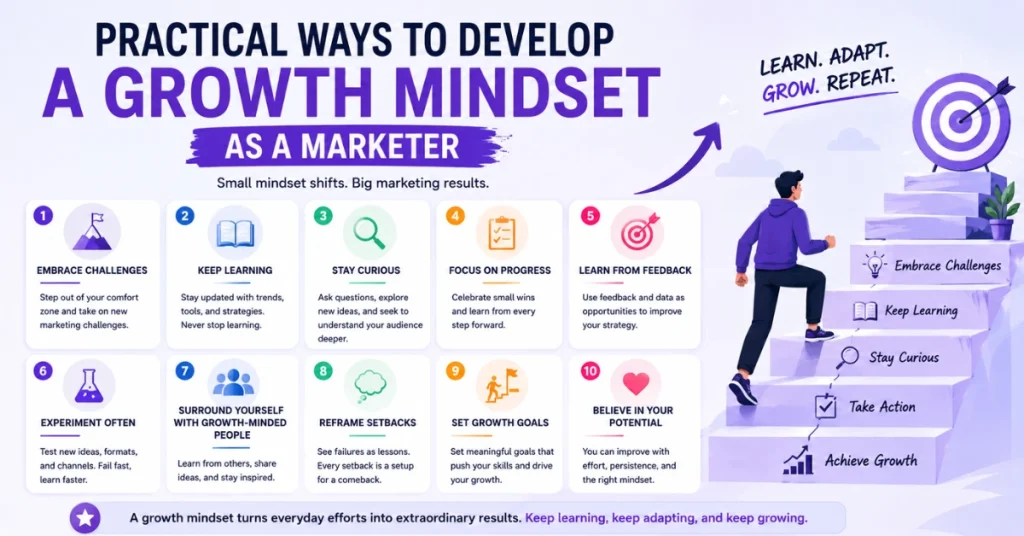
Embrace Continuous Learning
Marketing never stands still, and neither should your learning.
Stay updated by:
- Following industry leaders
- Listening to marketing podcasts
- Attending webinars
- Taking online courses
- Reading industry blogs
The more knowledge you gain, the more confident you’ll become in adapting to changes.
View Failures as Learning Opportunities
Not every campaign will generate outstanding results.
Instead of asking:
“Why did this fail?”
Ask:
“What can I learn from this?”
Analyze campaign data, identify weaknesses, and use those insights to improve future efforts.
Many successful marketers achieve results because they’ve learned from numerous failures along the way.
Set Learning Goals Alongside Performance Goals
Most marketers focus only on performance metrics such as leads, conversions, or revenue.
While these are important, adding learning goals can accelerate growth.
Examples include:
- Improving copywriting skills
- Understanding AI-powered marketing tools
- Mastering SEO fundamentals
- Learning Google Analytics 4
Learning goals help you grow even when campaign outcomes are uncertain.
Seek Feedback Regularly
Constructive feedback can reveal blind spots and opportunities for improvement.
Ask for feedback from:
- Managers
- Team members
- Clients
- Industry peers
Rather than viewing feedback as criticism, see it as valuable information that can help you improve.
Experiment More Often
Marketing success often comes from testing and optimization.
Try:
- New ad creatives
- Different audience segments
- Alternative landing page designs
- Various email subject lines
- Emerging social media platforms
Not every experiment will succeed, but each one provides valuable data.
Stop Comparing Yourself to Others
It’s easy to compare your progress to successful marketers on LinkedIn, X, or other platforms.
Remember that you’re usually seeing their highlights, not their struggles.
Instead of comparison, focus on:
- Your personal progress
- Skills you've developed
- Knowledge you've gained
- Goals you've achieved
Measure yourself against your past performance, not someone else’s success
Develop Curiosity
Curiosity drives growth.
Ask questions such as:
- Why did this campaign perform well?
- What motivates this audience?
- How can AI improve marketing workflows?
- What trends are emerging in the industry?
Curious marketers often discover new opportunities before their competitors.
Build Resilience
Marketing can be challenging. Campaigns may underperform despite careful planning.
Resilient marketers:
- Learn from setbacks
- Stay positive
- Adjust strategies quickly
- Continue moving forward
Resilience is a key component of a growth mindset.
9. Celebrate Progress, Not Perfection
Perfectionism can prevent growth.
Instead of waiting until everything is perfect:
- Launch campaigns
- Gather data
- Learn from results
- Improve over time
Small improvements accumulate into significant success.
Your environment influences your mindset. Connect with:
Your environment influences your mindset.
Connect with:
- Marketing communities
- Industry mentors
- Professional networks
- Growth-focused colleagues
Being around people who value learning can inspire your own development.
Common Growth Mindset Challenges for Marketers
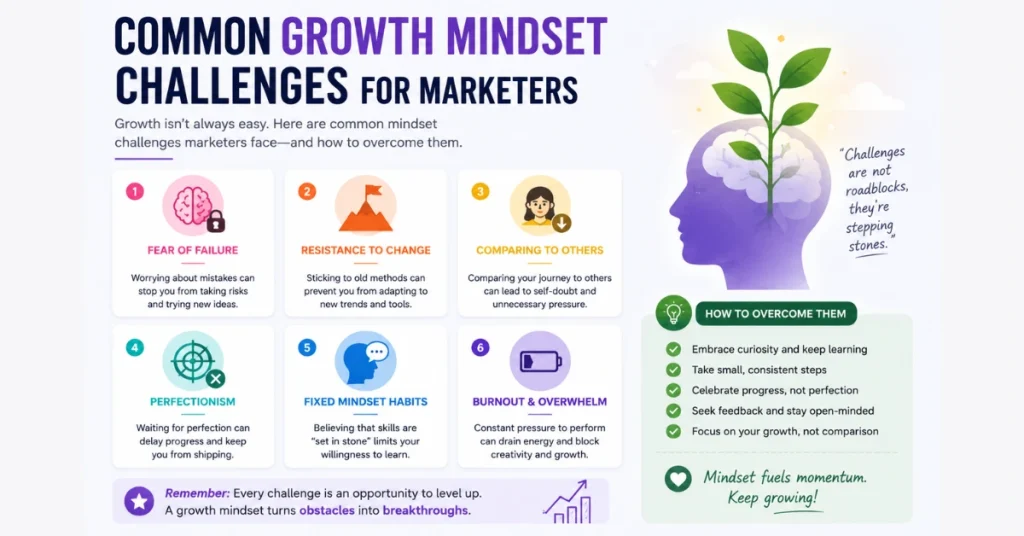
Fear of Failure
Many marketers hesitate to try new ideas because they fear poor results.
Remember that experimentation is essential for innovation.
Information Overload
The marketing industry generates an overwhelming amount of content.
Focus on learning what is most relevant to your goals instead of trying to learn everything.
Impatience
Growth takes time.
Developing new skills and achieving better results requires consistent effort and practice.
Benefits of a Growth Mindset in the Long Run
Marketers who cultivate a growth mindset often experience:
- Greater adaptability
- Better campaign performance
- Increased confidence
- More career opportunities
- Stronger leadership skills
- Higher levels of innovation
- Continuous professional development
Over time, these advantages create a significant competitive edge.
Conclusion
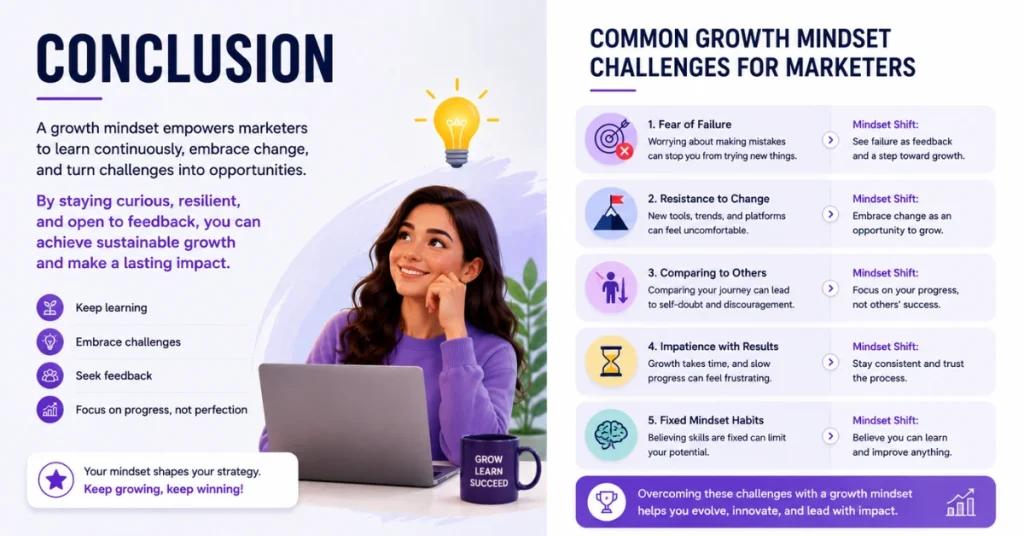
A growth mindset is one of the most valuable assets a marketer can develop. In an industry defined by constant change, the ability to learn, adapt, and improve is often more important than existing knowledge alone.
By embracing continuous learning, viewing failures as opportunities, seeking feedback, and staying curious, you can strengthen your marketing skills and position yourself for long-term success.
The most successful marketers aren’t necessarily the smartest or most experienced—they’re the ones who never stop learning.