Top Reasons Your Influencer Marketing Strategy Isn’t Working
Influencer marketing has become one of the most powerful digital marketing channels for brands looking to increase visibility, engagement, and sales. Businesses invest significant budgets into collaborations with creators on Instagram, YouTube, TikTok, and other social media platforms. Yet many campaigns fail to deliver the expected results.
If your influencer marketing strategy isn’t producing the engagement, leads, or conversions you hoped for, you’re not alone. The problem often isn’t influencer marketing itself—it’s how the strategy is planned and executed.
In this article, we’ll explore the top reasons your influencer marketing strategy isn’t working and what you can do to improve your campaign performance.
Table of Contents
ToggleTable of Contents
Why Influencer Marketing Matters
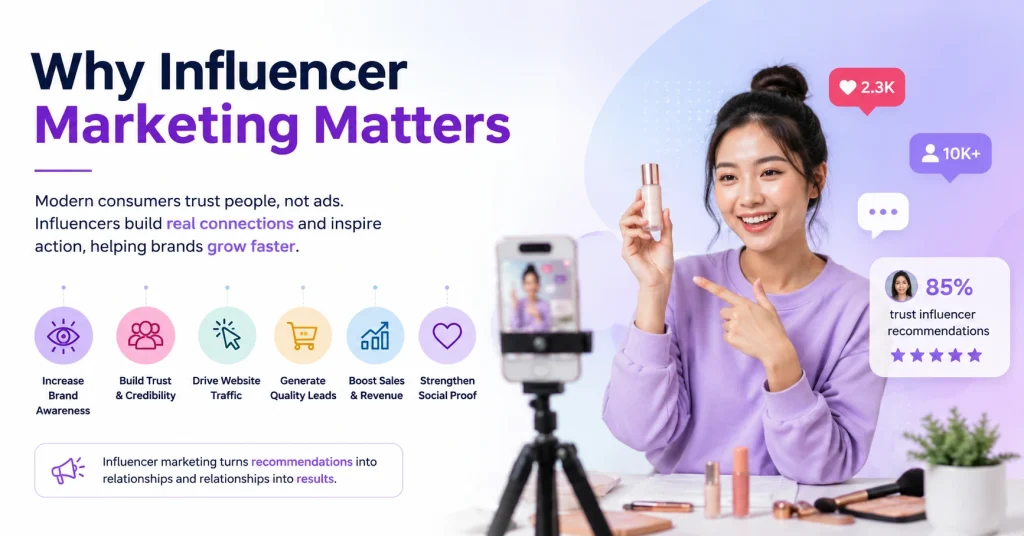
Modern consumers trust recommendations from people more than traditional advertisements. Influencers build communities around their expertise, personality, and content, making them valuable partners for brands.
When done correctly, influencer marketing can:
- Increase brand awareness
- Generate quality leads
- Improve customer trust
- Drive website traffic
- Boost product sales
- Strengthen social proof
However, success requires more than simply paying an influencer to promote your product.
Choosing the Wrong Influencers
One of the biggest mistakes brands make is selecting influencers based solely on follower count.
A creator with millions of followers may not be the right fit for your audience. If their followers aren’t interested in your product or service, your campaign will struggle regardless of reach.
How to Fix It
Focus on:
- Audience demographics
- Engagement rate
- Content relevance
- Industry expertise
- Audience trust
Micro-influencers often generate better engagement and conversions than larger influencers because their audiences are highly targeted and loyal.
Lack of Clear Campaign Goals
Many influencer campaigns fail because brands don’t define measurable objectives before launching.
Without clear goals, it’s impossible to evaluate performance or determine ROI.
Common Goals Include:
- Brand awareness
- Website traffic
- Lead generation
- Sales conversions
- Social media growth
- Product launches
How to Fix It
Set SMART goals:
- Specific
- Measurable
- Achievable
- Relevant
- Time-bound
For example, aim to generate 500 website visits or 100 product purchases within 30 days.
Ignoring Audience Alignment
Even if an influencer is popular, their audience may not match your target market.
For example, a fitness influencer promoting luxury watches may struggle if their audience primarily seeks workout tips and health content.
How to Fix It
Research:
- Age groups
- Geographic locations
- Interests
- Purchasing behavior
- Audience demographics
Successful influencer marketing depends on reaching the right people rather than the largest audience.
Prioritizing Reach Over Engagement
Brands often focus on follower counts instead of engagement metrics.
An influencer with 50,000 engaged followers can outperform someone with 500,000 inactive followers.
- Key Engagement Metrics
- Likes
- Comments
- Shares
- Saves
- Story interactions
- Video watch time
How to Fix It
Analyze engagement rates before partnering with influencers. Look for authentic conversations and consistent audience interaction.
Working with Fake or Inflated Influencers
Fake followers and engagement manipulation remain major challenges in influencer marketing.
Some creators artificially boost numbers through purchased followers, bots, or engagement pods.
- Warning Signs
- Sudden follower growth
- Low engagement rates
- Generic comments
- Large follower counts with minimal interaction
How to Fix It
Use influencer analytics tools and manually review audience engagement before signing agreements.
Giving Influencers Too Many Restrictions
Influencers understand their audience better than brands do.
When companies provide overly scripted content, promotions can feel forced and inauthentic.
Audiences quickly recognize content that doesn’t match an influencer’s usual style.
How to Fix It
Provide:
- Campaign objectives
- Key messages
- Brand guidelines
Then allow influencers creative freedom to communicate naturally with their followers.
Focusing Only on One-Time Campaigns
Many brands expect immediate results from a single sponsored post.
However, trust develops through repeated exposure.
One-off collaborations often fail to create meaningful impact.
How to Fix It
Build long-term influencer partnerships.
Ongoing collaborations help:
- Increase credibility
- Strengthen brand recognition
- Improve audience trust
- Deliver better conversion rates
Poor Product-Market Fit
Even the best influencer cannot sell a product that doesn’t solve a customer problem.
If your offering lacks value or relevance, influencer promotions won’t generate sustainable results.
How to Fix It
Evaluate:
- Competitive positioning
- Customer demand
- Pricing strategy
- Product quality
Pricing strategy
Not Tracking Campaign Performance
Many brands launch campaigns without monitoring results.
Without data, it’s impossible to identify what worked and what didn’t.
Important Metrics to Track
- Reach
- Impressions
- Engagement
- Click-through rate (CTR)
- Website traffic
- Conversion rate
- Return on investment (ROI)
How to Fix It
Use:
- UTM tracking links
- Promo codes
- Affiliate links
- Analytics platforms
Tracking allows you to optimize future campaigns.
Choosing Influencers Based on Cost Alone
While budget matters, selecting the cheapest influencer often leads to poor results.
Low-cost partnerships may not provide access to a qualified or engaged audience.
How to Fix It
Evaluate influencers based on:
- Audience quality
- Content quality
- Brand alignment
- Historical campaign performance
View influencer partnerships as investments rather than expenses.
Weak Campaign Briefs
Unclear instructions can create confusion and inconsistent messaging.
Influencers need enough information to represent your brand accurately.
How to Fix It
Create detailed briefs that include:
- Campaign objectives
- Target audience
- Deadlines
- Deliverables
- Key messages
- Compliance requirements
A strong brief increases campaign effectiveness while maintaining brand consistency.
Ignoring Platform Differences
Each social media platform serves different audiences and content formats.
What works on TikTok may not perform well on Instagram or YouTube
How to Fix It
Customize campaigns for each platform:
- Instagram for visual storytelling
- TikTok for short-form viral content
- YouTube for detailed reviews
- LinkedIn for B2B marketing
Platform-specific strategies produce stronger results.
Lack of Authenticity
Today’s consumers value authenticity more than polished advertising.
If influencer promotions feel overly promotional, audiences may ignore them.
How to Fix It
Encourage influencers to:
- Provide honest opinions
- Tell personal stories
- Demonstrate product usage
- Share genuine experiences
Authentic content builds trust and drives engagement.
Unrealistic Expectations
Some brands expect influencer marketing to generate immediate viral success.
In reality, effective campaigns require testing, optimization, and consistency.
How to Fix It
Understand that influencer marketing is a long-term strategy.
Focus on:
- Relationship building
- Brand awareness
- Audience trust
- Continuous improvement
Results often compound over time.
Best Practices for Influencer Marketing Success
To maximize campaign performance:
- Partner with relevant influencers
- Define clear goals
- Prioritize engagement over reach
- Track campaign metrics
- Build long-term relationships
- Allow creative freedom
- Focus on authenticity
- Test and optimize continuously
Brands that follow these principles typically achieve stronger ROI and sustainable growth.
Conclusion

Influencer marketing remains one of the most effective digital marketing strategies available today. However, success requires careful planning, audience alignment, performance tracking, and authentic partnerships.
If your influencer marketing strategy isn’t working, the issue may stem from choosing the wrong influencers, unclear goals, poor audience targeting, weak tracking, or unrealistic expectations.
By identifying these common mistakes and implementing the recommended solutions, your brand can create influencer campaigns that generate meaningful engagement, build trust, and drive measurable business results.
The key is to focus on quality partnerships, authentic content, and data-driven decision-making rather than simply chasing follower counts or short-term results.