The Ultimate Guide to Fixing Underperforming Influencer Marketing Campaigns
Influencer marketing has become one of the most effective digital marketing strategies for brands looking to increase awareness, engagement, and sales. However, not every campaign delivers the expected results. Many businesses invest significant budgets into influencer partnerships only to see low engagement, minimal conversions, or poor return on investment (ROI).
If your influencer marketing campaigns are underperforming, don’t worry. The good news is that most issues can be identified and fixed. This guide will help you understand why your campaigns aren’t working and provide actionable strategies to improve their performance.
Table of Contents
ToggleTable of Contents
Why Influencer Marketing Campaigns Fail
Before fixing a campaign, it’s important to identify the root cause. Common reasons include:
- Inadequate communication with influencers
- Unrealistic expectations
- Weak campaign tracking and analytics
- Inauthentic promotional content
- Choosing the wrong influencers
- Poor audience targeting
- Lack of clear campaign goals
Understanding these issues is the first step toward creating successful influencer partnerships.
Define Clear Campaign Goals
One of the biggest mistakes brands make is launching influencer campaigns without clear objectives.
Ask yourself
- Do you want to increase brand awareness?
- Generate website traffic?
- Boost sales?
- Grow social media followers?
- Promote a new product launch?
Your goals determine everything from influencer selection to content strategy and performance measurement.
SMART Goal Example
Instead of saying:
“Increase sales through influencer marketing.”
Use:
“Generate 500 website visits and 50 product purchases within 30 days through influencer partnerships.”
Clear goals make campaign success measurable.
choose the Right Influencers
results.
Instead, evaluate influencers based on:
Audience Relevance
The influencer’s audience should match your target market.
For example:
- Beauty brands should partner with beauty creators.
- Fitness brands should work with health and fitness influencers.
- SaaS companies should collaborate with industry experts.
Engagement Rate
An influencer with 20,000 highly engaged followers can outperform someone with 500,000 inactive followers.
Look for:
- Genuine comments
- Consistent likes
- Audience interaction
- Content shares
- Authenticity
Followers trust influencers who maintain authenticity. Avoid influencers who promote unrelated products every day.
Focus on Audience Quality
Sometimes campaigns fail because the influencer’s audience isn’t genuine.
Watch for signs such as:
- Sudden follower growth spikes
- Extremely low engagement rates
- Generic comments
- Large numbers of inactive followers
Use influencer analysis tools to verify audience quality before investing in partnerships.
Create Authentic Content
Today’s consumers can easily spot forced advertising.
Instead of providing rigid scripts, give influencers creative freedom to present your brand naturally.
conversions
What Works Better
Instead of:
“Buy this product today. It is the best on the market.”
Try:
“I’ve been using this product for two weeks and here’s what I genuinely like about it.”
Authentic recommendations build trust and increase conversions.
Improve Your Campaign Brief
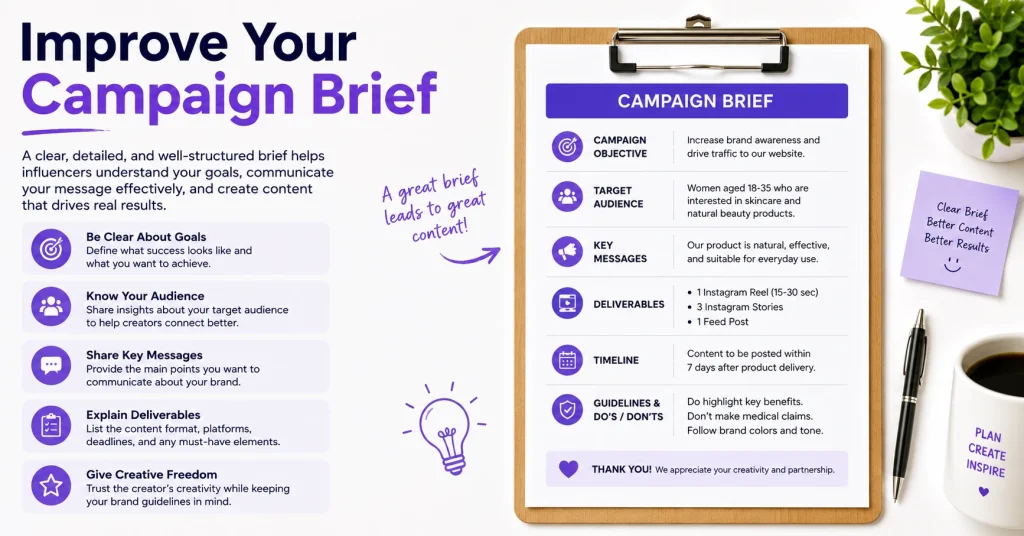
A vague campaign brief often leads to inconsistent messaging.
An effective influencer brief should include:
- Performance expectations
- Content deadlines
- Deliverables
- Target audience
- Key messages
- Brand guidelines
- Campaign objectives
At the same time, avoid micromanaging the creator’s style
Prioritize Micro-Influencers
Many brands overlook micro-influencers because of their smaller audiences.
However, influencers with 10,000–100,000 followers often provide:
- Lower campaign costs
- Better conversion rates
- Stronger audience trust
- Higher engagement rates
Working with several micro-influencers can sometimes outperform one large influencer.
Optimize Your Landing Pages
Even a successful influencer campaign can fail if the landing page experience is poor.
Check your landing pages for:
- Simple checkout process
- Easy navigation
- Clear calls to action
- Mobile responsiveness
- Fast loading speed
If visitors click but don’t convert, your website may be the problem rather than the influencer.
Track the Right Metrics
Many marketers focus only on likes and comments.
While engagement matters, deeper metrics reveal campaign effectiveness.
Important Metrics
Reach
The number of people who saw the content.
Engagement Rate
Measures audience interaction
Click-Through Rate (CTR)
Shows how many users visited your website.<br<conversion rate
Measures sales, signups, or other desired actions.
Return on Investment (ROI)
Determines campaign profitability.</br
10. Build Long-Term Partnerships
One-off collaborations often deliver limited results.
Long-term partnerships create:
- Greater audience trust
- Better brand recognition
- Consistent messaging
- Improved conversion rates
When followers repeatedly see an influencer using your products, they are more likely to trust the recommendation.
Test Different Content Formats
Not every audience responds to the same type of content.
Experiment with:
- Instagram Reels
- TikTok videos
- YouTube reviews
- Product tutorials
- Live streams
- Story content
- User-generated content
Analyze performance and invest more heavily in formats that generate the best results.
Strengthen Communication with Influencers
Successful campaigns rely on strong relationships.
Maintain regular communication by:
- Setting expectations early
- Providing quick feedback
- Sharing campaign updates
- Answering questions promptly
Influencers who feel valued are more likely to create high-quality content.
Continuously Optimize Campaigns
Influencer marketing is not a “set it and forget it” strategy.
Regularly review campaign data and adjust:
- Influencer selection
- Content formats
- Messaging
- Calls to action
- Posting schedules
Continuous optimization helps maximize campaign performance over time.
Common Mistakes to Avoid
Avoid these frequent influencer marketing errors:
- Ignoring audience demographics
- Setting unrealistic expectations
- Using overly promotional messaging
- Failing to track conversions
- Neglecting landing page optimization
- Ending partnerships too quickly
Eliminating these mistakes can significantly improve campaign outcomes.
Conclusion
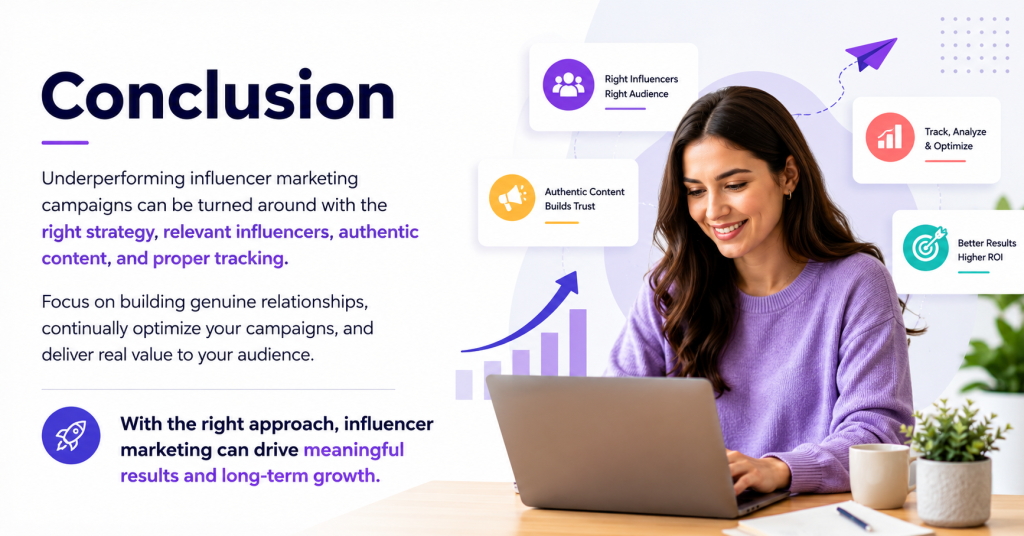
Underperforming influencer marketing campaigns are often the result of poor targeting, weak strategy, or inadequate tracking—not influencer marketing itself. By defining clear goals, selecting relevant influencers, creating authentic content, tracking meaningful metrics, and building long-term partnerships, brands can dramatically improve their campaign performance.
The most successful influencer marketing campaigns focus on trust, authenticity, and measurable results. Treat influencer marketing as a strategic investment, continuously analyze performance, and refine your approach. With the right adjustments, your campaigns can generate stronger engagement, higher conversions, and a better return on investment.