Want to Be a Great Social Media Manager? Master These 10 Skills
Social media management is more than posting content and replying to comments. Today’s social media managers are responsible for building brand awareness, engaging audiences, driving traffic, generating leads, and even influencing sales. As platforms evolve and competition increases, mastering the right skills is essential for success.
Whether you’re just starting your career or looking to improve your expertise, these 10 skills can help you become an outstanding social media manager.
Table of Contents
ToggleTable of Contents
Content Creation
At the heart of social media marketing is great content. A successful social media manager knows how to create engaging posts that attract attention and encourage interaction.
This includes:
- Writing compelling captions
- Creating eye-catching visuals
- Producing short-form videos
- Developing content tailored to different platforms
The ability to create content that resonates with your target audience is one of the most valuable skills in social media management.
Copywriting
Strong copywriting helps transform ordinary posts into high-performing content. Every caption, ad, and call-to-action should be clear, persuasive, and aligned with your brand voice.
Good copywriting skills help you:
- Increase engagement
- Increase engagement
- Improve conversions
- Build stronger brand messaging
Learning the basics of persuasive writing can significantly improve your social media results.
Analytics and Data Interpretation
Great social media managers don’t rely on guesswork. They use data to understand what works and what doesn’t.
Important metrics to track include:
- Reach
- Engagement rate
- Click-through rate
- Conversion rate
- Follower growth
Analyzing performance data allows you to optimize future campaigns and make informed marketing decisions
Strategic Thinking
Posting randomly rarely leads to long-term success. Effective social media managers create strategies that align with business goals.
This involves:
- Setting measurable objectives
- Planning content calendars
- Identifying target audiences
- Choosing the right platforms
- Monitoring competitors
Strategic thinking ensures every social media activity contributes to broader marketing objectives.
Community Management
Building relationships with followers is a critical part of social media success.
Community management includes:
- Managing online reputation
- Encouraging conversations
- Addressing customer concerns
- Responding to comments and messages
A responsive and engaged brand often earns higher customer trust and loyalty.
Graphic Design Basics
While you don’t need to be a professional designer, understanding basic design principles can greatly improve content quality.
Key design skills include:
- Visual hierarchy
- Color selection
- Branding consistency
- Typography
Tools like Canva and Adobe Express make it easier than ever to create professional-looking graphics.
Video Marketing
Short-form video dominates modern social media platforms. From Instagram Reels to TikTok and YouTube Shorts, video content continues to generate strong engagement.
Social media managers should understand:
- Platform-specific video trends
- Storytelling techniques
- Basic editing
- Video scripting
Brands that invest in video often experience better visibility and audience engagement.
Adaptability and Trend Awareness
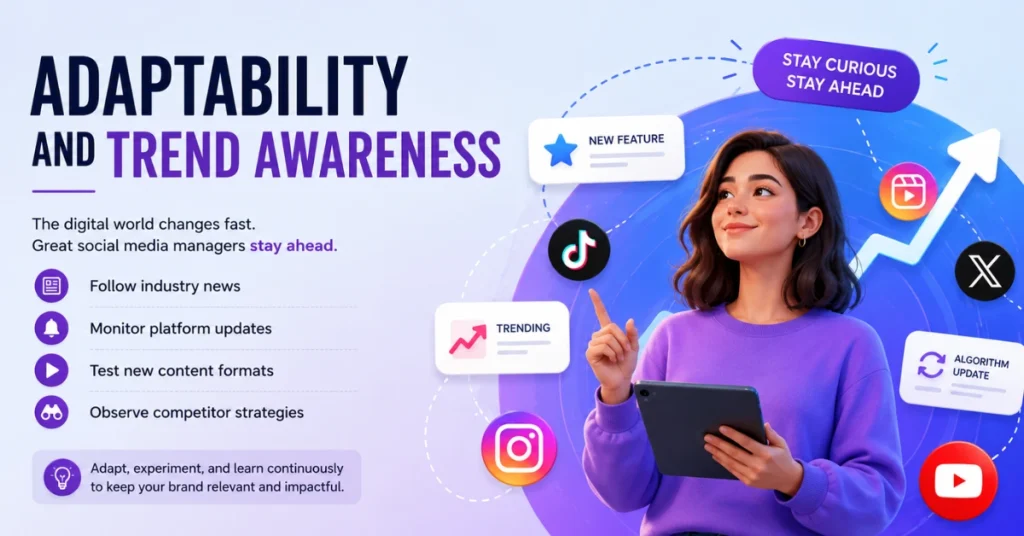
Social media changes rapidly. New features, algorithm updates, and trends emerge constantly.
Successful managers stay updated by:
- Observing competitor strategies
- Testing new content formats
- Monitoring platform updates
- Following industry news
Paid Advertising Knowledge
Organic reach alone may not be enough to achieve marketing goals. Understanding paid social advertising can significantly expand campaign performance.
Important advertising skills include:
- Audience targeting
- Budget management
- Ad copy creation
- A/B testing
- Campaign optimization
Knowledge of platforms like Facebook, Instagram, LinkedIn, and TikTok Ads can make you a more valuable marketer
Time Management and Organization
Managing multiple accounts, campaigns, and deadlines requires excellent organizational skills.
Effective time management involves:
- Campaign tracking
- Task prioritization
- Workflow planning
- Content scheduling
Using project management and scheduling tools can help streamline daily responsibilities and improve productivity.
How to Develop These Skills
Improving your social media management abilities takes continuous learning and practice. Consider these approaches:
- Take online marketing courses
- Follow industry experts
- Analyze successful brands
- Experiment with different content formats
- Practice using analytics tools
- Stay informed about platform updates
The more hands-on experience you gain, the stronger your skill set will become.
Conclusion
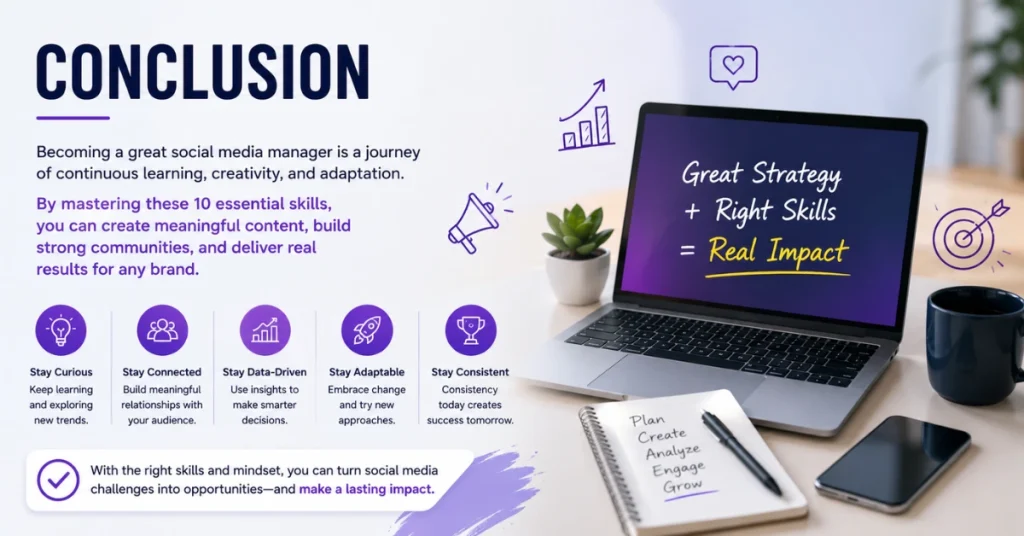
The role of a social media manager continues to evolve as platforms and consumer behaviors change. To stand out in this competitive field, you need more than creativity—you need a combination of strategic thinking, analytical skills, communication abilities, and technical expertise.
By mastering these 10 essential skills, you’ll be better equipped to create impactful campaigns, grow online communities, and deliver measurable business results. Whether you’re managing social media for a brand, agency, or your own business, investing in these skills can help you build a successful and rewarding career in digital marketing.