What is Digital Marketing & Its Future With AI?
In today’s hyper-connected world, almost every business — from a small home bakery to a multinational corporation — depends on some form of digital presence to survive and thrive. The internet has completely transformed how brands communicate with their audiences, how products are discovered, and how purchasing decisions are made. At the heart of this transformation lies digital marketing: a broad, dynamic, and endlessly evolving discipline that has become the backbone of modern commerce.
But as powerful as digital marketing already is, a new revolution is quietly — and not so quietly — reshaping everything we know about it. Artificial Intelligence (AI) is no longer a futuristic concept confined to science fiction. It is here, it is active, and it is fundamentally changing how marketers think, plan, and execute campaigns. Understanding digital marketing and the role AI plays in its future is no longer optional for business owners, marketers, or entrepreneurs — it is essential.
This article explores what digital marketing truly means, breaks down its core components, and then takes a deep dive into howAI is transforming this space — and what the future might look like.
Table of Contents
ToggleWhat Is Digital Marketing?
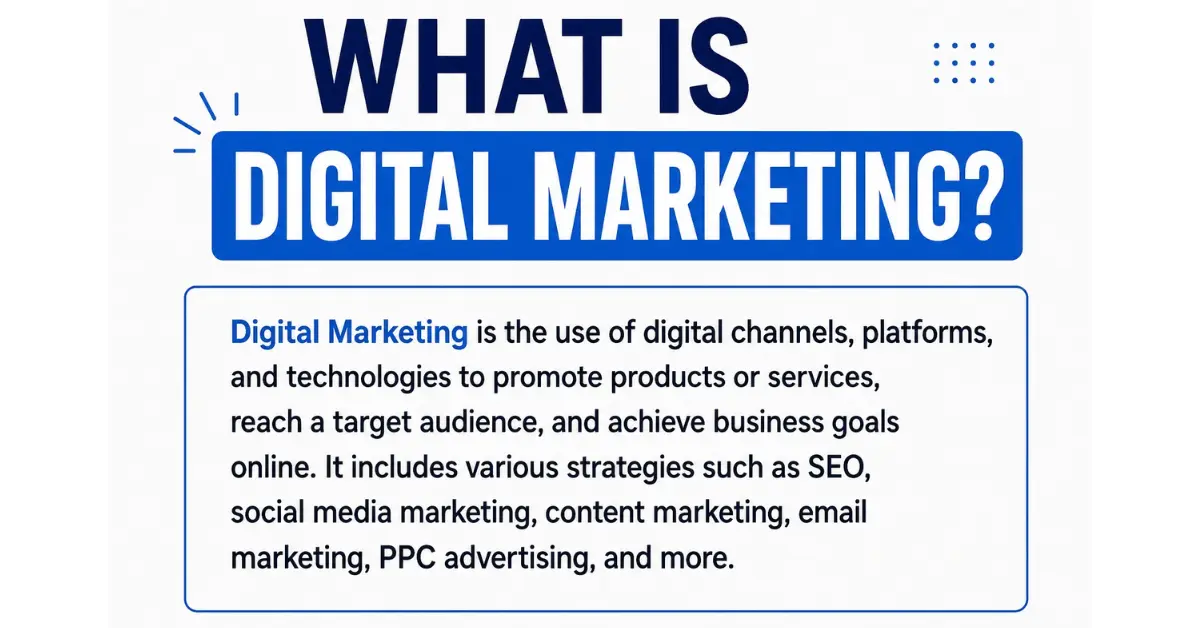
Digital marketing refers to all marketing efforts that use the internet or an electronic device to connect with potential customers. Unlike traditional marketing — which relies on print ads, billboards, TV commercials, and cold calling — digital marketing leverages digital channels such as search engines, social media platforms, email, websites, and mobile apps to reach audiences where they already spend most of their time: online.
At its core, digital marketing is about delivering the right message to the right person at the right time through the right channel. It is measurable, targeted, and adaptable in a way that traditional marketing never was.
Key Components of Digital Marketing
Digital marketing is not a single activity. It is an ecosystem of interconnected strategies and tools. Here are its most important pillars:
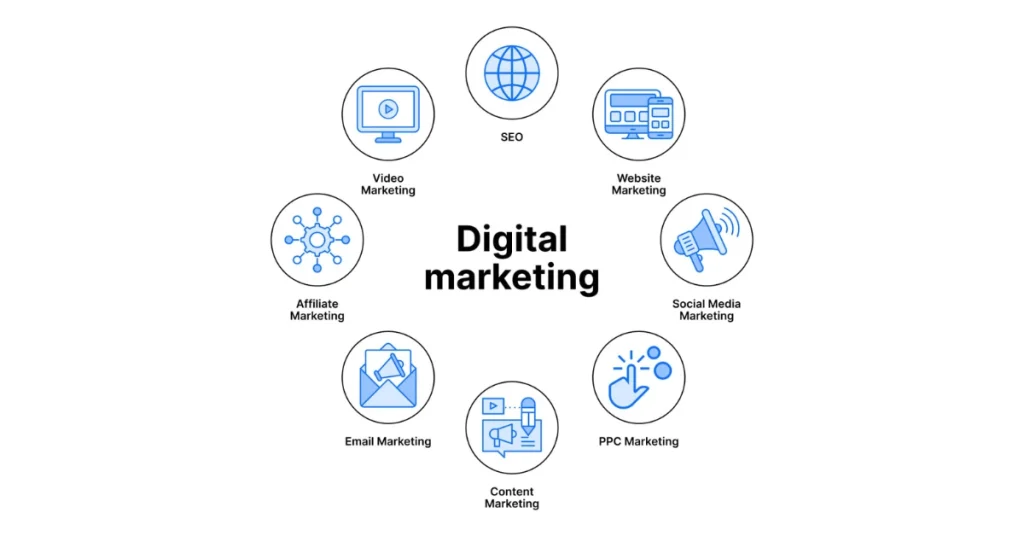
1. Search Engine Optimization (SEO)
SEO is the process of optimizing a website or piece of content so that it ranks higher in search engine results pages (SERPs) like Google or Bing. When someone searches for "best running shoes" or "digital marketing agency near me," businesses that have invested in SEO are more likely to appear at the top — and therefore attract more organic (free) traffic. SEO involves keyword research, technical website optimization, on-page content improvements, and building backlinks from credible websites.
2. Social Media Marketing
Social Media Marketing involves using platforms such as Instagram, Facebook, LinkedIn, and X to promote a brand, engage with audiences, and drive traffic to a website. Businesses use social media to share content, build communities, interact with customers, and run targeted advertising campaigns. A strong social media presence helps increase brand visibility, customer loyalty, and overall marketing effectiveness.
3. Pay-Per-Click (PPC)
PPC Advertising is a digital marketing model where advertisers pay a fee each time someone clicks on their ad. Popular PPC platforms include Google Ads and Microsoft Advertising. PPC allows businesses to appear at the top of search engine results and reach highly targeted audiences quickly. It is an effective way to generate immediate traffic, leads, and sales while maintaining control over advertising budgets.
4. Email Marketing
Email Marketing is a direct communication strategy that involves sending targeted emails to prospects and customers. These emails may include newsletters, promotional offers, product updates, event invitations, or automated follow-up messages. Email marketing helps businesses nurture leads, strengthen customer relationships, and encourage repeat purchases. When personalized and well-timed, it remains one of the highest-return digital marketing channels.
5. Content Marketing
Content Marketing is the practice of creating and distributing valuable, relevant, and consistent content to attract and engage a target audience. This content can include blog posts, videos, infographics, eBooks, case studies, and social media posts. Rather than directly promoting a product or service, content marketing focuses on providing useful information that helps solve audience problems and builds trust. Effective content marketing improves brand awareness, supports SEO efforts, and guides potential customers through the buying journey.
6. Influencer Marketing
Influencer Marketing involves collaborating with content creators and industry experts who have a dedicated online following. Influencers promote products or services through social media posts, videos, reviews, and recommendations. Because audiences often trust influencers' opinions, this marketing approach can increase brand awareness, credibility, and customer engagement.
7. Affiliate Marketing
Affiliate Marketing is a performance-based marketing strategy where businesses partner with affiliates who promote their products or services. Affiliates earn a commission for each sale, lead, or action generated through their referral links. This approach allows businesses to expand their reach and acquire customers without paying upfront advertising costs, making it a cost-effective growth channel.
8. Analytics and Reporting
Analytics and Reporting involve tracking, measuring, and analyzing digital marketing performance using tools such as Google Analytics. Businesses monitor key metrics such as website traffic, user behavior, conversion rates, and campaign performance. Data-driven insights help marketers understand what is working, identify opportunities for improvement, and make informed decisions to maximize return on investment (ROI).
9. Conversion Rate Optimization (CRO)
Conversion Rate Optimization (CRO) is the process of improving a website, landing page, or marketing campaign to increase the percentage of visitors who take a desired action. These actions may include making a purchase, filling out a form, subscribing to a newsletter, or downloading a resource. CRO focuses on enhancing user experience, testing different page elements, and removing barriers that prevent conversions.
10. Mobile Marketing
Mobile Marketing focuses on reaching users through smartphones and tablets. This includes mobile-friendly websites, SMS marketing, mobile apps, push notifications, and location-based advertising. As mobile device usage continues to grow, businesses must optimize their marketing efforts to provide seamless experiences for users on smaller screens and improve engagement across mobile channels.
What is the Scope of AI in Digital Marketing? Complete guide
Artificial Intelligence (AI) is transforming digital marketing by helping businesses automate tasks, analyze large amounts of data, and deliver personalized customer experiences. As AI technology continues to evolve, its role in digital marketing is expanding rapidly, making marketing campaigns more efficient, accurate, and result-oriented.
AI can analyze customer behavior, preferences, and online interactions to create highly targeted marketing campaigns. It helps marketers understand their audience better, predict future trends, and make data-driven decisions. AI-powered tools can automate repetitive tasks such as email marketing, social media scheduling, ad optimization, and customer support, saving both time and resources.
One of the most significant applications of AI in digital marketing is personalization. AI enables businesses to recommend products, create personalized content, and deliver customized advertisements based on user interests and browsing history. This improves customer engagement and increases conversion rates.
AI is also widely used in Search Engine Optimization (SEO), content creation, chatbots, voice search optimization, predictive analytics, and performance marketing. AI-powered chatbots provide instant customer support, while predictive analytics helps businesses forecast customer behavior and market trends.
Key Areas Where AI is Used in Digital Marketing:
- AI-powered SEO and keyword research
- Content creation and optimization
- Personalized email marketing
- Social media management and automation
- Chatbots and customer support
- Predictive analytics and customer insights
- Paid advertising optimization
- Lead generation and nurturing
- Voice search optimization
- Marketing automation
How AI helps marketers?
- 1. Audience analysis: AI examines customer behavior, preferences, and online interactions to build detailed audience profiles and craft highly targeted campaigns.
- 2. Predictive decisions: Machine learning models forecast trends and customer actions, helping marketers make data-driven choices.
- 3. Task automation: Routine tasks such as email sends, social scheduling, ad bidding, and basic customer service can be automated, freeing teams to focus on strategy.
- 4. Personalization: AI delivers product recommendations, tailored content, and customized ads based on browsing history and user interests, boosting engagement and conversion rates.
What AI tools are used in Digital Marketing?
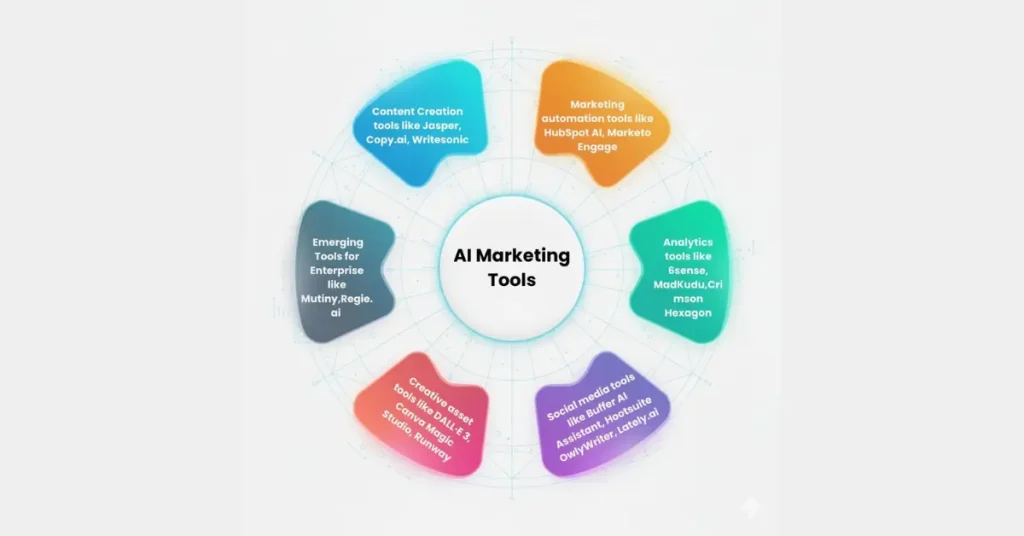
AI tools are now essential across all digital marketing categories, from SEO and content creation to social media, email automation, and analytics. Here are the most widely used AI tools organized by function:
1. SEO & Keyword Research
- SEMrush – AI-powered keyword research, competitor analysis, and backlink tracking.
- Ahrefs– Helps find keyword opportunities, analyze competitors, and improve SEO performance.
- Surfer SEO– Optimizes content by analyzing top-ranking pages and providing SEO recommendations.
- Clearscope – Uses AI to improve content quality and keyword optimization.
2. Content Creation & Copywriting
- ChatGPT – Generates blog posts, social media captions, meta descriptions, and content ideas.
- Jasper AI – Creates marketing copy, blog articles, and advertising content.
- Copy.ai – Produces product descriptions, email campaigns, and social media content.
- Writesonic – Generates articles, landing page content, and ad copy quickly.
3. Social Media Marketing
- Hootsuite – AI-assisted scheduling, content suggestions, and performance tracking..
- Buffer– Helps schedule posts and analyze engagement metrics.
- Lately.ai – Converts long-form content into multiple social media posts.
- Metricool – Provides AI-powered social media planning and analytics.
4. Email Marketing & Automation
- Mailchimp – Uses AI for email personalization and predictive analytics.
- Omnisend– Automates email campaigns based on customer behavior
- ActiveCampaign – Creates intelligent customer journeys and automated workflows.
- Brevo (Sendinblue) – Offers smart email automation and campaign optimization.
5. Analytics & Insights
- Google Analytics 4– Provides AI-driven insights into user behavior and website performances.
- HubSpot – Uses AI for lead scoring, customer management, and marketing automation.
- Looker Studio – Creates automated reports and visual dashboards.
- Mixpanel – Analyzes customer engagement and retention using AI.
6. Chatbots & Customer Support
- Intercom – AI-powered chatbot for customer support and lead generation.
- Drift – Conversational AI that engages visitors and qualifies leads.
- Tidio – Combines AI chatbots with live chat functionality.
- Freshchat– Automates customer interactions and support processes..
7. Conversion Rate Optimization (CRO)
- Optimizely – Uses AI for A/B testing and website personalization.
- Hotjar– Provides heatmaps and user behavior insights.
- VWO – Helps optimize websites through AI-driven testing.
- Crazy Egg– Tracks visitor behavior to improve website performance.
8. Emerging AI Tools in 2026
- Murf AI – Creates realistic AI voiceovers.
- Brandmark– Generates logos and branding assets using AI..
- Durable – Builds websites automatically with AI.
- Runway– AI-powered video editing and content creation platform.
Future Scope of AI in Digital Marketing
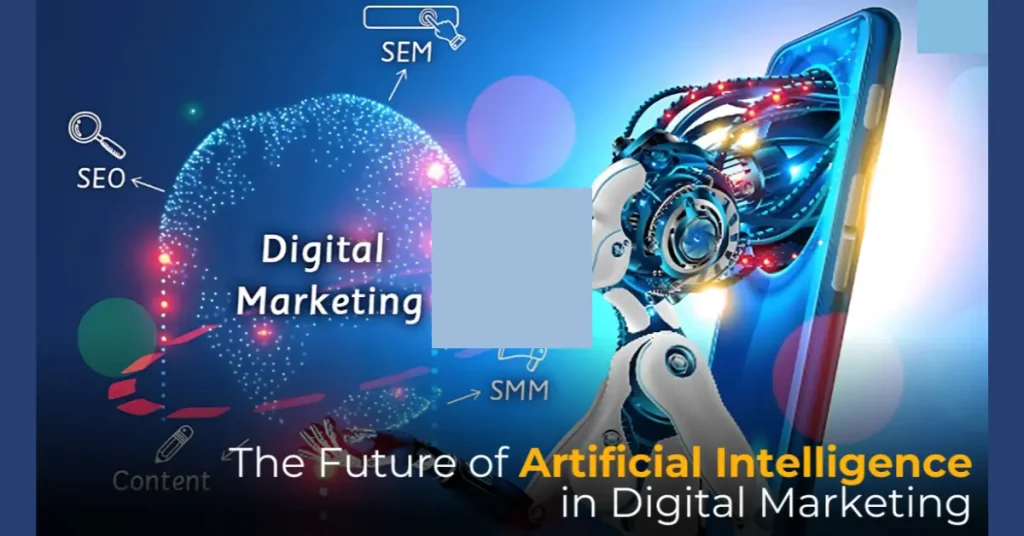
The future of AI in digital marketing is highly promising. Businesses are increasingly adopting AI-driven tools to improve customer experiences, automate workflows, and maximize marketing ROI. As AI technologies become more advanced, marketers who understand and utilize AI will have a significant competitive advantage in the digital marketplace.
In conclusion, AI is not replacing digital marketers; it is enhancing their capabilities by making marketing smarter, faster, and more effective.