Why Anti-Marketing is Transforming Modern Marketing Strategies?
Table of Contents
ToggleIntroduction
Marketing has always evolved alongside technology and consumer behavior. From newspaper advertisements and television commercials to digital campaigns and social media marketing, brands have continuously adapted to new ways of reaching customers. However, a new phenomenon is now reshaping the marketing landscape: Anti-Marketing.
At first glance, the term “Anti-Marketing” may sound like the opposite of marketing itself. In reality, it represents a significant shift in how consumers interact with brands and how businesses must approach their marketing strategies. Today’s consumers are more informed, connected, and empowered than ever before. With access to artificial intelligence (AI), social media platforms, online reviews, and user-generated content, customers have become active participants in shaping brand reputations.
Traditional marketing often focused on controlling brand narratives through advertisements and promotional messages. However, Anti-Marketing challenges this model by placing greater emphasis on transparency, authenticity, customer experience, and trust. As consumers gain more influence over public conversations, businesses must rethink their approach to marketing if they want to remain relevant and competitive.
This article explores why Anti-Marketing is transforming modern marketing strategies and what brands can do to succeed in this new environment.
Understanding Anti-Marketing
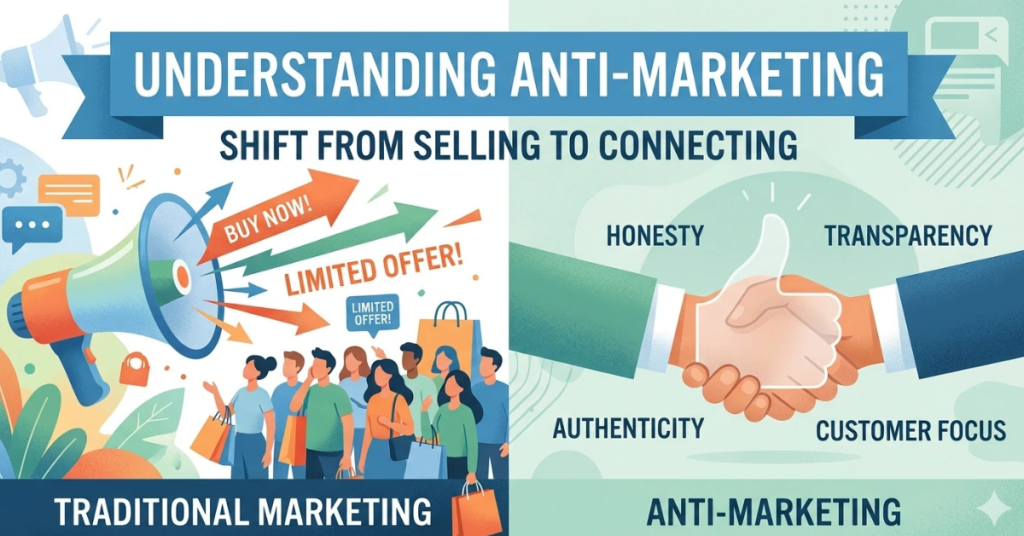
Anti-Marketing does not mean avoiding marketing altogether. Instead, it refers to consumer-driven responses that challenge, question, criticize, or even parody traditional marketing efforts. It emerges when customers feel that brand promises do not align with actual experience.
The rise of social media has amplified consumer voices. A single customer review, video, tweet, or post can reach millions of people within hours. Consumers are no longer passive recipients of marketing messages. They actively evaluate, discuss, and influence how brands are perceived.
Anti-Marketing can take many forms.
- Customer reviews exposing poor experiences
- Social media posts criticizing misleading advertisements
- Online campaigns promoting transparency
- AI-generated content that challenges brand narratives
The Evolution of Consumer Power
Historically, companies controlled most of the communication channels available to consumers. Television, radio, newspapers, and magazines allowed businesses to deliver carefully crafted messages to large audiences.
The internet changed everything.
Consumers now have access to countless information sources before making purchasing decisions. They can compare products, read reviews, watch demonstrations, and seek recommendations from real users.
Modern consumers often trust peer recommendations more than traditional advertisements. Studies consistently show that customer reviews and user-generated content influence purchasing decisions significantly.
The Role of Artificial Intelligence

Artificial Intelligence (AI) is rapidly transforming industries across the globe, revolutionizing the way businesses operate and individuals interact with technology. As organizations continue to adopt intelligent technologies, understanding the role of Artificial Intelligence is essential for staying competitive and embracing the future of work, communication, and decision-making.
The Rise of Authenticity in Marketing
One of the biggest reasons Anti-Marketing is gaining popularity is the growing demand for authenticity.
Consumers want brands that:
- Speak honestly
- Share real experiences
- Admit mistakes
- Demonstrate transparency
- Support meaningful values
When customers feel that a brand is genuine, they are more likely to trust its recommendations and remain loyal over time.
Building Trust Through Transparency

Trust has become one of the most valuable assets a brand can possess.
Anti-Marketing helps businesses build trust by encouraging transparency in areas such as:
Pricing
Instead of hiding fees or creating confusing pricing structures, transparent brands clearly explain costs.
Product Limitations
Rather than claiming perfection, Anti-Marketing acknowledges product weaknesses and explains who the product may not be suitable for.
Community-Driven Marketing
Modern brands are increasingly focused on building communities rather than simply acquiring customers.
Anti-Marketing encourages brands to create spaces where people can:
Share experiences
Ask questions
Connect with others
Participate in discussions
Strong communities generate:
Higher engagement
Better customer retention
Increased referrals
Greater brand loyalty
Social Media and the Anti-Marketing Movement
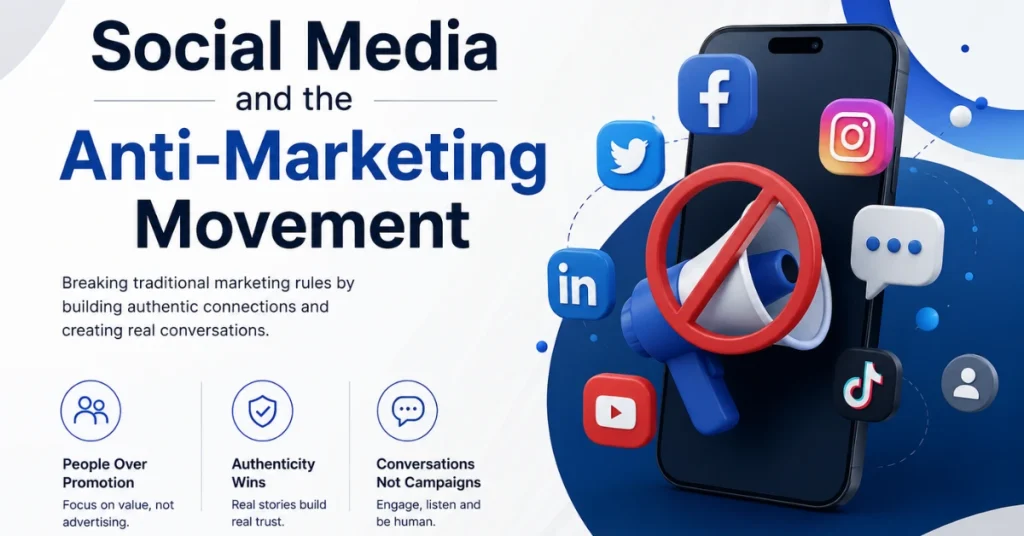
Social media has played a major role in the growth of Anti-Marketing.
Platforms such as Instagram, TikTok, LinkedIn, and YouTube have changed how people interact with brands.
Consumers prefer:
- Authentic content
- Behind-the-scenes videos
- Real conversations
- Honest review
Many brands are now adopting casual communication styles that reflect real human interaction.
Why Younger Generations Prefer Anti-Marketing
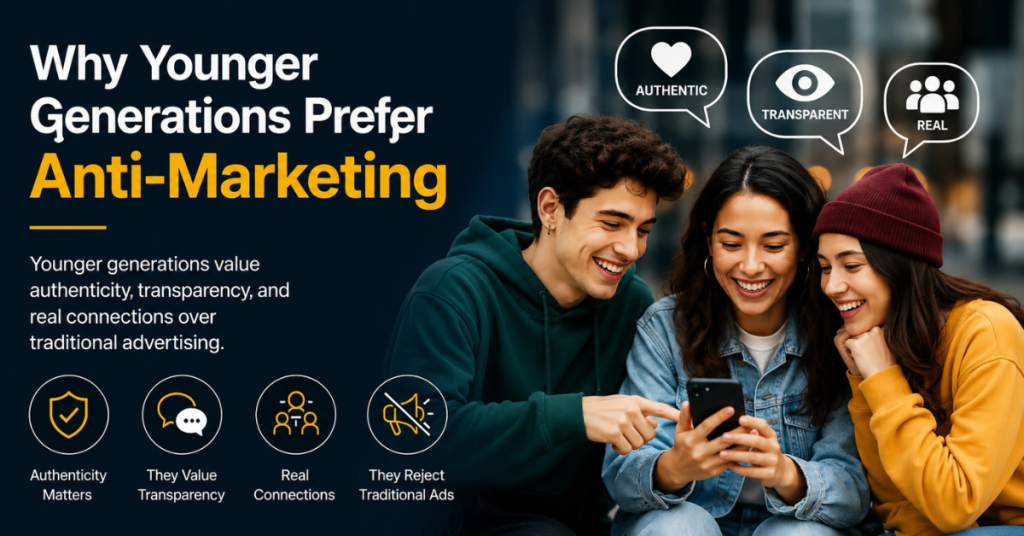
Millennials and Generation Z have significantly influenced modern marketing trends.
These generations value:
Authenticity
Transparency
Social responsibility
Ethical business practices
They are highly skilled at recognizing traditional sales tactics and often reject brands that appear insincere.
As younger consumers gain purchasing power, Anti-Marketing continues to become more important.
The Future of Marketing
The future of marketing is shifting toward customer-centric experiences.
Consumers increasingly expect:
Authentic communication
Personalized interactions
Transparent business practices
Meaningful relationships.
Brands that prioritize authenticity will be better positioned to succeed in the future.
Anti-Marketing represents more than a trend—it reflects a fundamental change in how businesses connect with people.
Anti-Marketing represents more than a trend—it reflects a fundamental change in how businesses connect with people.
Benefits of Anti-Marketing for Businesses
1. Increased Customer Trust
Trust forms the foundation of every successful customer relationship.
Honest communication helps brands earn credibility and long-term loyalty.
2. Stronger Brand Reputation
Authentic brands often develop positive reputations that attract both customers and media attention.
3. Higher Customer Retention
Customers who trust a brand are more likely to make repeat purchases.
4. Better Word-of-Mouth Marketing
Satisfied customers naturally recommend trustworthy brands to friends and family.
5. Improved Customer Relationships
Anti-Marketing encourages meaningful interactions rather than transactional relationships.
Examples of Anti-Marketing in Action
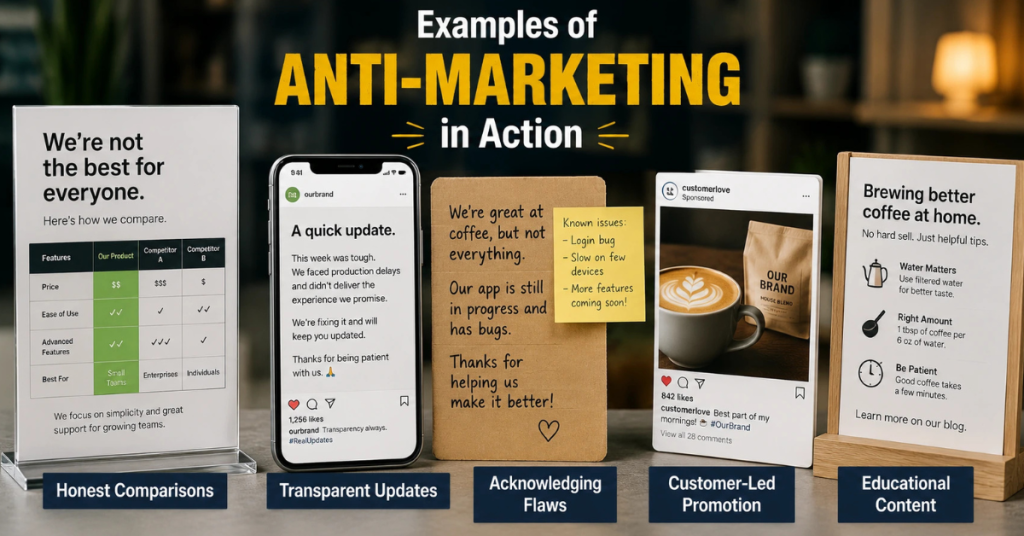
Many successful companies have embraced Anti-Marketing principles.
Common examples include:
Honest Product Comparisons
Some brands openly compare their products with competitors and discuss both strengths and weaknesses.
Transparent Business Updates
Companies share challenges, setbacks, and improvements instead of presenting a perfect image.
Educational Content
Rather than constantly promoting products, brands focus on helping customers solve problems.
Customer-Led Promotion
Businesses encourage customers to share their experiences instead of relying entirely on advertising.
Conclusion
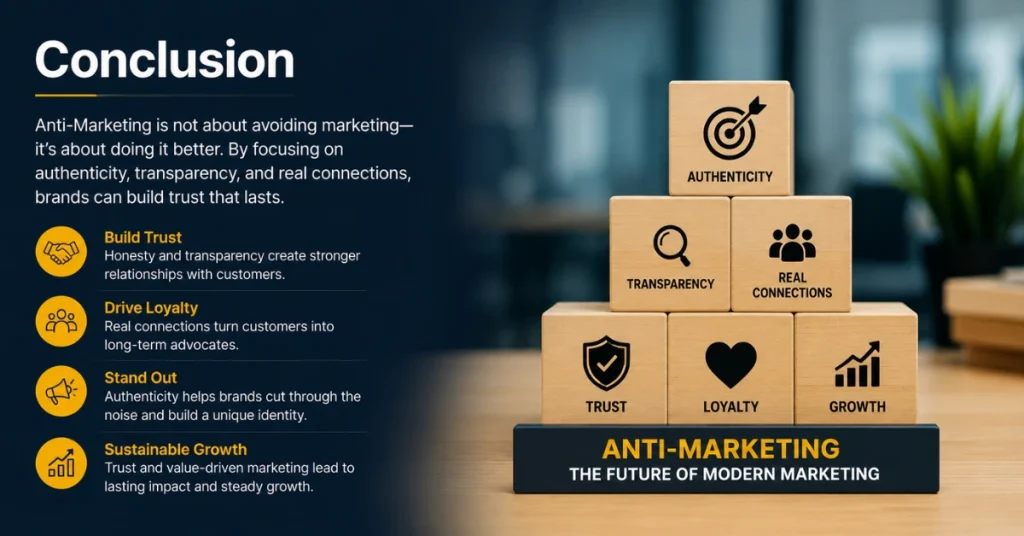
Anti-Marketing is transforming modern marketing strategies because it aligns with what today’s consumers truly want: honesty, transparency, and genuine relationships. As trust becomes increasingly valuable in the digital age, brands that embrace authenticity are gaining a competitive advantage.
Rather than relying on aggressive sales tactics, Anti-Marketing focuses on creating meaningful connections that foster long-term loyalty and advocacy.
In a world saturated with advertising, authenticity stands out. The brands that succeed tomorrow will not necessarily be those that advertise the loudest, but those that communicate the most honestly. Anti-Marketing is not the absence of marketing—it is the evolution of marketing into something more human, trustworthy, and effective.