Why Your Account-Based Marketing Campaigns Aren’t Delivering Results
Account-Based Marketing is a strategic approach where marketing and sales teams collaborate to target a predefined list of high-value accounts. Instead of marketing to a broad audience, ABM focuses on decision-makers within specific organizations, delivering personalized messaging and content tailored to their needs.
When implemented correctly, ABM can increase customer acquisition, shorten sales cycles, and improve return on investment (ROI).
Table of Contents
ToggleTable of Contents
Why Your ABM Campaigns Are Not Producing Results
Poor Account Selection
One of the biggest reasons ABM campaigns fail is targeting the wrong accounts. If your target list includes companies that don’t fit your ideal customer profile (ICP), your efforts may not generate meaningful engagement.
Common Mistakes:
- Targeting companies that lack purchasing power
- Choosing accounts based on assumptions rather than data
- Ignoring firmographic and behavioral insights
How to Fix It:
- Prioritize accounts with strong buying intent
- Use CRM and analytics data to identify high-value prospects
- Clearly define your Ideal Customer Profile
Lack of Sales and Marketing Alignment
ABM requires close collaboration between sales and marketing teams. When both departments work independently, messaging becomes inconsistent, and opportunities are often missed.
Warning Signs:
- Different account priorities
- Poor communication between teams
- Lack of shared goals and KPIs
How to Fix It:
- Create joint ABM objectives
- Conduct regular alignment meetings
- Share account insights and campaign performance data
Insufficient Personalization
Personalization is at the heart of successful ABM. Sending generic content to target accounts defeats the purpose of an account-focused strategy.
Common Problems:
- Using the same messaging for all accounts
- Generic email campaigns
- Lack of industry-specific content
How to Fix It:
- Develop personalized content for each account segment
- Address specific pain points and business challenges
- Customize landing pages, emails, and outreach efforts
Weak Data Quality
ABM depends heavily on accurate and up-to-date data. Incomplete or outdated information can lead to poor targeting and wasted marketing spend.
Common Data Issues:
- Incorrect contact information
- Duplicate records
- Outdated company details
How to Fix It:
- Regularly clean and update your database
- Use reliable data providers
- Implement data validation processes
Unrealistic Expectations
Many organizations expect immediate results from ABM campaigns. However, ABM is a long-term strategy that often requires months of consistent engagement before generating significant returns.
Common Expectations:
- Instant lead generation
- Immediate revenue growth
- Quick account conversions
How to Fix It:
- Set realistic timelines
- Focus on engagement metrics early on
- Track progress throughout the buyer journey
Ineffective Content Strategy
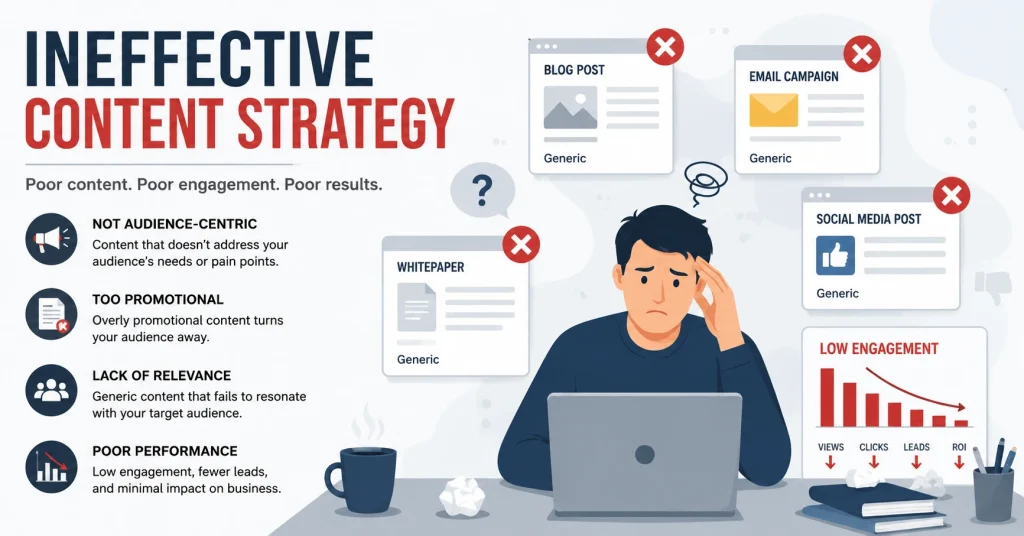
Even with the right target accounts, poor content can prevent engagement. Decision-makers expect valuable insights that address their business needs.
Content Mistakes:
- Overly promotional messaging
- Overly promotional messaging
- Generic blog content
How to Fix It:
- Create account-specific content
- Offer case studies and industry reports
- Develop content for every stage of the buying cycle
Failure to Engage Multiple Decision-Makers
B2B purchases typically involve multiple stakeholders. Focusing on a single contact within an organization can limit campaign effectiveness.
Challenges:
- Ignoring buying committees
- Limited outreach to key influencers
- Incomplete account coverage
How to Fix It:
- Identify all relevant decision-makers
- Create tailored messaging for different roles
- Build relationships across departments
Inadequate Use of Marketing Technology
ABM campaigns often require advanced tools for targeting, personalization, tracking, and analytics. Without the right technology, campaign execution becomes difficult
Common Issues:
- Limited automation capabilities
- Create tailored messaging for different roles
- Build relationships across departments
How to Fix It:
- Invest in ABM platforms and CRM integration
- Utilize marketing automation tools
- Track engagement across multiple channels
Weak Multi-Channel Strategy
Modern buyers interact with brands through multiple channels. Relying on a single communication method can reduce visibility and engagement.
Common Mistakes
- Email-only campaigns
- Limited social media engagement
- No retargeting strategy
How to Fix It:
- Combine email, LinkedIn, content marketing, and paid advertising
- Use retargeting campaigns
- Create consistent messaging across channels
Poor Measurement and Reporting
Without proper measurement, it’s impossible to understand what’s working and what needs improvement.
Common Tracking Problems:
- Focusing only on leads generated
- Ignoring engagement metrics
- Lack of account-level reporting
Key Metrics to Monitor:
- Account engagement rate
- Pipeline contribution
- Opportunity creation
- Deal velocity
- Revenue generated
How to Fix It:
- Establish clear KPIs before launching campaigns
- Use dashboards to monitor performance
- Continuously optimize based on data
Best Practices for Improving ABM Performance
To maximize the success of your Account-Based Marketing campaigns, consider these proven strategies:
Build a Strong Ideal Customer Profile
Use historical customer data to identify characteristics of your best-performing accounts.
Invest in Personalization
Tailor messaging, content, and outreach efforts to each account’s specific needs and challenges.
Strengthen Sales and Marketing Collaboration
Create shared goals and maintain regular communication between teams.
Focus on Data Accuracy
Maintain a clean and reliable database to improve targeting precision.
Implement Multi-Channel Engagement
Reach decision-makers through email, social media, webinars, paid advertising, and personalized content.
Continuously Analyze Results
Review campaign performance regularly and adjust strategies based on insights.
Conclusion
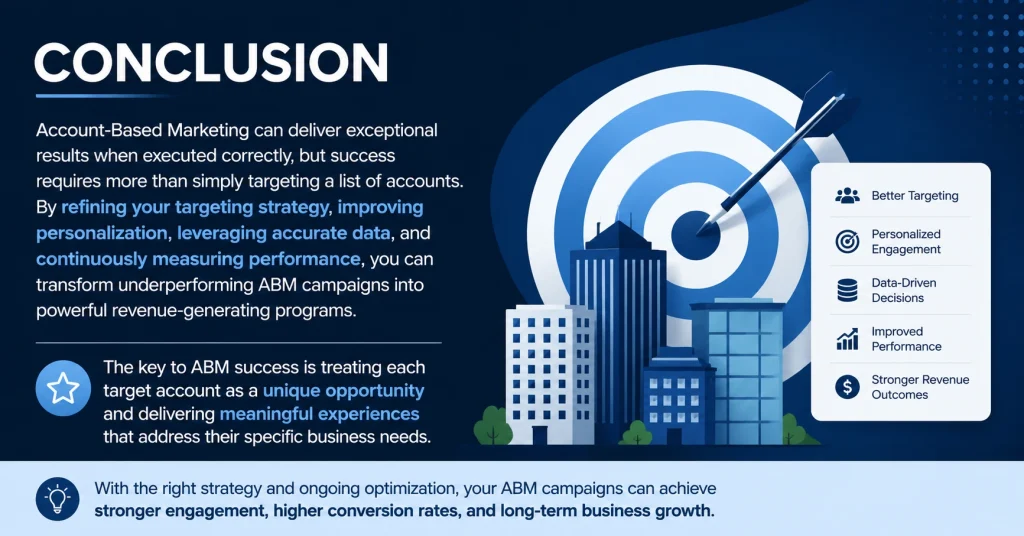
Account-Based Marketing can deliver exceptional results when executed correctly, but success requires more than simply targeting a list of accounts. Poor account selection, weak personalization, data issues, and lack of alignment between sales and marketing are some of the most common reasons ABM campaigns fail.
By refining your targeting strategy, improving personalization, leveraging accurate data, and continuously measuring performance, you can transform underperforming ABM campaigns into powerful revenue-generating programs.
The key to ABM success is treating each target account as a unique opportunity and delivering meaningful experiences that address their specific business needs. With the right strategy and ongoing optimization, your Account-Based Marketing campaigns can achieve stronger engagement, higher conversion rates, and long-term business growth.