The Rise of AI Agents in E-commerce: How to Future-Proof Your Store for 2026
Table of Contents
ToggleIntroduction
E-commerce has evolved rapidly over the last decade. Businesses moved from simple online storefronts to personalized shopping experiences powered by automation, analytics, and customer data. Now, another transformation is taking shape—AI agents and agentic commerce.
By 2026, AI agents are expected to become a major part of online shopping experiences. These intelligent systems can understand customer intent, perform tasks autonomously, compare products, recommend purchases, answer questions, and even complete transactions with minimal human intervention.
Unlike traditional chatbots or rule-based automation tools, AI agents can make context-aware decisions and act independently to achieve goals. This shift is creating a new era of digital commerce where customers spend less time searching and more time receiving personalized outcomes.
For online retailers, this creates both opportunities and challenges. Stores that adapt early can improve customer experience, increase efficiency, and stay competitive. Businesses that delay may struggle to meet rising expectations.
In this article, we’ll explore how AI agents are reshaping e-commerce and what practical steps businesses can take to future-proof their stores for 2026.
Table of Contents
What Are AI Agents in E-commerce?
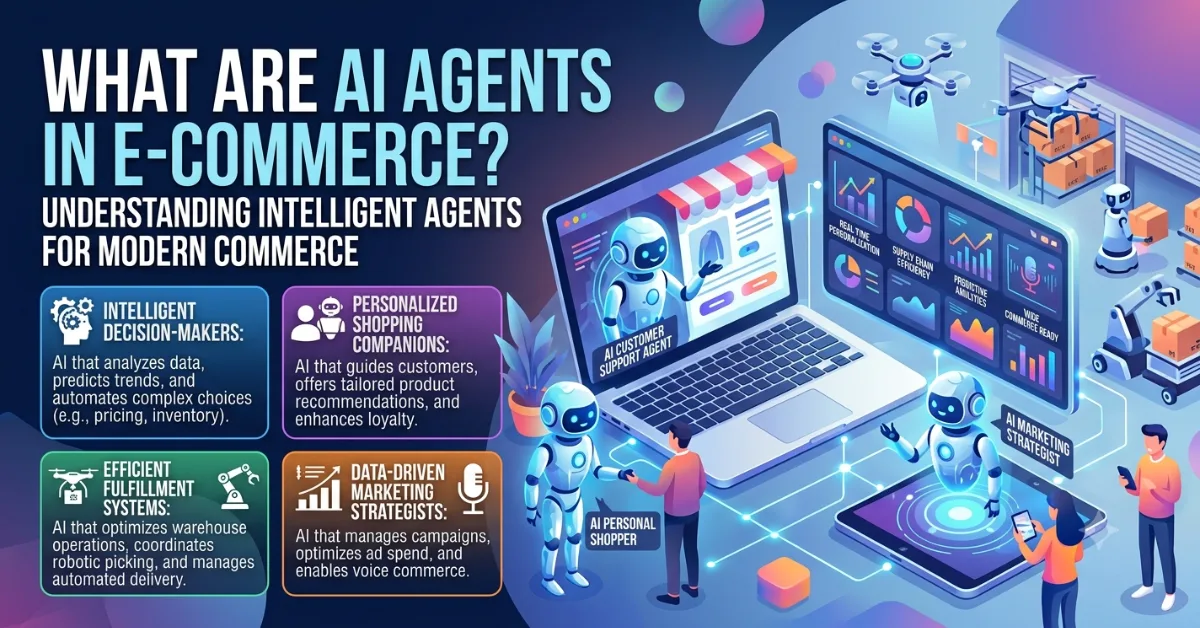
AI agents are intelligent software systems designed to perform tasks, make decisions, and interact with customers with limited human involvement.
In e-commerce, AI agents can:
- Recommend products based on customer behavior
- Answer customer questions instantly
- Compare alternatives automatically
- Predict buying intent
- Manage inventory decisions
- Automate customer support
- Assist customers throughout the shopping journey
Instead of responding to simple commands, AI agents analyze data, learn from interactions, and optimize outcomes.
For example:
A customer wants running shoes.
Traditional search:
Customer browses multiple categories.
AI agent:
Understands preferences, compares options, selects products, checks availability, and recommends the best match.
This creates a faster and more personalized experience.
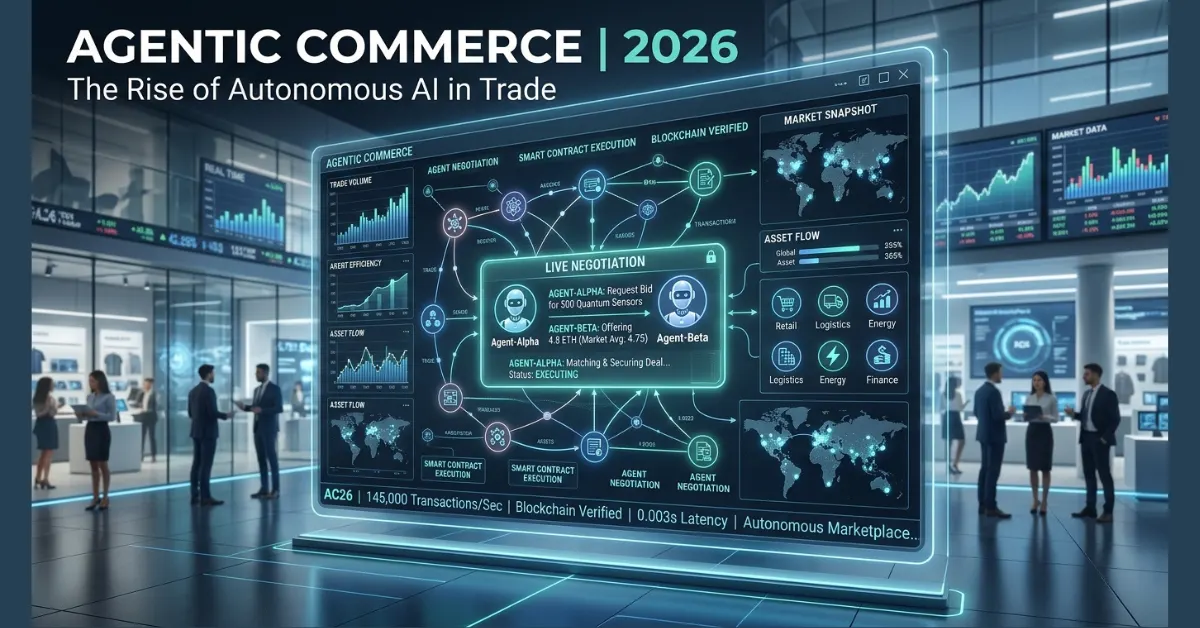
Why Agentic Commerce Is Growing in 2026
1. Customers Expect Instant Experiences
Consumers increasingly expect quick answers, personalized recommendations, and seamless purchasing.
Long forms, complicated navigation, and generic product pages create friction.
AI agents reduce effort and improve convenience.
2. Data Availability Is Increasing
Businesses now collect information from:
- Website interactions
- Purchase history
- Customer support conversations
- Email campaigns
- Mobile applications
AI systems can process this data and deliver smarter experiences.
3. Technology Is Becoming More Accessible
Cloud platforms and AI services are reducing barriers for businesses of all sizes.
Small and medium-sized stores can now access advanced capabilities that were once available only to large enterprises.
How AI Agents Will Transform Online Stores
Smarter Product Discovery
Traditional search depends on keywords.
AI agents understand intent.
Instead of searching:
“Blue running shoes”
Customers may ask:
“I need lightweight running shoes under my budget for daily use.”
AI systems interpret needs and deliver better results.
Benefits include:
- Improved search accuracy
- Higher conversion rates
- Better customer satisfaction
How AI Agents Will Transform Online Stores
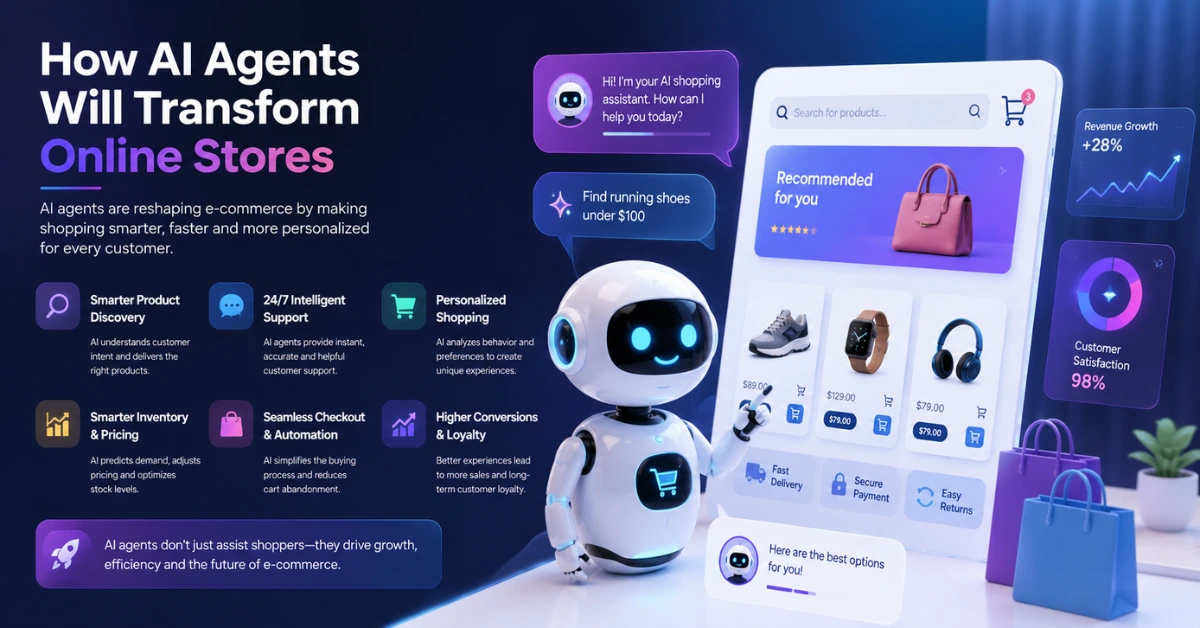
Smarter Product Discovery
Traditional search depends on keywords.
AI agents understand intent.
Instead of searching:
“Blue running shoes”
Customers may ask:
“I need lightweight running shoes under my budget for daily use.”
AI systems interpret needs and deliver better results.
Benefits include:
- Improved search accuracy
- Higher conversion rates
- Better customer satisfaction
Personalized Shopping Experiences
Modern customers expect relevance.
AI agents personalize:
- Product recommendations
- Homepage content
- Discounts
- Email campaigns
- Search results
This creates stronger engagement and better retention.
Intelligent Customer Support
Customer service is changing.
AI agents can:
- Handle routine questions
- Process order inquiries
- Guide customers through purchases
- Support multiple languages
- Provide 24/7 assistance
Human teams can focus on more complex interactions.
Automated Purchase Assistance
AI agents can simplify buying decisions.
Examples include:
- Creating shopping lists
- Recommending bundles
- Comparing products
- Tracking prices
- Completing checkout steps
This reduces friction throughout the customer journey.
Key Steps to Future-Proof Your Store for 2026
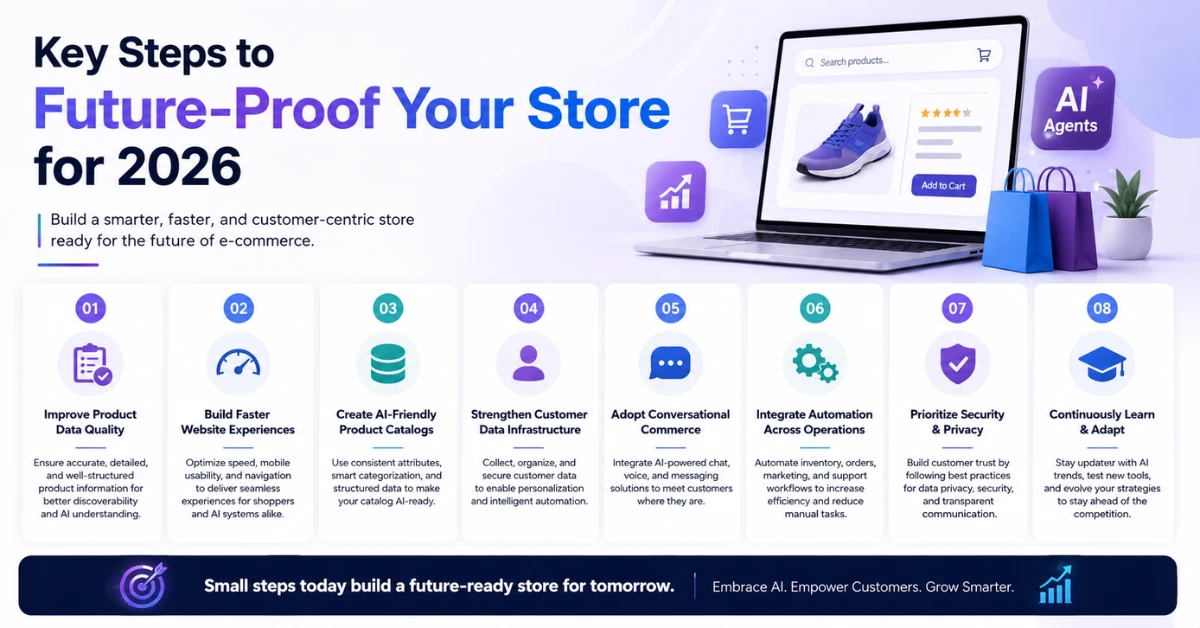
Preparing for AI commerce requires more than installing new tools.
1. Improve Product Data Quality
AI depends on accurate information.
Focus on:
- Detailed product titles
- Clear descriptions
- Organized categories
- Structured specifications
- High-quality images
Good data improves discoverability.
2. Build Faster Website Experiences
Speed directly affects conversion.
Optimize:
- Page loading times
- Mobile responsiveness
- Navigation simplicity
- Checkout experience
Fast websites support both users and AI systems.
3. Create AI-Friendly Product Catalogs
Future shopping systems may access catalogs directly.
Ensure:
- Consistent naming
- Standard attributes
- Updated inventory
- Searchable content
Well-structured catalogs improve recommendations.
4. Strengthen Customer Data Infrastructure
AI relies on reliable customer information.
Collect and organize:
- Purchase behavior
- Browsing patterns
- Customer preferences
- Support interactions
Maintain transparency and responsible data practices.
5. Adopt Conversational Commerce
Customers increasingly interact through conversations instead of menus.
Examples include:
- Website assistants
- Messaging platforms
- Voice experiences
Conversational interfaces make shopping easier.
6. Integrate Automation Across Operations
Future-ready stores connect systems.
Areas to automate:
- Inventory updates
- Order processing
- Email workflows
- Customer segmentation
- Marketing campaigns
Integration improves operational efficiency.
Challenges Businesses Should Prepare For
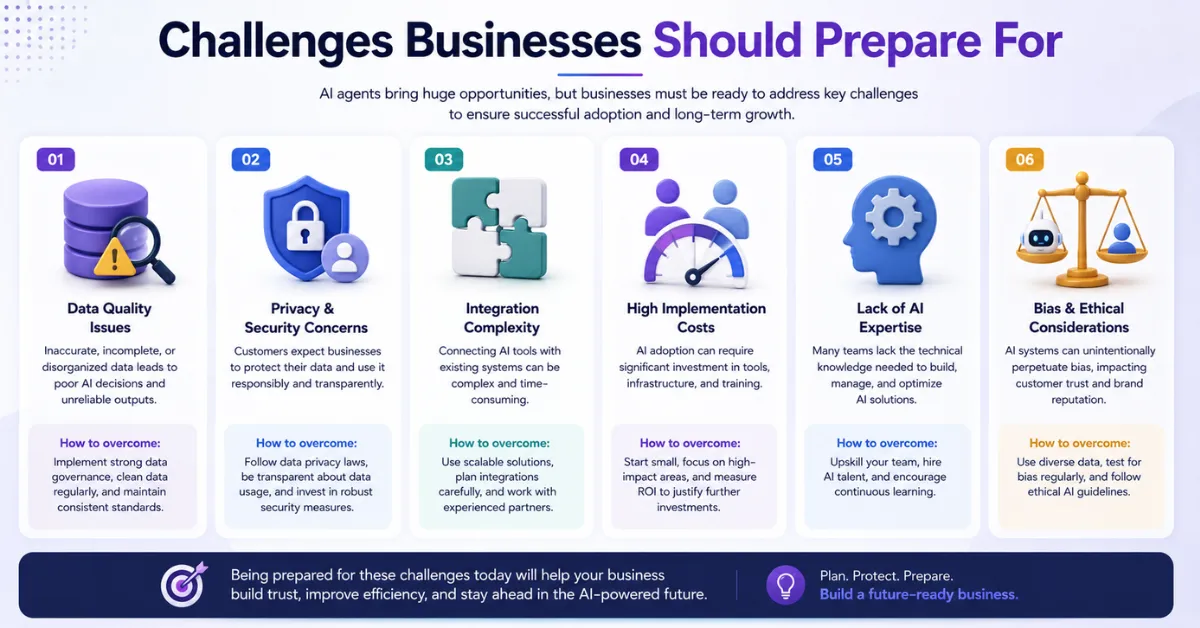
AI adoption also introduces challenges.
Data Quality Problems
Poor information reduces AI effectiveness.
Solution:
Create strong data governance practices.
Privacy Expectations
Customers expect control and transparency.
Businesses should:
- Explain data usage
- Respect preferences
- Maintain security standards
Trust remains essential.
Integration Complexity
Many businesses operate disconnected systems.
Solution:
Prioritize scalable architecture and gradual implementation.
Team Readiness
Technology alone is not enough.
Employees should understand:
- AI workflows
- Automation tools
- Customer experience strategies
Training supports successful adoption.
Challenges Businesses Should Prepare For
AI adoption also introduces challenges.
Data Quality Problems
Poor information reduces AI effectiveness.
Solution:
Create strong data governance practices.
Privacy Expectations
Customers expect control and transparency.
Businesses should:
- Explain data usage
- Respect preferences
- Maintain security standards
Trust remains essential.
Integration Complexity
Many businesses operate disconnected systems.
Solution:
Prioritize scalable architecture and gradual implementation.
Team Readiness
Technology alone is not enough.
Employees should understand:
- AI workflows
- Automation tools
- Customer experience strategies
Training supports successful adoption.
Practical Action Plan for Store Owners
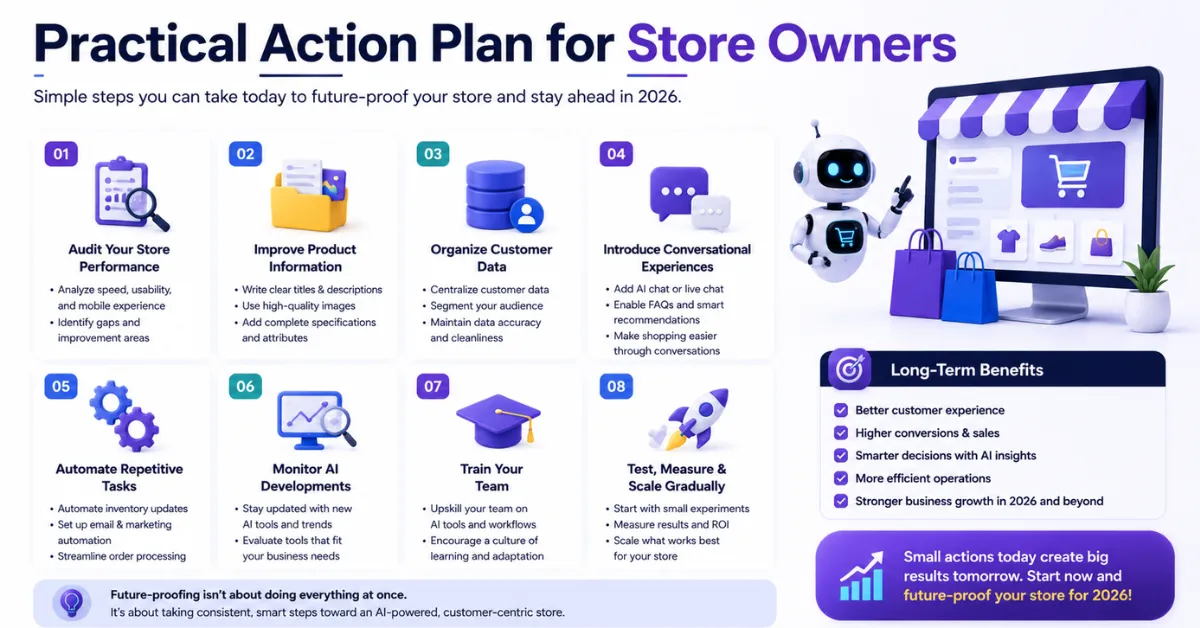
To prepare your business:
✓ Audit your website performance
✓ Improve product information
✓ Organize customer data
✓ Introduce conversational experiences
✓ Automate repetitive tasks
✓ Monitor AI developments
✓ Train internal teams
✓ Test new technologies gradually
Small improvements today can create long-term advantages.
Conclusion
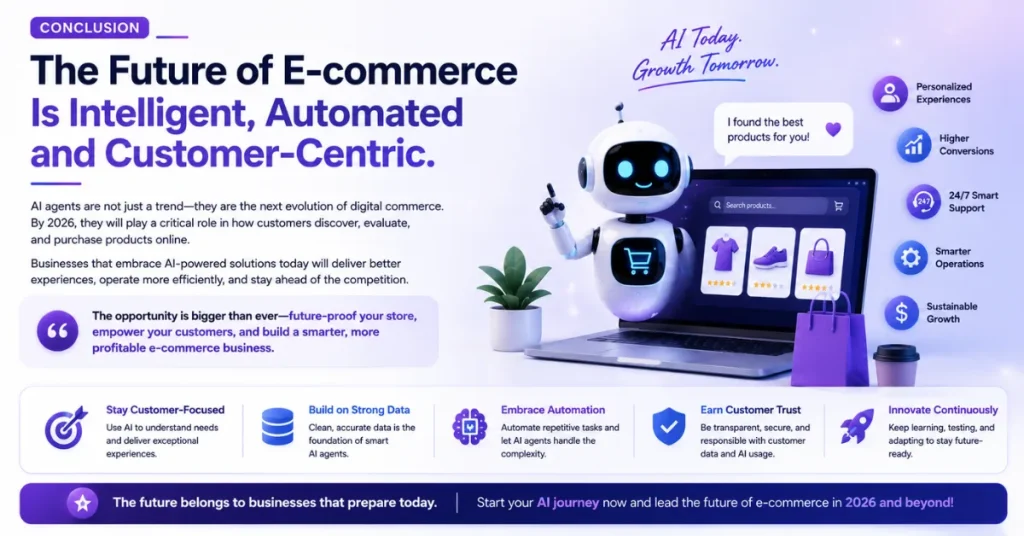
AI agents are redefining how customers discover, evaluate, and purchase products online. The shift toward agentic commerce in 2026 represents more than another technology trend—it signals a change in how digital retail operates.
Future-ready stores will focus on speed, personalization, intelligent automation, and better customer experiences. Success will depend on clean data, adaptable systems, and a willingness to evolve alongside changing consumer expectations.
Businesses that begin preparing now can build stronger relationships, improve efficiency, and position themselves for sustainable growth in the next generation of e-commerce.
The future of online retail is becoming more intelligent—and the best time to prepare is today.