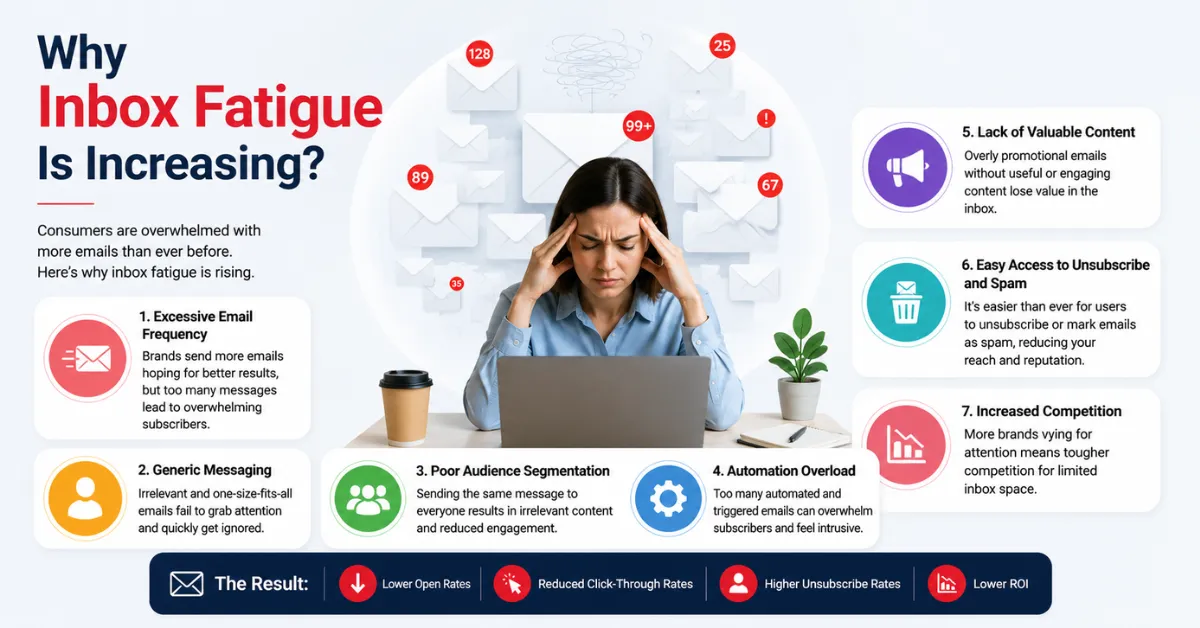
Excessive Email Frequency Many brands believe sending more emails creates more opportunities to convert customers. In reality, excessive communication often leads to disengagement.Consumers want quality communication—not constant communication.
Generic Messaging
Mass emails that fail to address customer needs often feel irrelevant.
Personalized communication performs better because consumers expect brands to understand their preferences and behavior.
Poor Audience Segmentation
Sending identical messages to every subscriber creates message fatigue.
Effective segmentation helps ensure users receive content that matches their interests.
Automation Overload
Automation improves efficiency but can become overwhelming when customers receive multiple triggered emails within short periods.
Lack of Valuable Content
Emails focused only on sales and promotions quickly lose effectiveness.
Consumers increasingly expect useful information, insights, education, or exclusive benefits.
The Impact of Inbox Fatigue on Campaign ROI
Campaign ROI depends on engagement and conversions. Inbox fatigue directly affects both.
Lower Open Rates
When consumers ignore emails, open rates decrease, reducing campaign reach.
Reduced Click-Through Rates
Even opened emails may fail to generate action if users no longer find content valuable.
Higher Unsubscribe Rates
Frequent or irrelevant messaging causes subscriber loss.
Declining Conversion Rates
Lower engagement ultimately impacts purchases, registrations, and lead generation.
Increased Customer Acquisition Costs
Poor email performance forces marketers to spend more acquiring new customers.
Warning Signs Your Email Strategy Is Causing Fatigue
Watch for these indicators:
• Open rates consistently falling
• Increasing unsubscribe requests
• Reduced website traffic from email
• Low click engagement
• Higher spam complaints
• Reduced conversion performance
Early identification helps prevent long-term damage.