The Strategy Behind Target’s Creator Program Makeover
The creator economy has transformed the way brands connect with consumers. Traditional advertising methods are no longer enough to capture audience attention in a digital-first world where authenticity, trust, and community engagement drive purchasing decisions. As social media platforms continue to dominate consumer behavior, brands are increasingly turning to creators and influencers to build meaningful relationships with their audiences.
Among the major retailers embracing this shift is Target, one of the largest retail chains in the United States. Recognizing the growing influence of content creators, Target has undertaken a significant overhaul of its creator program, redefining how it collaborates with influencers and digital storytellers.
Rather than focusing solely on promotional campaigns, Target is building a creator ecosystem centered around authenticity, diversity, long-term partnerships, and measurable business outcomes. This transformation reflects broader changes occurring across the marketing industry, where brands are moving away from one-off influencer deals and toward strategic creator collaborations.
In this article, we’ll explore the strategy behind Target’s creator program makeover, the key elements driving its success, and the lessons marketers can learn from its evolving approach.
Table of Contents
ToggleTable of Contents
How Target Is Reinventing Influencer Marketing for the Next Generation of Shoppers?
In the rapidly evolving world of digital commerce, brands are constantly searching for new ways to connect with consumers. Traditional advertising methods are losing effectiveness as audiences increasingly rely on social media personalities, content creators, and online communities for product recommendations. Recognizing this shift, Target has taken a bold step by revamping its creator program, signaling a major transformation in how the retail giant approaches influencer marketing.
The makeover of Target’s creator program is not simply a cosmetic update. It represents a strategic effort to strengthen relationships with creators, increase consumer trust, drive sales through authentic content, and stay competitive in an increasingly crowded retail landscape. By empowering creators with better tools, incentives, and opportunities, Target is positioning itself at the center of the creator economy.
This article explores the strategy behind Target’s creator program makeover, the market forces driving the change, and what it means for creators, consumers, and the future of retail marketing.
Understanding the Rise of the Creator Economy
Before examining Target’s strategy, it is important to understand the broader context. The creator economy has become one of the most influential forces in modern marketing.
Consumers today spend significant amounts of time on platforms such as TikTok, Instagram, YouTube, Pinterest, and emerging social channels. Rather than relying on traditional advertisements, they often seek recommendations from trusted creators who share honest reviews, tutorials, lifestyle content, and shopping inspiration.
Creators have become modern-day tastemakers. Their influence extends beyond entertainment and into purchasing decisions, making them valuable partners for brands looking to reach highly engaged audiences.
As a result, companies across industries are investing heavily in creator partnerships. Retailers, in particular, see creators as an effective bridge between product discovery and purchase. Target’s revamped creator program reflects this reality.
Why Target Needed a Creator Program Makeover
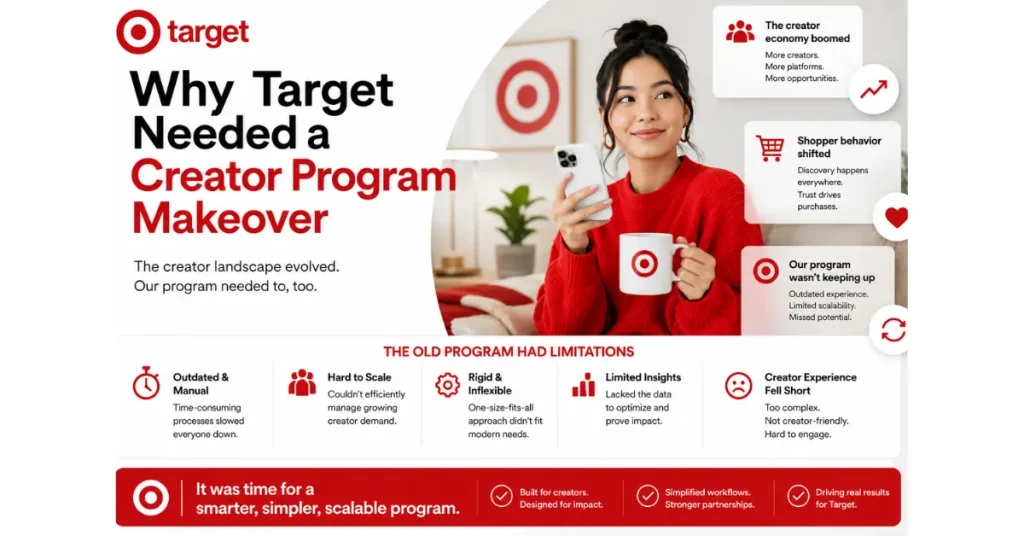
Target has long been known for its strong brand identity, stylish product assortment, and ability to attract trend-conscious shoppers. However, consumer behavior has changed dramatically over the past decade.
Several factors likely contributed to the need for a revamped creator strategy:
Changing Shopping Habits
Today’s consumers discover products differently than previous generations. Social media feeds have become digital storefronts where trends emerge and purchasing decisions are made.
Consumers often encounter products through:
* Product reviews
* Unboxing videos
* Lifestyle content
* Home makeover projects
* Fashion styling guides
* Parenting recommendations
* Beauty tutorials
Target recognized that creators play a significant role in these discovery journeys.
Increased Competition
Retail competition has intensified. Major retailers, including Amazon, Walmart, and specialty brands, are investing heavily in influencer marketing and creator partnerships. To remain competitive, Target needed a more robust program capable of attracting high-quality creators while providing meaningful incentives.
Demand for Authenticity
Modern consumers value authenticity more than polished advertising. They want real experiences, genuine recommendations, and relatable storytelling.Creators often provide this authenticity better than traditional marketing campaigns. A revamped creator program allows Target to harness authentic voices at scale.
Growth of Social Commerce
Social commerce continues to reshape retail. Consumers can now discover products, read reviews, watch demonstrations, and make purchases without leaving social platforms.Target’s creator strategy aligns with this trend by making it easier for creators to influence purchasing decisions throughout the customer journey.
The Core Goals Behind the Makeover

Every major marketing initiative is driven by strategic objectives. Target’s creator program makeover appears designed to achieve several key goals.
Expanding Brand Reach
Creators provide access to diverse communities that traditional advertising may struggle to reach. A parenting creator, for example, connects with families. A fitness creator reaches health-conscious consumers. A home décor influencer attracts audiences interested in design and renovation.
By partnering with creators across multiple niches, Target can expand its reach among different consumer segments.
Driving Product Discovery
One of the biggest challenges in retail is helping consumers discover products they may not actively search for. Creators excel at introducing audiences to new items through storytelling and practical demonstrations. Whether showcasing seasonal décor, beauty products, kitchen gadgets, or fashion collections, creators can generate awareness in a natural way.
Increasing Conversion Rates
Consumers often trust recommendations from creators more than direct advertising.When audiences see products being used in real-life situations, they gain confidence in purchasing decisions. This trust can translate into higher conversion rates and stronger sales performance.
Building Long-Term Loyalty
Target’s strategy is not solely focused on immediate transactions.Creator partnerships help strengthen emotional connections between consumers and the brand. Repeated exposure through trusted voices can improve brand perception and foster long-term loyalty.
Empowering Creators as Business Partners
One of the most significant shifts in modern influencer marketing is the movement from transactional relationships to strategic partnerships.Historically, brands often viewed influencers as promotional channels. Today, leading companies recognize creators as entrepreneurs, storytellers, and community builders.Target’s program makeover reflects this evolution.
Better Monetization Opportunities
Creators increasingly expect meaningful earning potential.By offering competitive commission structures, performance-based incentives, and access to exclusive opportunities, Target can attract top-tier creators who are serious about growing their businesses.
Enhanced Tools and Resources
Successful creator programs provide participants with tools that simplify content creation and performance tracking.Improved dashboards, analytics, product discovery features, and campaign management tools help creators optimize their efforts while increasing engagement and sales.
Access to Exclusive Products
Many creators value early access to product launches and exclusive collections.Providing these opportunities allows creators to produce fresh content while generating excitement among audiences eager to discover new products.
Data-Driven Influencer Marketing
Another major aspect of the makeover is likely the increased use of data and analytics.Modern creator programs are becoming increasingly sophisticated, relying on measurable performance indicators rather than vanity metrics.
Tracking Real Business Impact
Brands are focusing on metrics such as:
* Sales conversions
* Click-through rates
* Customer acquisition
* Return on investment
* Engagement quality
* Audience demographics
This shift enables companies like Target to evaluate creator performance more accurately.
Personalized Partnerships
Data also helps identify creators whose audiences align closely with specific product categories.Rather than pursuing broad influencer campaigns, Target can create highly targeted collaborations that deliver stronger results.
Continuous Optimization
Advanced analytics allow marketers to refine campaigns over time, identify successful content formats, and allocate budgets more effectively.This creates a feedback loop that improves program performance.
The Importance of Micro and Mid-Tier Creators
One notable trend in influencer marketing is the growing value of micro and mid-tier creators. While celebrity influencers generate visibility, smaller creators often deliver stronger engagement and trust.
Why Smaller Creators Matter
Micro creators typically have highly engaged audiences that view them as relatable and authentic.Their recommendations often feel more personal, leading to higher levels of trust.
Scalability Through Diversity
Instead of relying on a handful of large influencers, Target can partner with hundreds or thousands of creators across various niches.This strategy creates a diversified marketing ecosystem capable of reaching consumers in multiple communities simultaneously.
Cost Efficiency
Smaller creators often provide better returns on investment because their audiences are highly targeted and engaged.This makes them valuable assets in a modern creator strategy.
Aligning with Gen Z and Younger Consumers
One of the most important reasons behind the makeover is likely Target’s desire to strengthen relationships with younger consumers.Gen Z has grown up in a creator-driven world.
Unlike previous generations, they often trust creators more than traditional advertisements. They value:
* Transparency
* Authenticity
* Community
* Diversity
* Personal expression
A creator-focused strategy helps Target align with these preferences.
Meeting Consumers Where They Are
Rather than waiting for shoppers to visit stores or websites, Target can meet consumers on platforms they already use daily.This approach reduces friction in the buying process and increases brand relevance.
Social Proof as a Growth Engine
Social proof remains one of the most powerful psychological drivers in consumer behavior.When consumers see trusted creators using and recommending products, those products gain credibility.Target’s creator program leverages this principle by encouraging authentic demonstrations, reviews, and recommendations.The result is a scalable system of peer-influenced product discovery that feels more natural than traditional advertising.
Strengthening Omnichannel Retail
Target has invested heavily in creating a seamless shopping experience across digital and physical channels.The creator program supports this omnichannel strategy.
A consumer might:
1. Discover a product through a creator.
2. Research it online.
3. Purchase through Target’s website.
4. Pick it up in-store.
5. Share the experience on social media.
Creators help initiate this journey, connecting digital inspiration with retail execution.
Challenges and Risks
Despite its potential benefits, a creator-focused strategy comes with challenges.
Maintaining Authenticity
Consumers quickly recognize content that feels overly promotional.Target must balance commercial objectives with creator freedom to preserve authenticity.
Managing Scale
As creator programs grow, maintaining quality control becomes more difficult.Brands must ensure creators align with brand values while allowing room for creative expression.
Measuring Long-Term Value
Some creator partnerships generate immediate sales, while others contribute to long-term brand awareness.Balancing short-term and long-term measurement remains a challenge for many organizations.
What the Makeover Means for Creators
For creators, the revamped program presents new opportunities.
Benefits may include:
- Increased earning potential
- Greater visibility
- Access to exclusive products
- Stronger brand relationships
- Better analytics tools
- Expanded collaboration opportunities
- Creators who understand their audiences and produce authentic content will likely benefit the most from these enhancements.
What It Means for Consumers
Consumers also stand to gain from the evolution of Target’s creator strategy.
They can expect:
- More authentic product recommendations
- Better shopping inspiration
- Diverse perspectives
- Real-world product demonstrations
- Easier product discovery
- Instead of relying solely on traditional advertising, shoppers gain access to content that helps them make informed purchasing decisions.
The Future of Retail Creator Programs
Target’s creator program makeover reflects a broader shift taking place across the retail industry.
Future creator programs will likely become:
- More data-driven
- More personalized
- More integrated with e-commerce
- More focused on long-term partnerships
- More supportive of creator entrepreneurship
- As technology continues to evolve, creators will play an even larger role in shaping consumer behavior and influencing purchasing decisions.Retailers that successfully build strong creator ecosystems will gain a significant competitive advantage.
Conclusion
Target’s creator program makeover represents much more than a marketing update—it is a strategic investment in the future of commerce. By embracing the creator economy, empowering influencers with better tools and incentives, and aligning with changing consumer behaviors, Target is positioning itself for long-term growth in an increasingly digital marketplace.
The strategy recognizes a fundamental reality of modern retail: consumers trust people more than advertisements. Creators have become powerful intermediaries between brands and buyers, influencing everything from product discovery to purchase decisions.
By strengthening its creator ecosystem, Target is not only expanding its marketing capabilities but also building a more authentic, community-driven connection with shoppers. As the creator economy continues to grow, Target’s approach may serve as a blueprint for how major retailers can successfully adapt to the next era of consumer engagement.