What is On Page SEO?
On-page SEO is the process of improving individual web pages so they can rank higher in search engines and attract the right audience. It focuses on elements that are visible on your page and parts of the HTML code that search engines read.
Unlike off-page SEO, which includes backlinks and external signals, on-page SEO is fully under your control. That means you can make changes directly on your website to improve its chances of ranking
Some of the most important on-page SEO elements include
- Page titles
- Meta descriptions
- Header tags
- Keyword placement
- Content quality
- Image optimization
Table of Contents
ToggleTable of Contents
Why Is On-Page SEO Important Websites?
On-page SEO is important because it helps both search engines and users understand your website better. When your pages are properly optimized, search engines can index them more effectively and show them to people searching for relevant topics.
Here are a few reasons why on-page SEO matters:
It improves search rankings
Well-optimized pages are more likely to appear higher in search results.
It increases organic traffic
Better visibility means more people can find your website without paid ads
It improves user experience
Clear structure, useful content, and fast-loading pages make it easier for visitors to stay on your site.
It boosts conversions
When your content matches user intent, visitors are more likely to take action — such as filling out a form, making a purchase, or contacting you.
Key On-Page SEO Factors for Your Website
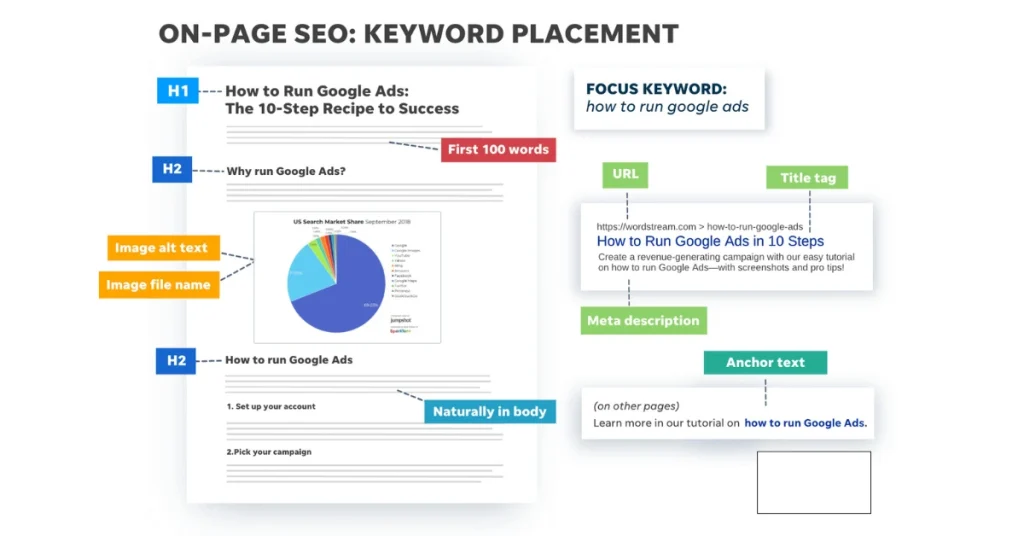
Let’s look at the most important on-page SEO elements you should focus on.
Use a clear and keyword-rich page title
Your page title is one of the first things search engines and users see. It should clearly describe the topic of the page and include your main keyword naturally.
Example:
Instead of: Home Page
Use: Affordable Web Design Services for Small Businesses
A good title should be short, relevant, and compelling.
Write compelling meta descriptions
A meta description is the short summary that appears under your page title in search results. While it does not directly impact rankings, it can improve click-through rates.
Tips for meta descriptions:
- Keep it under 160 characters
- Include your target keywordrs
- Make it engaging and clear
- Encourage users to click
Example:
Learn how on-page SEO can improve your website rankings, boost traffic, and help your content reach the right audience.
Use headings properly
Headings help organize your content and make it easier to read. They also help search engines understand the structure of your page.
- H1 = Main page title
- H2 = Main sections
- H3 = Subsections
Optimize your content for search intent
Search intent is the reason behind a user’s search. Your content should match what people are actually looking for.
For example:
.
If someone searches “what is on-page SEO,” they want a simple explanation.
If they search “on-page SEO checklist,” they want practical steps.
If they search “best on-page SEO tools,” they want recommendations.
Creating content that matches intent helps improve rankings and user satisfaction.
Place keywords naturally
Keywords help search engines understand what your page is about. But keyword stuffing can hurt your SEO and make your content unreadable.
Use your primary keyword in:
- The title
- The first paragraph
- One or two headings
- Naturally throughout the content
- Image alt text when relevant
Focus on writing for people first, not just search engines. when relevant
Improve image SEO
Images make your content more engaging, but they should also be optimized for SEO
Here’s how:
- Use descriptive file names
- Add alt text
- Compress images for faster loading
- Use the right format and size
Example alt text:
On-page SEO checklist for website optimization
Use internal links
Internal links connect one page of your website to another. They help users navigate your site and help search engines crawl your content.
For example, if you have a blog post about keyword research, you can link to your service page or another related article.
Internal links also distribute authority across your website and keep visitors engaged longer.
Make URLs short and clean
A good URL is simple, easy to read, and includes the main topic of the page.
Good URL:
yourwebsite.com/on-page-seo
Not ideal:
yourwebsite.com/page?id=12345
Clean URLs improve both user experience and SEO.
9. Improve page speed
Fast-loading pages are important for both rankings and user experience. If your website takes too long to load, visitors may leave before reading your content.
To improve speed:
- Compress images
- Remove unnecessary scripts
- Use caching
- Choose reliable hosting
- Minimize large files
Make sure your site is mobile-friendly
Most users browse on mobile devices, so your website should look and work well on phones and tablets.
A mobile-friendly site should:
- Load properly on small screens
- Avoid horizontal scrolling
Google also prioritizes mobile-friendly websites in search results.

Final Thoughts
On-page SEO is one of the best ways to improve your website’s visibility in search engines. By optimizing your content, titles, headings, images, links, and page structure, you make it easier for both users and search engines to understand your site.
.If you want your website to rank better and attract more visitors, on-page SEO should be part of your regular strategy. Even small improvements can make a big difference over time.
Start by reviewing your most important pages and applying the tips above. With consistent optimization, your website can become more visible, more useful, and more successful.