Can AI Improve Google Ads Performance Better Than Manual Optimization?
Google Ads has become one of the most powerful digital marketing platforms for businesses looking to generate leads, increase sales, and boost brand visibility. However, managing successful Google Ads campaigns requires constant monitoring, data analysis, bid adjustments, audience targeting, and ad optimization. Traditionally, marketers handled these tasks manually, relying on experience and performance data to make decisions.
Today, Artificial Intelligence (AI) is transforming the way businesses manage their Google Ads campaigns. Google’s Smart Bidding, Performance Max campaigns, predictive analytics, and machine learning algorithms are helping advertisers automate complex tasks and improve campaign performance.
But the question remains: Can AI improve Google Ads performance better than manual optimization? Let’s explore the advantages, limitations, and best practices of both approaches.
Table of Contents
ToggleUnderstanding Manual Google Ads Optimization
Manual optimization involves a marketer or PPC specialist managing every aspect of a Google Ads campaign. This includes
- Keyword research
- Bid management
- Audience targeting
- Budget allocation
- Performance monitoring
- Conversion tracking
Experienced PPC professionals analyze campaign data and make strategic decisions based on industry knowledge and business goals.
Benefits of Manual Optimization
Greater Control
Manual management allows advertisers to control every campaign element. Marketers can make precise adjustments based on business objectives and market trends.
Human Creativity
AI can analyze data, but humans create compelling ad copy, emotional messaging, and creative campaign strategies that connect with audiences.
Better Understanding of Business Goals
A PPC expert understands customer behavior, brand positioning, seasonal trends, and industry-specific challenges that AI may not fully recognize.
Flexibility
Manual optimization allows marketers to quickly respond to sudden market changes, competitor actions, or promotional campaigns.
Challenges of Manual Optimization
While manual optimization offers control, it also comes with several challenges:
- Time-consuming management
- Human errors
- Difficulty analyzing large datasets
- Slower decision-making
- Difficulty analyzing large datasets
- Limited ability to process real-time signals
As campaigns grow larger, manual optimization becomes increasingly complex.
How AI Works in Google Ads
Artificial Intelligence uses machine learning algorithms to analyze vast amounts of campaign data and automatically make optimization decisions.
Google Ads AI considers hundreds of signals, including:
- Device type
- Location
- User behavior
- Search intent
- Time of day
- Browser type
- Demographics
- Historical performance
Based on these signals, AI can automatically adjust bids, target audiences, and optimize ad delivery to maximize conversions.
Popular AI-powered Google Ads features include:
- Smart Bidding
- Performance Max Campaigns
- Responsive Search Ads
- Automated Audience Targeting
- Predictive Conversion Modeling
Based on these signals, AI can automatically adjust bids, target audiences, and optimize ad delivery to maximize conversions.
Benefits of AI in Google Ads Performance
Improved Bid Management
One of AI’s strongest capabilities is automated bidding.
Google's Smart Bidding strategies such as:
- Target CPA
- Maximize Conversions
- Target ROAS
- Maximize Conversion Value
continuously analyze user signals and adjust bids in real time.
Manual bidding simply cannot process millions of data points at the same speed and accuracy
Faster Data Analysis
AI can instantly analyze enormous amounts of campaign data and identify patterns that humans might overlook.
This helps advertisers:
- Identify high-performing keywords
- Detect underperforming ads
- Optimize budget allocation
- Better Audience Targeting
- Improve conversion rates
AI evaluates user behavior and predicts which audiences are most likely to convert.
Instead of relying solely on demographic targeting, AI uses behavioral and intent-based signals to find high-value prospects.
Enhanced Ad Personalization
Responsive Search Ads use AI to automatically test different headline and description combinations.
The system learns which combinations perform best and serves the most effective ads to users.
This increases:
- Click-through rates (CTR)
- Conversion rates
- Improved Budget Efficiency
- Quality Scores
AI helps reduce wasted ad spend by focusing budgets on users who are more likely to convert.
By continuously optimizing campaigns, AI often delivers better return on ad spend (ROAS).
Where Manual Optimization Still Wins
Despite its advantages, AI is not perfect.
Strategic Decision-Making
AI excels at optimization but struggles with broader marketing strategy.
Human marketers still determine:
- Brand messaging
- Business objectives
- Competitive strategy
- Product positioning
These areas require critical thinking and market understanding.
Creative Excellence
AI can generate ad variations, but human creativity remains superior when crafting emotionally engaging campaigns.
Strong storytelling, brand voice, and persuasive messaging often come from experienced marketers.
New Campaign Launches
AI performs best when it has sufficient historical data.
For new campaigns with limited conversion data, manual optimization may initially outperform AI until enough data is collected.
Industry-Specific Knowledge
Some industries require unique targeting strategies that AI may not fully understand.
Experienced PPC specialists can apply niche market knowledge that improves campaign performance

Experienced PPC specialists can apply niche market knowledge that improves campaign performance.
The Best Approach: Combining AI and Human Expertise
The debate should not be AI versus humans. Instead, businesses achieve the best results when they combine both.
A hybrid approach allows AI to handle data-intensive tasks while marketers focus on strategy and creativity.
Let AI Handle:
- Smart bidding
- Audience targeting
- Automated testing
- Budget optimization
- Performance forecasting
Let Humans Handle:
- Campaign strategy
- Ad copy creation
- Brand messaging
- Market analysis
- Business objectives
This partnership often delivers stronger results than relying entirely on either method alone.
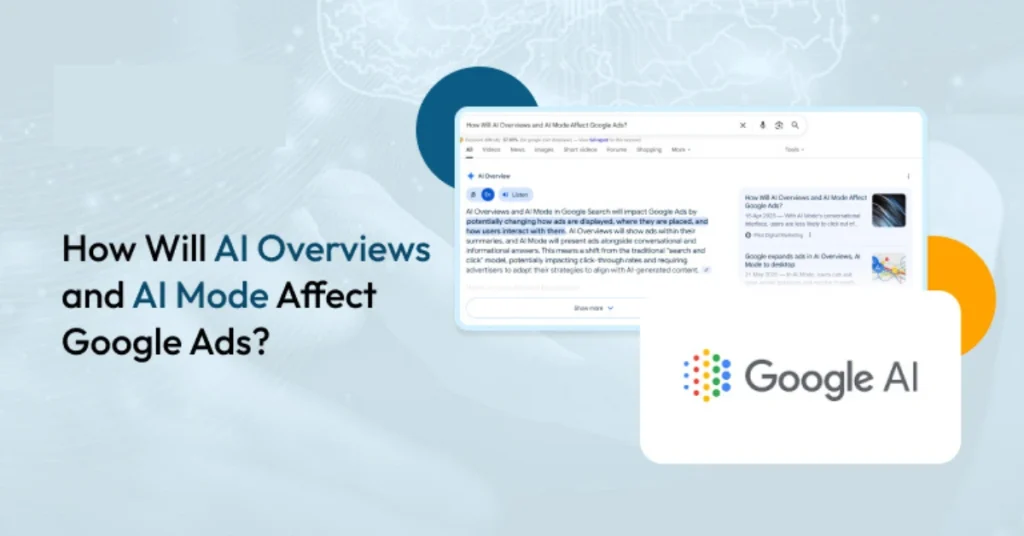
Real-World Impact of AI on Google Ads
Many businesses have reported improvements after implementing AI-driven optimization, including:
- Higher conversion rates
- Lower cost per acquisition (CPA)
- Improved return on ad spend (ROAS)
- Better audience targeting
- Increased campaign scalability
Future of AI in Google Ads
AI will continue playing a larger role in digital advertising.
Future advancements may include:
- More predictive targeting
- Advanced customer journey analysis
- Improved creative automation
- Enhanced attribution modeling
- Better cross-channel campaign optimization
As AI technology evolves, advertisers who embrace automation while maintaining human oversight will gain a competitive advantage.

Conclusion
So, can AI improve Google Ads performance better than manual optimization?
So, can AI improve Google Ads performance better than manual optimization?
However, AI is not a complete replacement for human expertise. Strategic thinking, creativity, brand storytelling, and business understanding remain essential components of successful Google Ads campaigns.
The most effective approach is combining AI-powered automation with experienced human oversight. Businesses that leverage both can maximize conversions, reduce advertising costs, and achieve stronger long-term marketing results.
As Google Ads continues evolving, marketers who embrace AI while maintaining strategic control will be best positioned for success in the competitive digital advertising landscape.