What is OFF Page SEO?
Off-page SEO refers to all the actions taken outside your website to improve its rankings on search engines like Google.
While on-page SEO focuses on optimizing your website content, titles, images, and internal links, off-page SEO is about building your website’s reputation, trust, and authority across the internet.
The main goal of off-page SEO is to show search engines that your website is valuable, credible, and worth recommending to users.
Table of Contents
ToggleTable of Contents
Why Is Off-Page SEO Important?
Search engines want to provide users with the best and most trustworthy results. One of the ways they measure trust is by looking at how other websites and people talk about your site.
Off-page SEO helps search engines understand:
- How popular your website is
- How trustworthy your content appears
- How strong your online brand presence is
When your website earns quality backlinks, mentions, reviews, and social engagement, it sends positive signals to search engines. This can help improve your rankings and drive more organic traffic.
Key Elements of Off-Page SEO
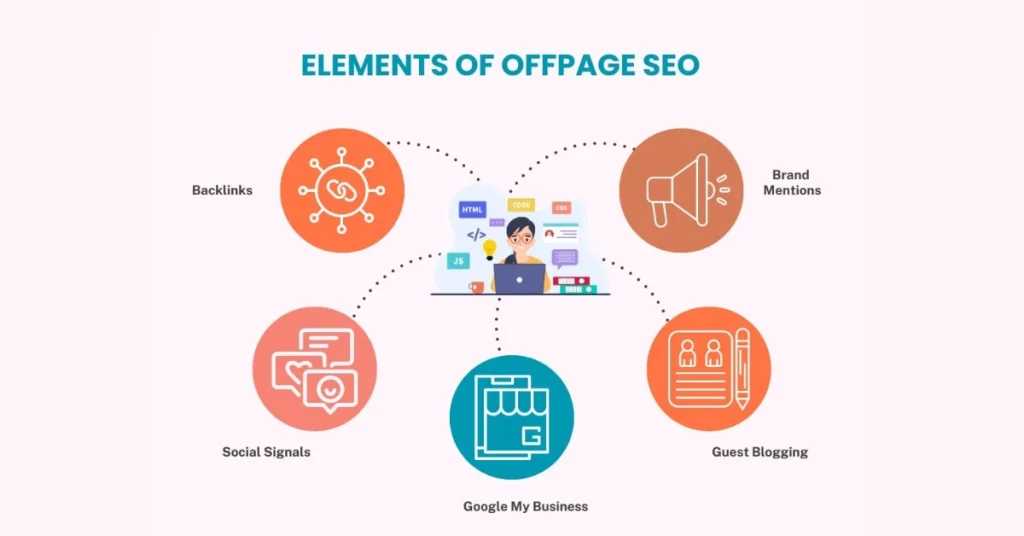
Here are the main components of off-page SEO:
Backlinks
Backlinks are links from other websites that point to your website. They are one of the most important ranking factors in SEO.
When a trusted website links to your content, search engines often see that as a vote of confidence.
Why backlinks matter:
- They increase your website authority
- They help search engines discover your pages
- They can improve your search rankings
Not all backlinks are equal:
A backlink from a high-quality, relevant website is much more valuable than many low-quality links.
Brand Mentions
Even when another website mentions your business name without linking to it, that can still help your online reputation.
Search engines pay attention to brand signals, especially if your website is being discussed on reputable platforms.
Examples include:
- Blog mentions
- News articles
- Online forums
Social Media Marketing
Social media may not directly boost rankings in every case, but it supports off-page SEO by increasing your brand visibility and helping your content reach more people.
When your content is shared on platforms like Facebook, Instagram, LinkedIn, X, or Pinterest, it can lead to:
- More backlinks from people who discover your content
- More brand awareness
- Stronger online engagement
Guest Posting
Guest posting means writing articles for other websites in your industry. In return, you often get a backlink to your own website.
This is a great off-page SEO strategy because it helps you:
- Reach a new audience
- Build authority in your niche
- Earn high-quality backlinks
Online Reviews
Reviews on Google, Yelp, Trustpilot, and other platforms are also part of off-page SEO, especially for local businesses.
Positive reviews help build trust with both users and search engines.
They can improve:
- Your local SEO visibility
- Your brand credibility
- our click-through rate from search results
Influencer Outreach
Collaborating with influencers or industry experts can help your website gain exposure, mentions, shares, and backlinks.
If influencers talk about your brand, products, or content, it can boost your authority and drive targeted traffic to your site.
Local SEO Citations
For businesses that serve a local area, citations are extremely important.
A citation is any online mention of your business’s:
- Name
- Address
- Phone number
Having consistent business information across directories like Google Business Profile, Bing Places, Yelp, and local listings helps search engines trust your business.
Best Off-Page SEO Techniques for Your Website
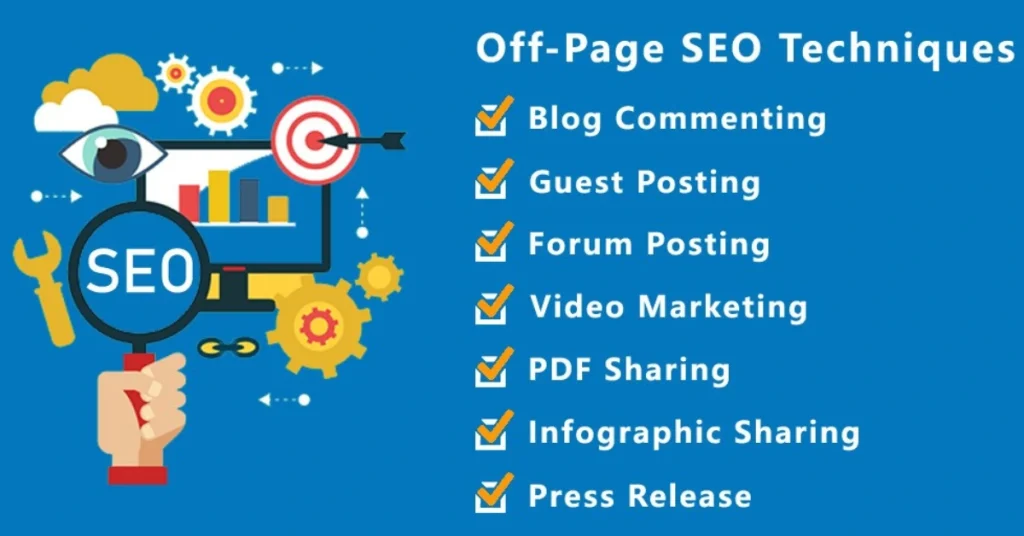
If you want to improve your off-page SEO, here are some practical strategies to start with:
Create High-Quality Content
People are more likely to link to helpful, original, and valuable content. Blog posts, guides, case studies, infographics, and research-based articles can naturally attract backlinks.
Build Relationships in Your Industry
Connect with bloggers, website owners, journalists, and influencers in your niche. Strong relationships often lead to mentions, collaborations, and backlinks..
Use Guest Blogging
Write useful content for relevant websites with good authority. Focus on quality, not quantity.
Promote Your Content
Don’t just publish content and wait. Share it through social media, email newsletters, communities, and outreach campaigns.
Get Listed in Reputable Directories
Submit your website or business to trusted directories, especially if you run a local business.
Encourage Customer Reviews
Ask happy customers to leave reviews on important platforms. Always respond professionally to both positive and negative feedback.
Monitor Your Backlink Profile
Use SEO tools to track who is linking to your website and identify harmful or spammy links
Off-Page SEO vs On-Page SEO
Many people confuse off-page SEO with on-page SEO, but they are different.
On-Page SEO includes:
- Keyword optimization
- Title tags
- Meta descriptions
- Internal linking
- Content quality
- Image optimization
- URL structure
Off-Page SEO includes:
- Backlinks
- Social sharing
- Brand mentions
- Guest posting
- Reviews
- Influencer outreach
- Directory submissions
Both are essential for a strong SEO strategy.
Common Off-Page SEO Mistakes to Avoid
When working on off-page SEO, avoid these common mistakes:
- Buying low-quality backlinks
- Spamming blog comments with links
- Using irrelevant directories
- Ignoring review management
- Focusing only on quantity instead of link quality
- Creating backlinks from unrelated or suspicious websites
Search engines are smart, and poor-quality link-building can hurt your website instead of helping it.

Final Thoughts
Off-page SEO is all about building your website’s reputation beyond your own pages. It helps search engines see your site as trustworthy, authoritative, and relevant.
By focusing on quality backlinks, brand mentions, social media presence, reviews, and industry relationships, you can improve your website’s visibility and attract more organic traffic over time.
If you want your website to perform better in search results, off-page SEO should be a core part of your digital marketing strategy.