Will Google AI Reduce Website Traffic?
The search landscape is undergoing one of the biggest transformations since Google’s inception. With the introduction of AI-powered search experiences, including AI Overviews and conversational search results, many website owners, marketers, bloggers, and businesses are asking a critical question: **Will Google AI reduce website traffic?**
For years, websites relied on Google’s traditional search engine results pages (SERPs) to attract visitors. Businesses invested heavily in SEO, content marketing, and link building to secure top rankings and drive organic traffic. However, Google’s increasing use of artificial intelligence is changing how users interact with search results.
Instead of displaying a list of links, Google can now generate comprehensive answers directly within search results. This development has sparked concerns about declining website visits, reduced click-through rates, and the future of SEO.
In this article, we’ll explore how Google AI affects website traffic, the challenges it creates, and the opportunities businesses can leverage to remain visible in the evolving search ecosystem.
Table of Contents
ToggleTable of Contents
Understanding Google's AI Search Experience
Google’s AI-powered search uses advanced language models to understand user intent and provide direct answers.
When users ask questions, Google can now:
* Summarize information from multiple sources
* Generate detailed responses
* Provide follow-up suggestions
* Offer conversational search experiences
* Deliver personalized recommendations
Instead of forcing users to visit several websites to find information, Google often presents a complete answer immediately.
For users, this means convenience.
For website owners, it introduces uncertainty.
Why Website Owners Are Concerned?

The primary concern revolves around one simple issue:
“If Google provides the answer directly, why would users click on websites?”
Historically, websites earned traffic by answering questions.
For example:
A user searches:
“How to improve website speed”
Traditional search results display ten blue links.
The user clicks a blog post to learn more.
In an AI-powered search environment, Google may summarize the key recommendations directly within the search results.
The user receives the information without visiting any website.
This phenomenon is often called a “zero-click search.”
The Rise of Zero-Click Searches
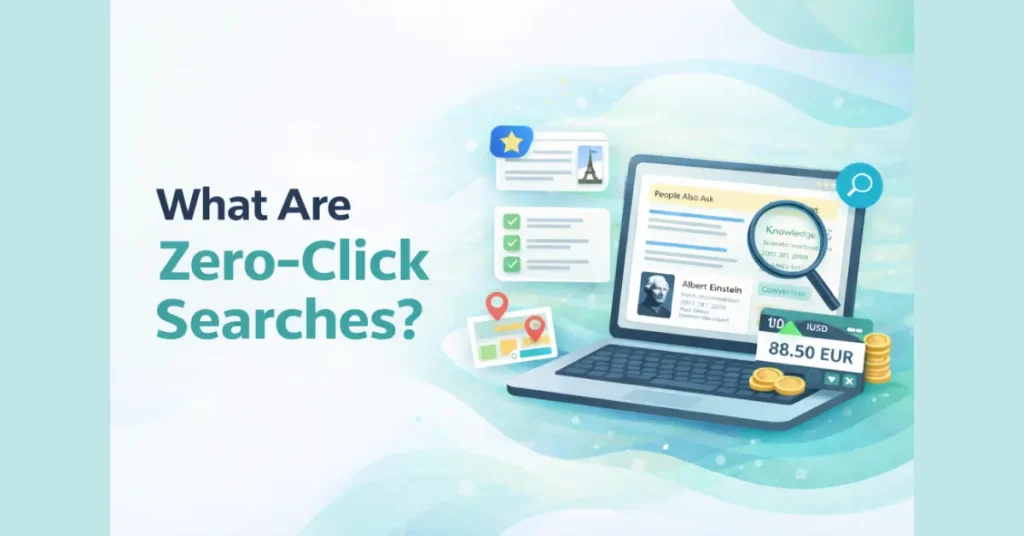
Zero-click searches have existed for years through:
* Featured snippets
* Knowledge panels
* Weather widgets
* Sports scores
* Currency converters
* Flight information
Google AI significantly expands this trend.
Now, AI-generated summaries can answer complex questions that previously required users to visit websites.
Examples include:
* Marketing strategies
* Product comparisons
* Travel planning
* Technical troubleshooting
* Educational content
As AI becomes more sophisticated, more searches may end without a website visit.
This naturally raises concerns about declining organic traffic.
Will Website Traffic Actually Decline?

The honest answer is:
For some websites, yes. For others, not necessarily.
The impact depends largely on the type of content a website publishes. Websites Most at Risk. Certain content categories are more vulnerable to AI-generated summaries.
These include:
1. Basic Informational Content
Articles answering simple questions such as:
* What is SEO?
* How does email marketing work?
* What is a backlink?
Google AI can summarize these topics easily.
As a result, users may not need to click through.
2. Dictionary and Definition Sites
Short-form definitions can be displayed directly within search results.
3. Simple How-To Guides
Basic tutorials may experience reduced traffic if AI provides the steps directly.
4. FAQ Pages
Frequently asked questions are particularly vulnerable because AI can summarize them effectively.
Websites That May Benefit From AI Search
Not all websites will suffer. Many could actually gain visibility.
1. Authoritative Brands
Google tends to trust recognized sources. Businesses with strong authority may be cited more frequently in AI-generated responses.
2. Original Research Publishers
Unique data cannot easily be replaced. Studies, surveys, industry reports, and proprietary insights remain valuable.
3. Expert-Led Content
Content featuring genuine expertise, personal experience, and unique perspectives becomes increasingly important.
4. Niche Websites
Highly specialized websites often provide information unavailable elsewhere. AI systems frequently rely on these sources.
How Google AI Changes SEO?
SEO is not disappearing.It’s evolving.
Traditional SEO focused heavily on:
* Keywords
* Backlinks
* Meta tags
* Search rankings
AI search introduces new priorities.
Experience- Google increasingly values real-world experience.Content created by people with practical knowledge often performs better.
Expertise- Subject matter expertise becomes more important.
Authority- Brand recognition and trust signals matter more than ever.
Trustworthiness- Accurate, reliable information gains visibility.
These principles align with Google’s E-E-A-T framework:
* Experience
* Expertise
* Authoritativeness
* Trustworthiness
The Impact on Click-Through Rates
One of the biggest changes may occur in click-through rates (CTR). Even if rankings remain strong, fewer users may click. Imagine your article ranks first.
Previously:
* 1,000 people searched
* 300 clicked your result
Now:
* 1,000 people search
* Google AI provides an answer
* Only 150 users click
The ranking remains. Traffic declines.
This is why many marketers are focusing less on rankings and more on visibility within AI-generated results.
AI Search Creates New Opportunities
While AI introduces challenges, it also creates opportunities.
1. Becoming a Source: Google AI often references high-quality content when generating answers.If your website becomes a trusted source, your brand may gain exposure even if users do not immediately click.
2. Brand Awareness: Users may repeatedly see your brand cited in AI responses. Over time, this strengthens credibility.
3. Higher Intent Visitors: AI may filter casual searchers and send only highly interested users to your site.
This can improve:
* Conversion rates
* Lead quality
* Sales opportunities
Less traffic does not always mean less revenue.
Why Original Content Matters More Than Ever?
AI can summarize common information.It struggles to replicate unique insights.This makes original content incredibly valuable.
Examples include:
* Industry surveys
* Customer case studies
* Personal experiences
* Proprietary research
* Expert interviews
* Real-world testing
The more unique your content, the harder it becomes for AI to replace.
The Future of Blogging
Many bloggers worry that AI search will eliminate blog traffic. However, blogging is unlikely to disappear. Instead, successful blogs will focus on:
- Depth: Comprehensive content often outperforms shallow articles.
- Expertise: Readers seek trusted experts.
- Personal Experience: Authentic stories remain difficult for AI to replicate.
- Community Building: Email lists, social media followers, and loyal audiences become increasingly valuable.
Traffic diversification becomes essential.
Why Businesses Should Not Depend Solely on Google?
The rise of AI search highlights an important lesson:
Never rely entirely on one traffic source. Smart businesses invest in:
* Email marketing
* Social media marketing
* YouTube
* Podcasts
* Online communities
* Brand building
* Paid advertising
Diversified traffic sources reduce risk.
How to Prepare for Google's AI Future?
Businesses can take several steps today.
1. Create Original Content: Avoid publishing generic articles that exist everywhere.
2. Build Brand Authority: Strong brands receive more visibility.
3. Demonstrate Expertise: Showcase credentials, experience, and real-world knowledge.
4. Focus on User Intent: Answer deeper questions beyond basic definitions.
5. Invest in Content Quality: Comprehensive, accurate content remains valuable.
6. Strengthen Audience Relationships: Build email lists and community engagement.
7. Monitor AI Search Visibility: Track how often your content appears in AI-generated responses.
What Marketers Should Expect in the Next Few Years?
AI search will continue evolving rapidly.Future developments may include:
* More conversational search experiences
* Personalized AI responses
* Voice-powered search interactions
* Enhanced shopping recommendations
* Deeper integration with productivity tools
SEO professionals must adapt to these changes rather than resist them.The businesses that embrace AI-driven search strategies will be better positioned for long-term success.
The Bigger Picture
AI search will continue evolving rapidly.Future developments may include:
* More conversational search experiences
* Personalized AI responses
* Voice-powered search interactions
* Enhanced shopping recommendations
* Deeper integration with productivity tools
SEO professionals must adapt to these changes rather than resist them.The businesses that embrace AI-driven search strategies will be better positioned for long-term success.
Conclusion
So, will Google AI reduce website traffic?
The answer is yes—for some websites and certain types of content. Informational pages, simple FAQs, and basic how-to articles may experience declining clicks as Google increasingly answers questions directly within search results.
However, AI search does not signal the end of SEO or content marketing. Instead, it marks the beginning of a new era where originality, expertise, authority, and brand trust become more important than ever.
Websites that create unique insights, publish original research, demonstrate real-world experience, and build strong brands are likely to remain valuable sources within Google’s AI ecosystem.
Rather than focusing solely on rankings, businesses should focus on becoming trusted authorities. Those who adapt to AI-powered search will not only survive but may discover new opportunities for growth, visibility, and customer engagement.
The future of search is changing—but quality content and genuine expertise will always have a place in it.