Boost Your Influencer Marketing Results with These Proven Strategies
Influencer marketing has become one of the most effective digital marketing techniques for brands looking to increase awareness, drive engagement, and generate sales. However, many businesses invest heavily in influencer partnerships only to see disappointing results. The good news is that a few strategic adjustments can significantly improve the performance of your influencer marketing campaigns.
In this guide, we’ll explore proven influencer marketing strategies that can help you maximize your return on investment (ROI) and achieve better results.
Table of Contents
ToggleTable of Contents
Why Influencer Marketing Matters
Modern consumers trust recommendations from real people more than traditional advertisements. Influencers have built loyal communities that value their opinions, making them powerful partners for brands.
Benefits of influencer marketing include:
- Increased brand awareness
- Higher audience engagement
- Improved credibility and trust
- Better lead generation
- Increased sales and conversions
- Access to niche target audiences
When executed correctly, influencer marketing can become one of your most profitable marketing channels.
Define Clear Campaign Goals
One of the biggest reasons influencer campaigns fail is a lack of clear objectives.
Before launching any campaign, determine exactly what success looks like. Common influencer marketing goals include:
- Growing brand awareness
- Increasing website traffic
- Generating leads
- Driving product sales
- Building social media followers
- Promoting a product launch
Each goal requires different content, influencers, and performance metrics.
Example
If your goal is brand awareness, focus on reach and impressions. If your goal is sales, prioritize conversion tracking and affiliate partnerships.
Choose the Right Influencers
Not all influencers are equally effective for every brand.
Many businesses make the mistake of choosing influencers based solely on follower count. Instead, prioritize relevance and audience alignment.
Look for influencers who:
- Serve your target audience
- Share content related to your industry
- Have strong engagement rates
- Maintain authentic relationships with followers
- Produce high-quality content
Types of Influencers
Nano Influencers (1K–10K followers)
- High engagement
- Affordable partnerships
- Strong community trust
Micro Influencers (10K–100K followers)
- Excellent audience targeting
- Strong conversion potential
Macro Influencers (100K–1M followers)
- Large reach
- Strong brand awareness opportunities
Mega Influencers (1M+ followers)
- Massive visibility Higher campaign costs
- campaign costs
For many brands, micro influencers often deliver the best ROI.
Focus on Authentic Partnerships
Today’s consumers can easily identify forced promotions.
Instead of controlling every aspect of the content, allow influencers creative freedom to present your brand naturally.
Authentic content typically generates:
- More engagement
- Higher trust
- Better conversion rates
- Stronger audience connections
Work with influencers who genuinely like your products or services whenever possible.
Create Valuable Content Together
The most successful influencer campaigns focus on providing value rather than simply promoting products.
Encourage content formats such as:
- Tutorials
- Product demonstrations
- Reviews
- Behind-the-scenes content
- Educational videos
When audiences gain useful information, they’re more likely to trust the recommendation and take action.
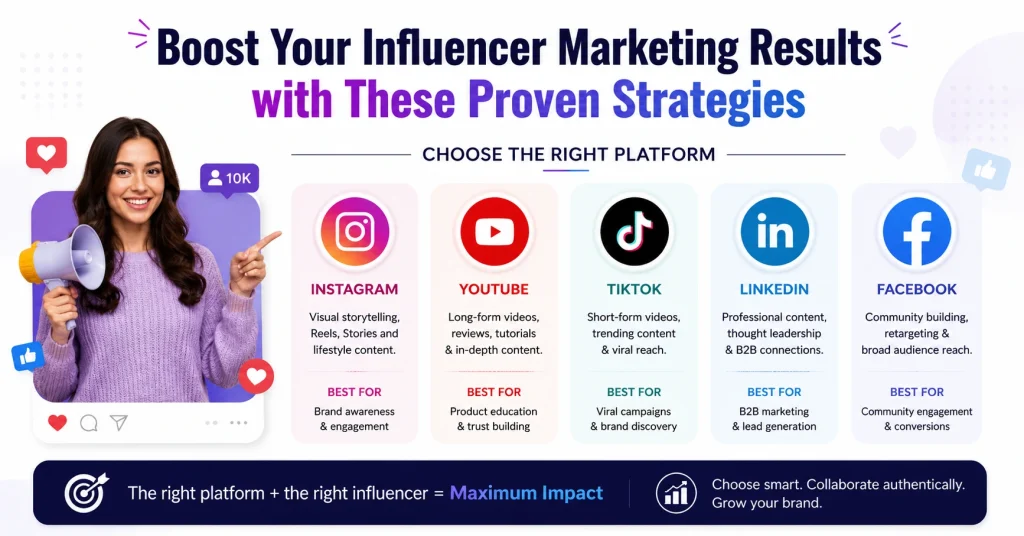
Leverage Multiple Social Media Platforms
Many brands rely on a single platform, limiting their campaign potential.
Expand your influencer strategy across platforms like:
Ideal for:
- Product showcases
- Reels
- Stories
YouTube
Ideal for:
- Detailed reviews
- Tutorials
- Long-form content
TikTok
Ideal for:
- Viral campaigns
- Short-form videos
- Brand challenges
Ideal for:
- B2B influencer marketing
- Professional thought leadership
Ideal for:
- Community engagement
- Retargeting campaigns
A multi-platform strategy can significantly increase campaign reach and impact.
Use Data to Guide Decisions
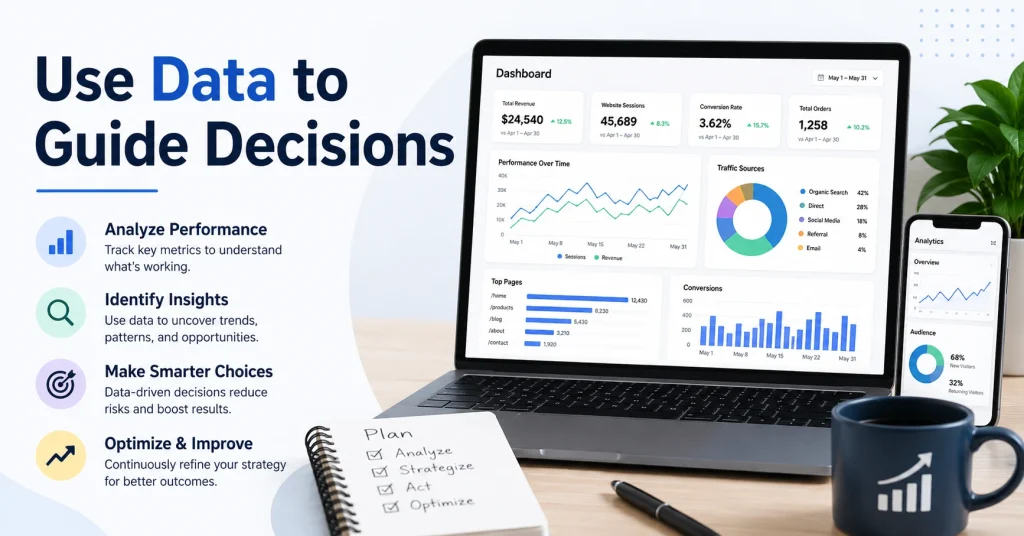
Successful influencer marketing relies on data-driven optimization.
Track key performance indicators (KPIs) such as:
- Return on ad spend (ROAS)
- Conversion rate
- Lead generation
- Website traffic
- Reach
- Click-through rate (CTR)
- Engagement rate
- Impressions
Regular performance analysis helps identify top-performing influencers and content formats.
Implement Affiliate and Discount Code Programs
Affiliate marketing can improve accountability and performance tracking.
Provide influencers with:
- Referral programs
- Affiliate links
- Unique discount codes
Benefits include:
- Performance-based compensation
- Easier conversion tracking
- Increased motivation for influencers
This strategy often produces better ROI than fixed-fee partnerships alone.
Build Long-Term Relationships
Many brands focus on one-time collaborations, missing opportunities for deeper audience trust.
Long-term influencer partnerships create:
- Better campaign performance over time
- Consistent messaging
- Increased credibility
- Stronger brand recognition
When followers repeatedly see an influencer using your product, the recommendation feels more authentic.
Repurpose Influencer Content
Influencer-generated content can provide value beyond the original campaign.
Repurpose content for:
- Retargeting campaigns
- Blog posts
- Product pages
- Email marketing
- Website landing pages
This extends content lifespan and maximizes marketing ROI.
Combine Influencer Marketing with Paid Advertising
Many brands stop after publishing influencer content.
A smarter strategy is to amplify high-performing influencer posts using paid advertising.
Benefits include:
- Improved campaign scalability
- Higher conversions
- Increased reach
- Better targeting
Running influencer-generated content as ads often outperforms traditional brand-created advertisements because it appears more authentic.
Common Mistakes to Avoid
Avoid these influencer marketing errors:
- Choosing influencers based only on follower count
- Choosing influencers based only on follower count
- Choosing influencers based only on follower count
- Overly controlling content creation
- Not tracking performance metrics
- Using one-time partnerships exclusively
- Focusing solely on vanity metrics
Conclusion
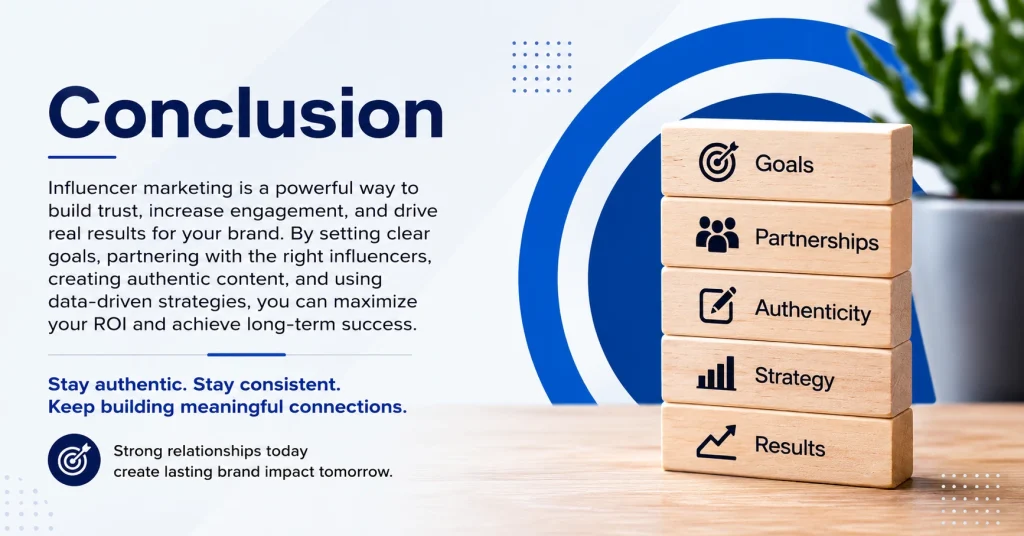
Influencer marketing remains one of the most powerful digital marketing strategies available today. However, achieving strong results requires more than simply partnering with popular creators.
By setting clear goals, selecting the right influencers, prioritizing authenticity, leveraging data, and building long-term relationships, brands can significantly improve campaign performance and ROI.
Implement these proven influencer marketing strategies, and you’ll be well-positioned to drive greater engagement, increase conversions, and build stronger connections with your target audience.